Hagia Sophia
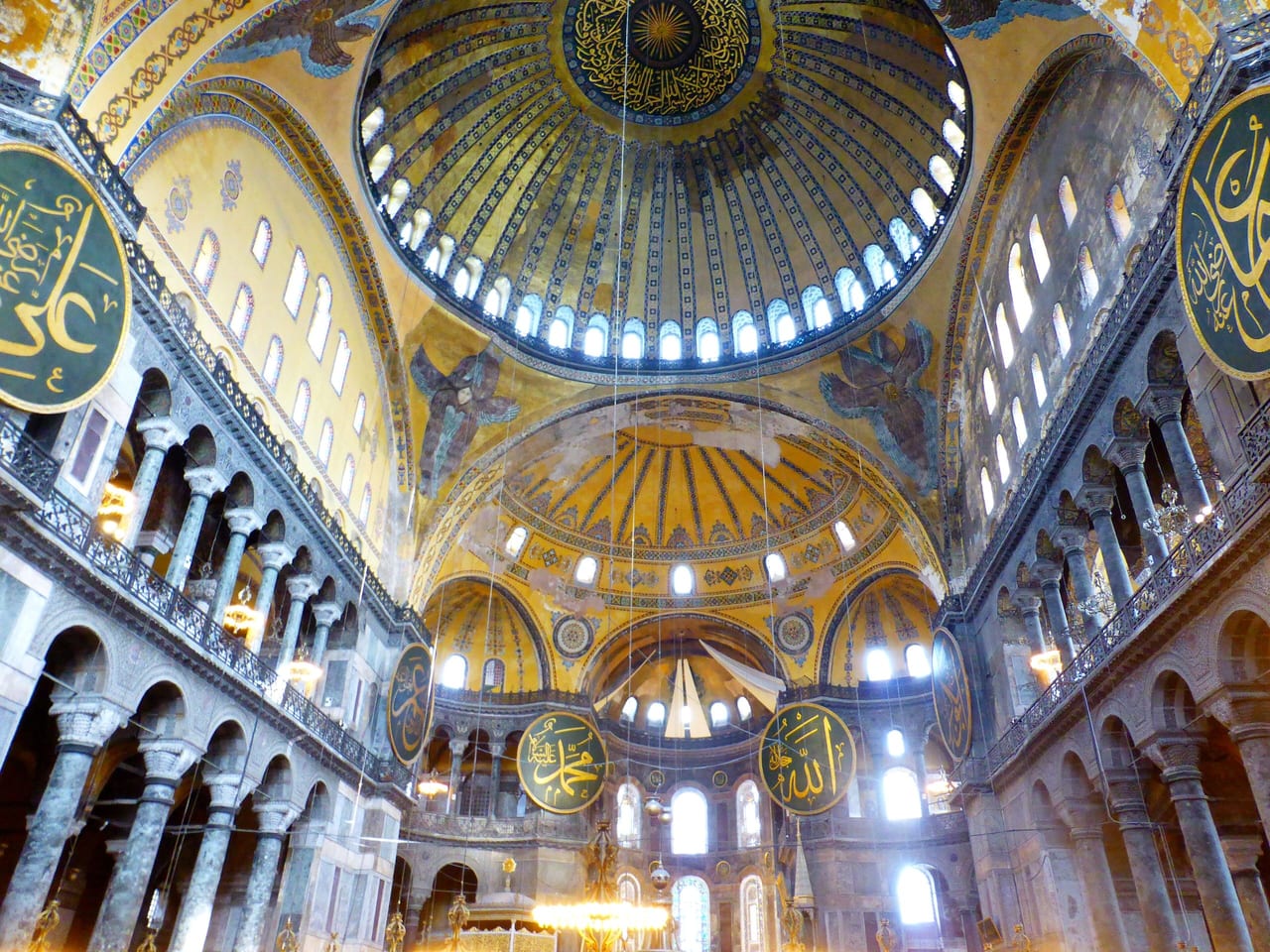
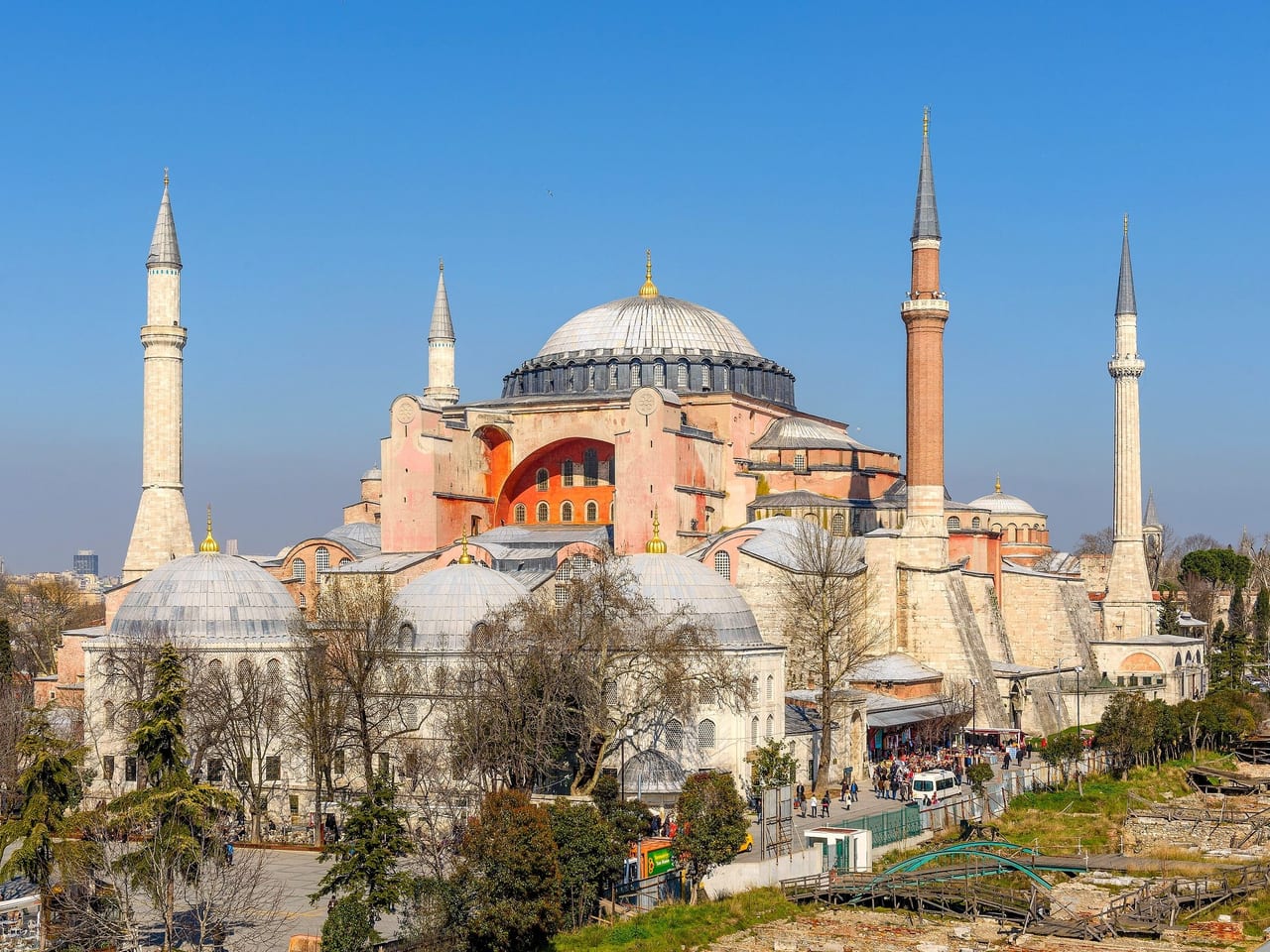
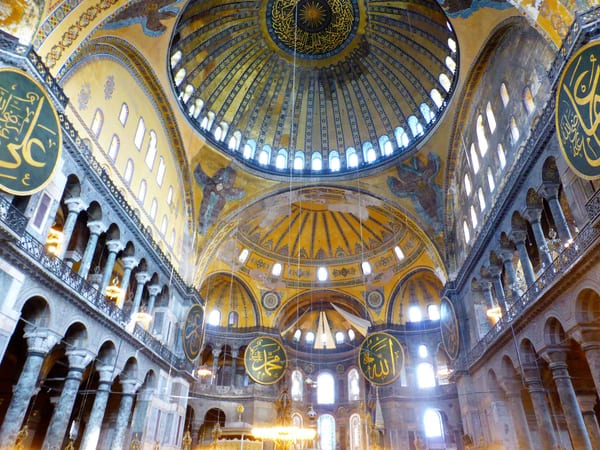
The domed building Justinian opened in 537: the great church of Byzantium, a mosque after 1453, with its mosaics, calligraphic roundels, and a dome rising about 56 meters.
How many times can a building change its identity? Hagia Sophia answers that question in the language of stone, glass and gold, across nearly fifteen centuries.Listen to the rest in the app
On the site of three buildings
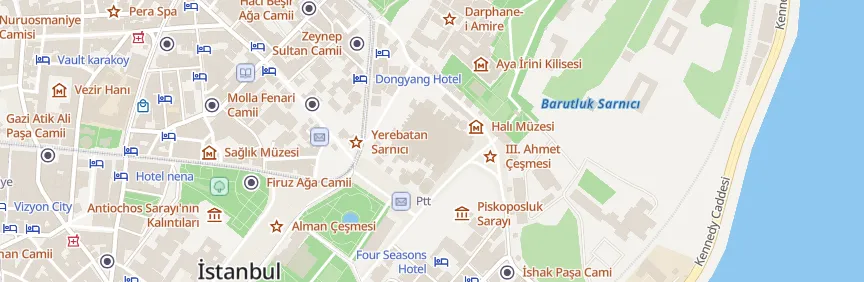
Hagia Sophia (Ayasofya) stands on Ayasofya Square in Sultanahmet. It was built three times on the same spot. The first building, called the Megale Ekklesia, or "Great Church," was completed around 360 under Constantius II and destroyed in 404; a new one was built in its place under Theodosius II in 415. That second church was destroyed in the Nika Revolt of 532. Emperor Justinian I entrusted the present building to Anthemius of Tralles and Isidore of Miletus, and it was inaugurated on December 27, 537. The name Hagia Sophia, meaning "Holy Wisdom," was in use from 430 onward. The dome, which collapsed in an earthquake in 558, was rebuilt and completed in 562. Mehmed II, who took the city in 1453, converted the building into a mosque. Hagia Sophia became a museum in 1934 and a mosque again in 2020.
Dome, mosaics, and roundels
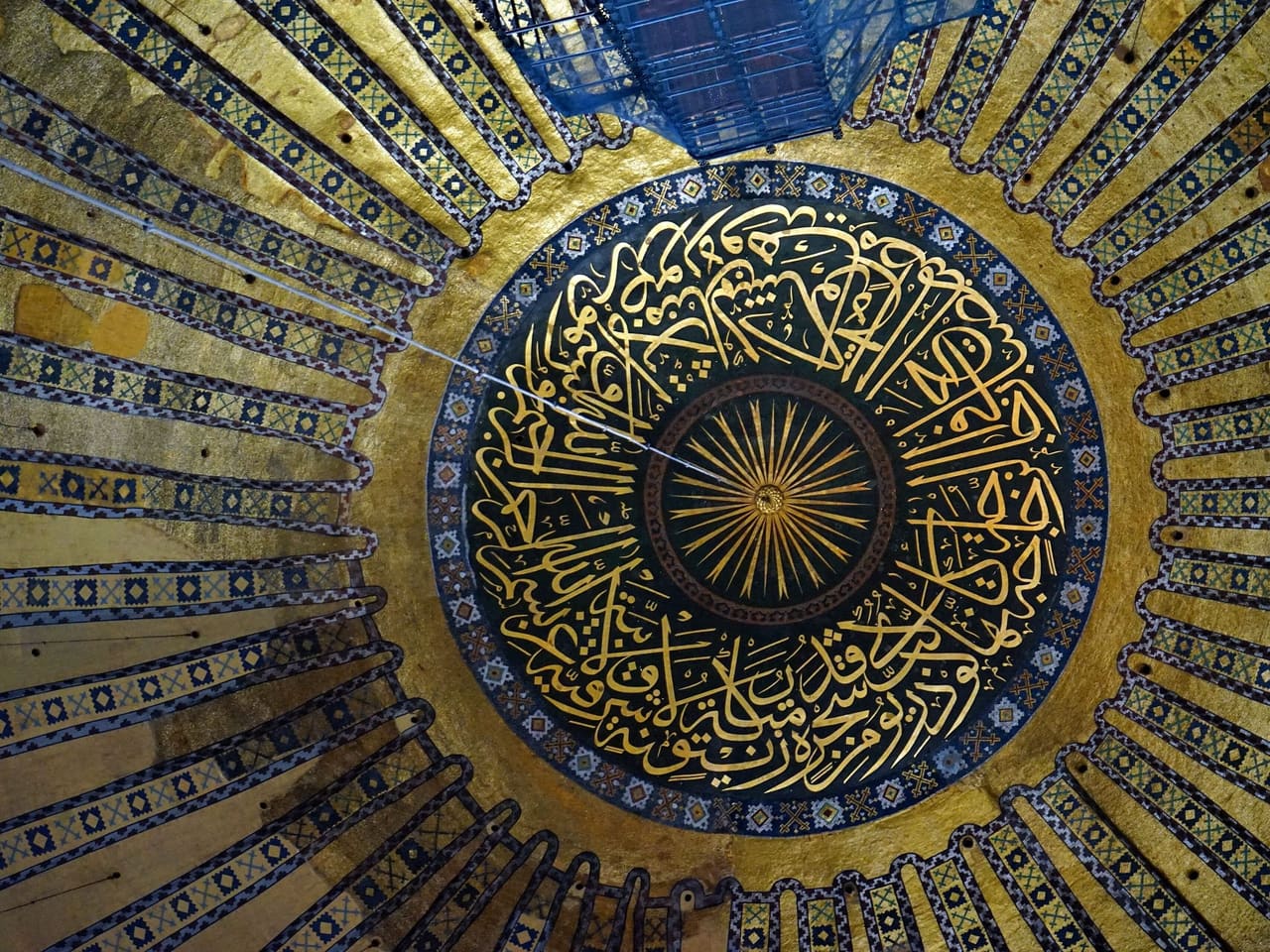
The dome is about 31 meters across and about 56 meters above the floor; it has 40 windows, four of them later walled up. Light bricks reduced its weight, and half-domes spread the load. Most of the columns were brought from other buildings, while the capitals made for this building bear the names of Justinian and Theodora. The mosaics span the 6th to the 14th centuries; figural mosaics were removed during the Iconoclast period of 726–843, and new ones were made afterward. In the 16th century, Mimar Sinan added buttress walls against earthquakes. In 1847–1849, at the request of Sultan Abdülmecid, the Swiss Fossati brothers restored the building; verse 35 of the Surah an-Nur, written by Kazasker Mustafa İzzet Efendi, was placed in the dome, and large round panels by the same calligrapher were hung on the walls. Hagia Sophia lies within the "Historic Areas of Istanbul," inscribed on the UNESCO World Heritage List in 1985.
Practical information
- Getting there: Sultanahmet stop on the Kabataş–Bağcılar tram; from Kadıköy or Üsküdar by ferry to Eminönü, then by tram.
- Suggested time: 1–1.5 hours.
[bilgi: An active mosque; visits are restricted during prayer times. For the dress code, visiting hours, and access to the upper galleries, check the official website before you go.]
Where
Inside this place
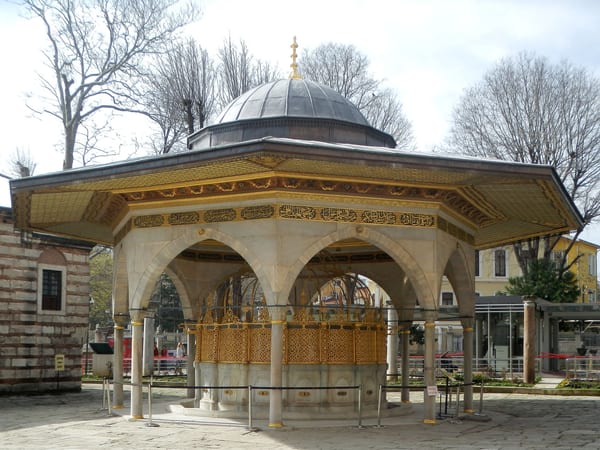 Hagia Sophia Courtyard (Fountain, Primary School, Timekeeper's House)
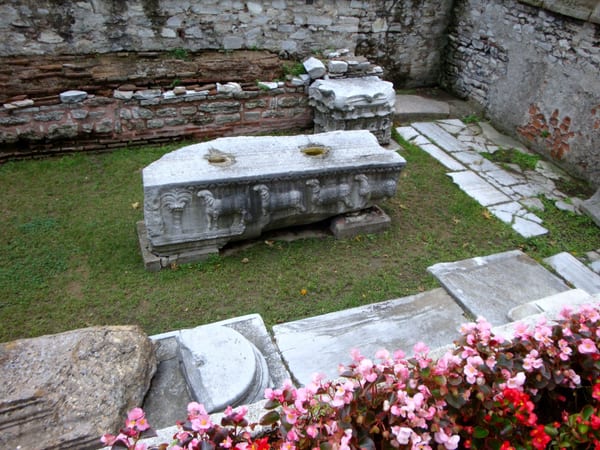 Remains of the Earlier Church
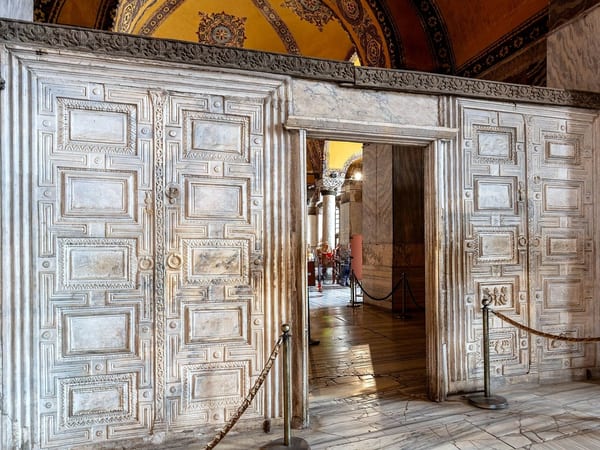 West Gallery and Marble Door
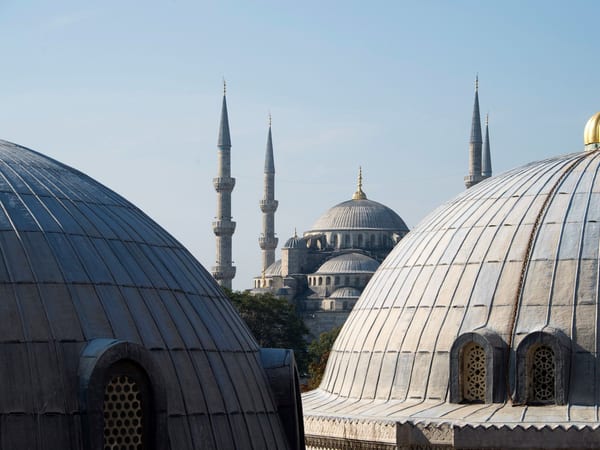 Tombs of the Sultans at Hagia Sophia
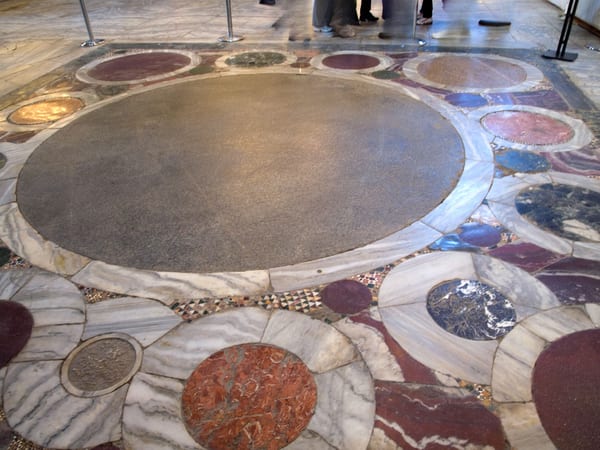 Omphalion
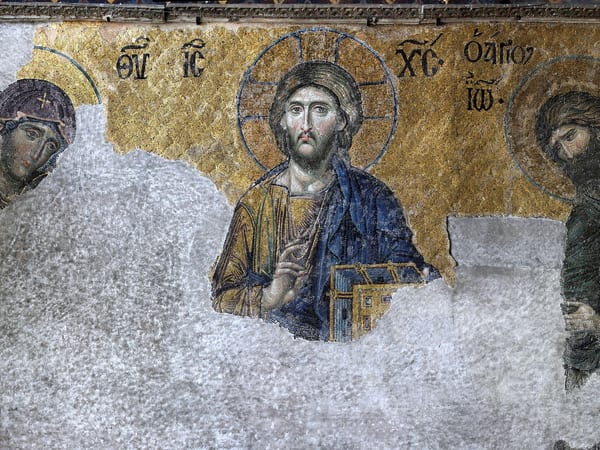 Deesis and Imperial Mosaics
Nearby places
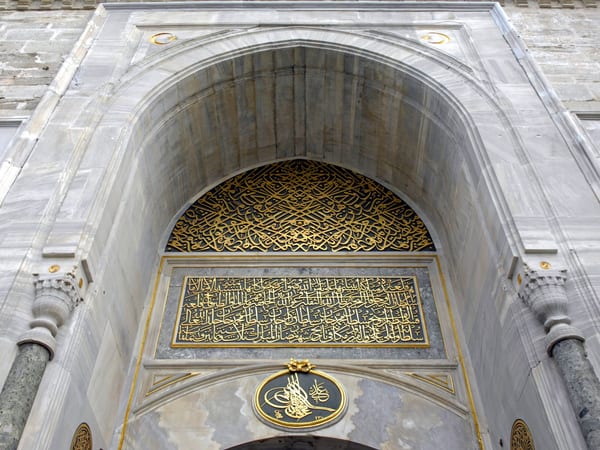 Imperial Gate
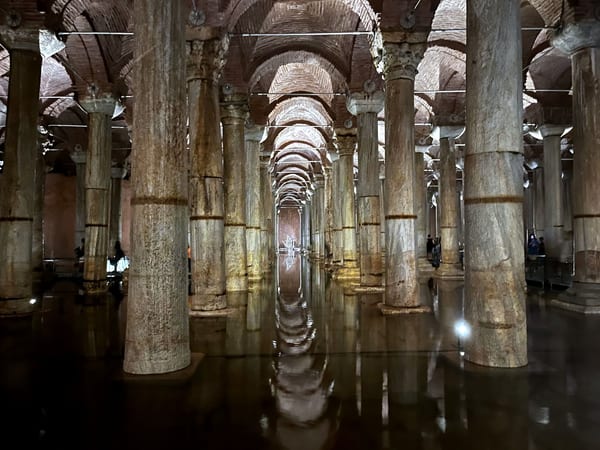 Basilica Cistern
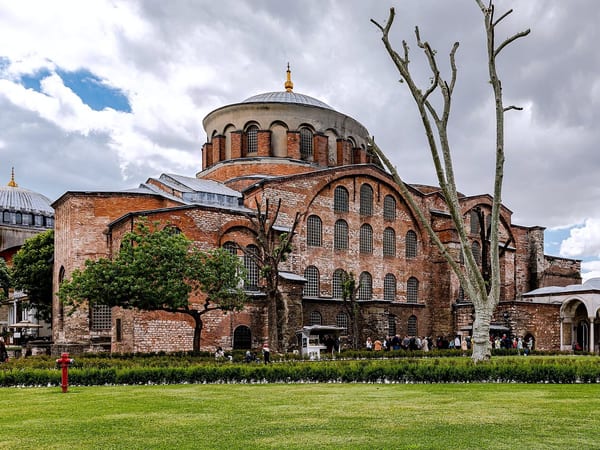 Hagia Irene
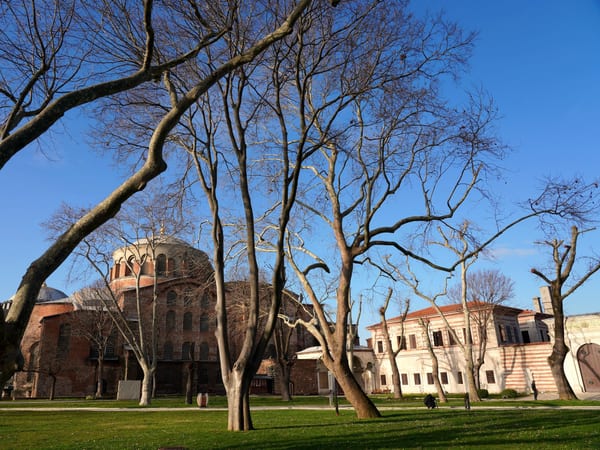 First Courtyard

Routes that include this place
Listen as you walk
Guide & Travel starts the story by itself when you reach the place, and it works offline too.
Photos (11)
- Hagia Sophia Courtyard (Fountain, Primary School, Timekeeper's House) — Photo: Hasibe Durmaz · CC BY-SA 4.0 · Wikimedia Commons (colour corrected)
- Remains of the Earlier Church — Photo: mayatomo · CC BY-SA 3.0 · Wikimedia Commons (colour corrected)
- West Gallery and Marble Door — Photo: Diego Delso · CC BY-SA 4.0 · Wikimedia Commons (edited)
- Tombs of the Sultans at Hagia Sophia — Photo: Dosseman · CC BY-SA 4.0 · Wikimedia Commons (cropped)
- Omphalion — Photo: Javier Losa · CC BY 2.0 · Wikimedia Commons (edited)
- Deesis and Imperial Mosaics — Photo: Till Niermann · CC BY-SA 3.0 · Wikimedia Commons (cropped)
- Imperial Gate — Photo: Dosseman · CC BY-SA 4.0 · Wikimedia Commons (cropped)
- Basilica Cistern — Photo: Kurmanbek · CC BY-SA 4.0 · Wikimedia Commons (colour corrected)
- Hagia Irene — Photo: Ninara · CC BY 2.0 · Wikimedia Commons (cropped)
- First Courtyard — Photo: Ray Swi-hymn from Sijhih-Taipei, Taiwan · CC BY-SA 2.0 · Wikimedia Commons (edited)
- Hagia Sophia — Photo: Kemal KOZBAEV · CC BY-SA 4.0 · Wikimedia Commons (colour corrected)


