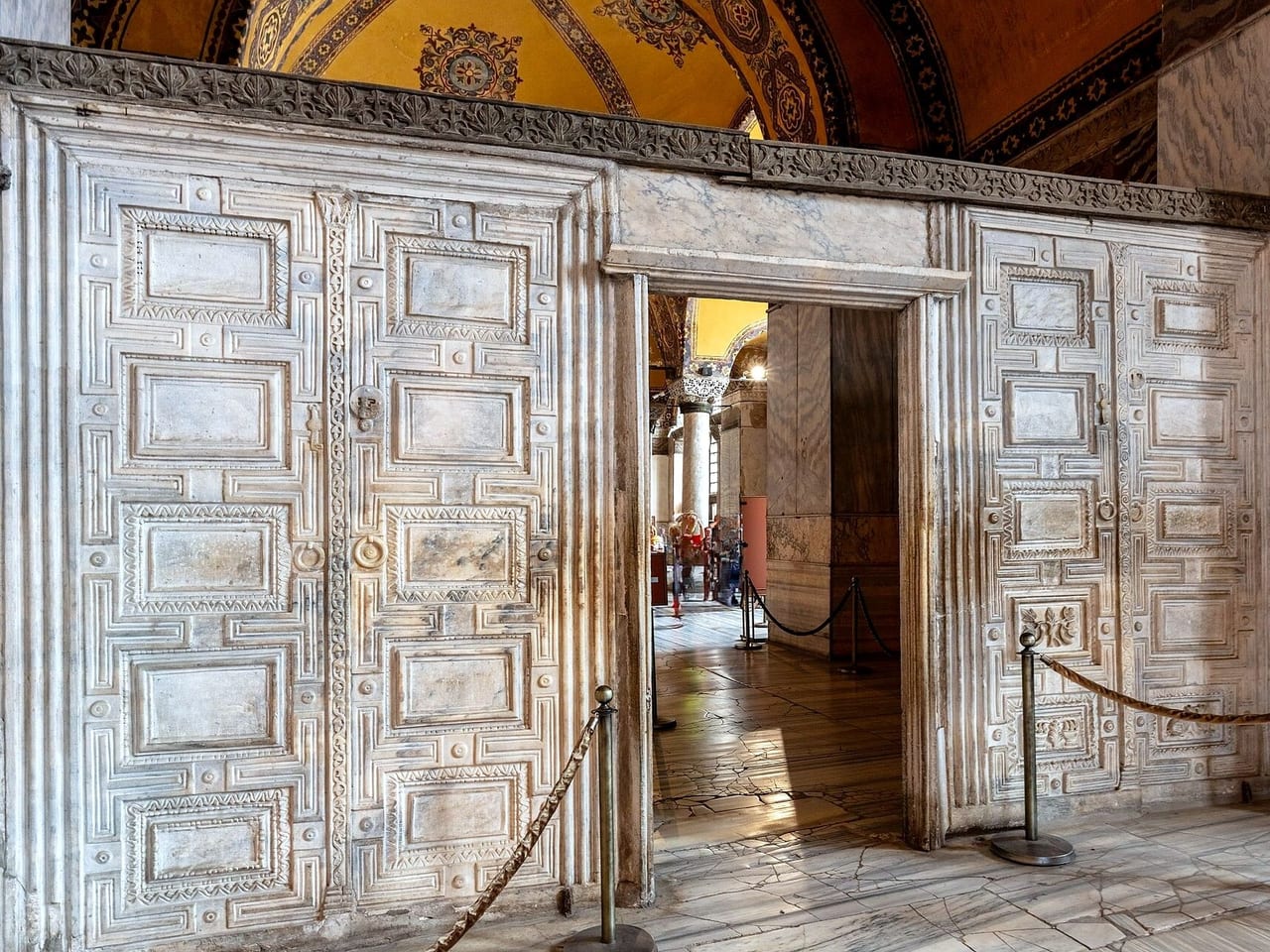
West Gallery and Marble Door
The west gallery on Hagia Sophia's upper floor: the green stone that marks where the empress watched the liturgy, and the mysterious marble door in the gallery.
Where would an empress stand through a long liturgy? The answer is set into the west gallery's pavement: a round stone of green marble.Listen to the rest in the app
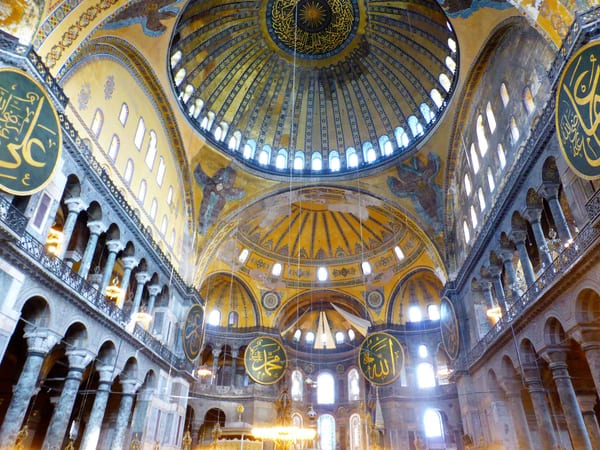
The galleries on Hagia Sophia's upper floor run along three sides of the building and were the women's place of worship in Byzantine times; the empress, the women of the dynasty, and ordinary women each had their own sections here. In Orthodox churches, the women's section, the gynaeceum, is built on the upper floor. The upper floor is reached by ramps at the corners of the building, of which the southeastern one collapsed in the early tenth century; these ramps were also used by the imperial women permitted to go upstairs. The west gallery was reserved for the empress and her retinue. At its center, a round stone of green marble set into the floor marks the empress's place throughout the liturgy; no one sat down during the service. The capitals of the columns supporting the galleries bear the initials of the names and titles of Justinian and Theodora. A little beyond the Empress's Lodge stands a marble door, placed in the gallery at an unknown time and for an unknown purpose; it is known as the Gate of Heaven and Hell. From the galleries there is a bird's-eye view down into the main hall.
Practical information
- Visit: Since January 15, 2024, foreign visitors have been taken to the upper gallery through a separate entrance, with a paid ticket. Check the official website for the gallery arrangements and hours before you go.
- Suggested time: 10 minutes.
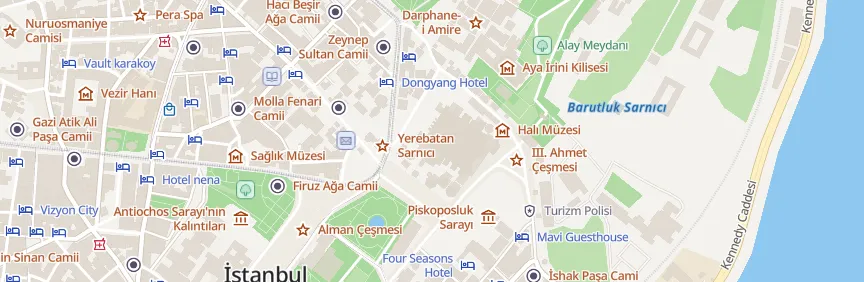
Where
Nearby places
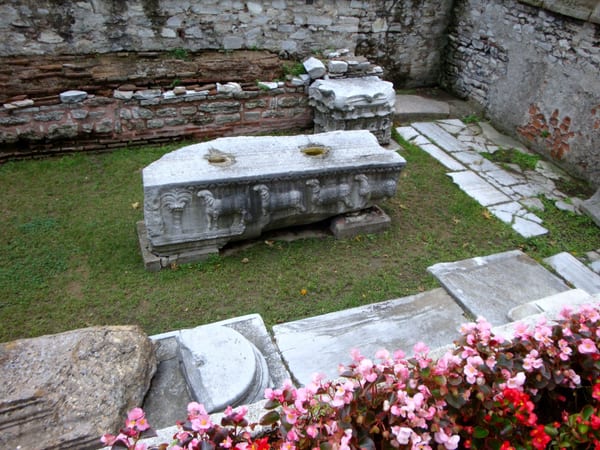 Remains of the Earlier Church
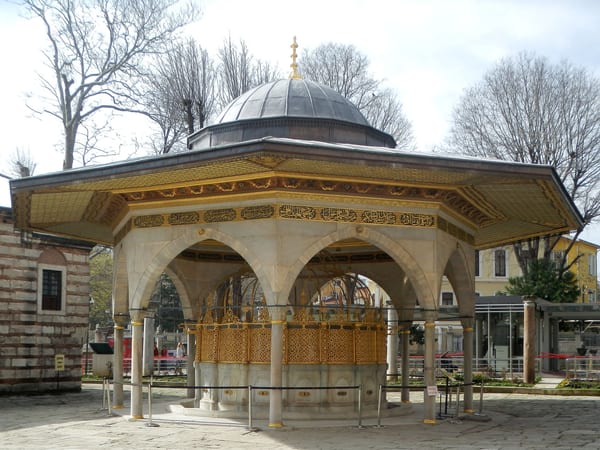 Hagia Sophia Courtyard (Fountain, Primary School, Timekeeper's House)
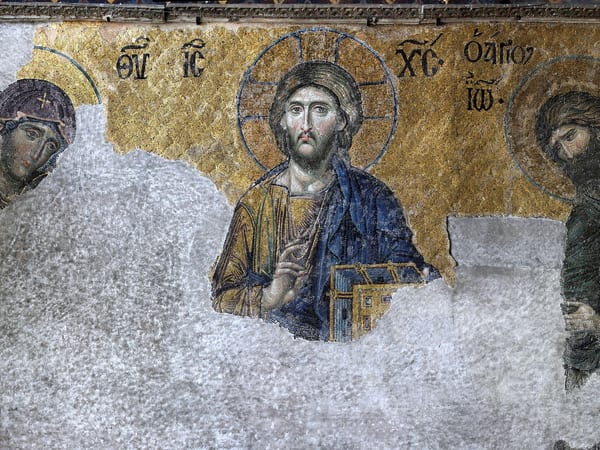 Deesis and Imperial Mosaics
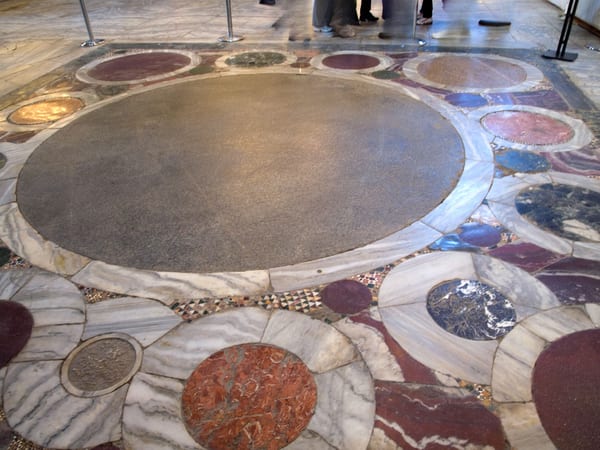 Omphalion

Routes that include this place
Listen as you walk
Guide & Travel starts the story by itself when you reach the place, and it works offline too.
Photos (5)
- Remains of the Earlier Church — Photo: mayatomo · CC BY-SA 3.0 · Wikimedia Commons (colour corrected)
- Hagia Sophia Courtyard (Fountain, Primary School, Timekeeper's House) — Photo: Hasibe Durmaz · CC BY-SA 4.0 · Wikimedia Commons (colour corrected)
- Deesis and Imperial Mosaics — Photo: Till Niermann · CC BY-SA 3.0 · Wikimedia Commons (cropped)
- Omphalion — Photo: Javier Losa · CC BY 2.0 · Wikimedia Commons (edited)
- Hagia Sophia — Photo: Kemal KOZBAEV · CC BY-SA 4.0 · Wikimedia Commons (colour corrected)


