Basilica Cistern
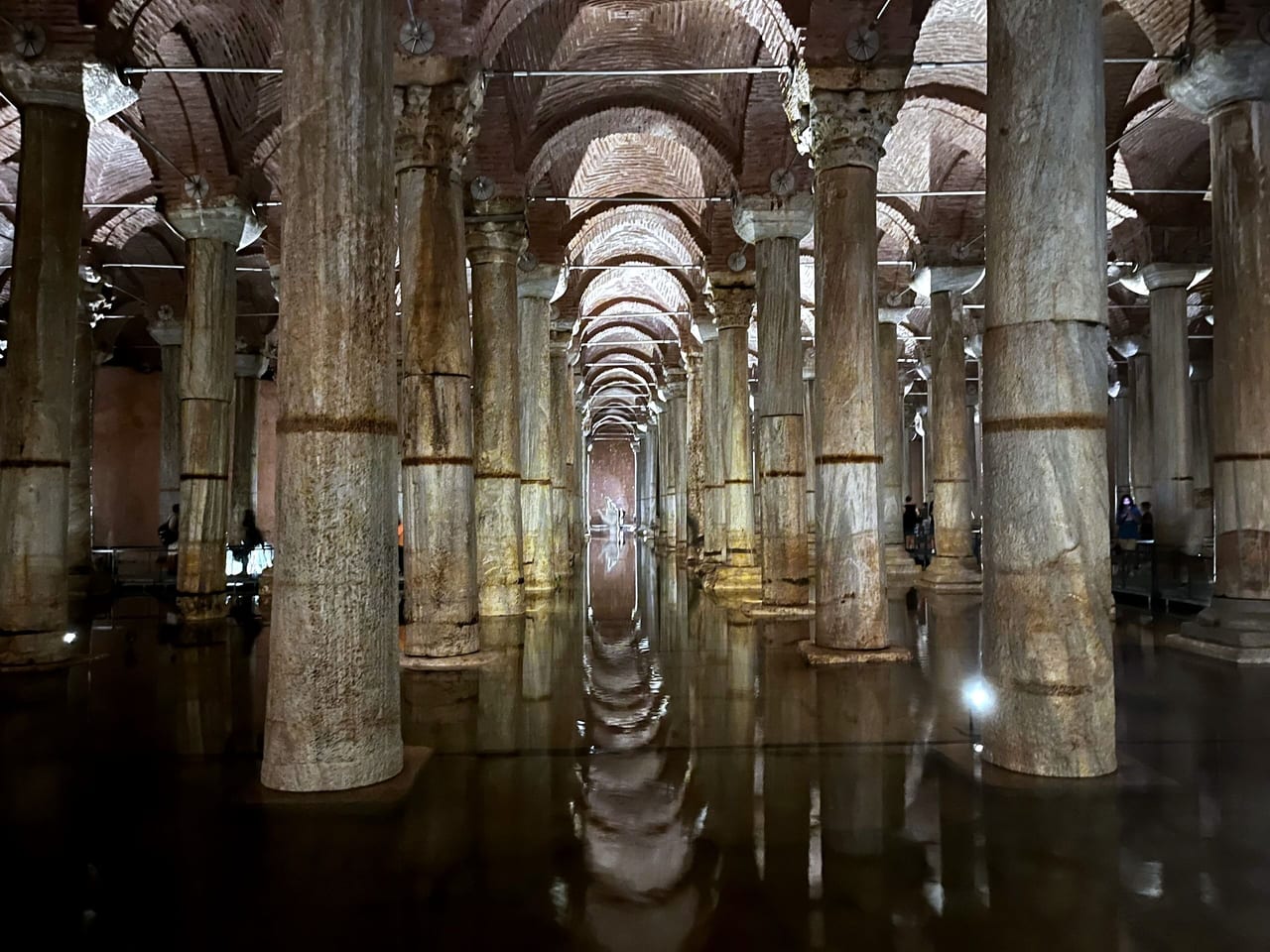
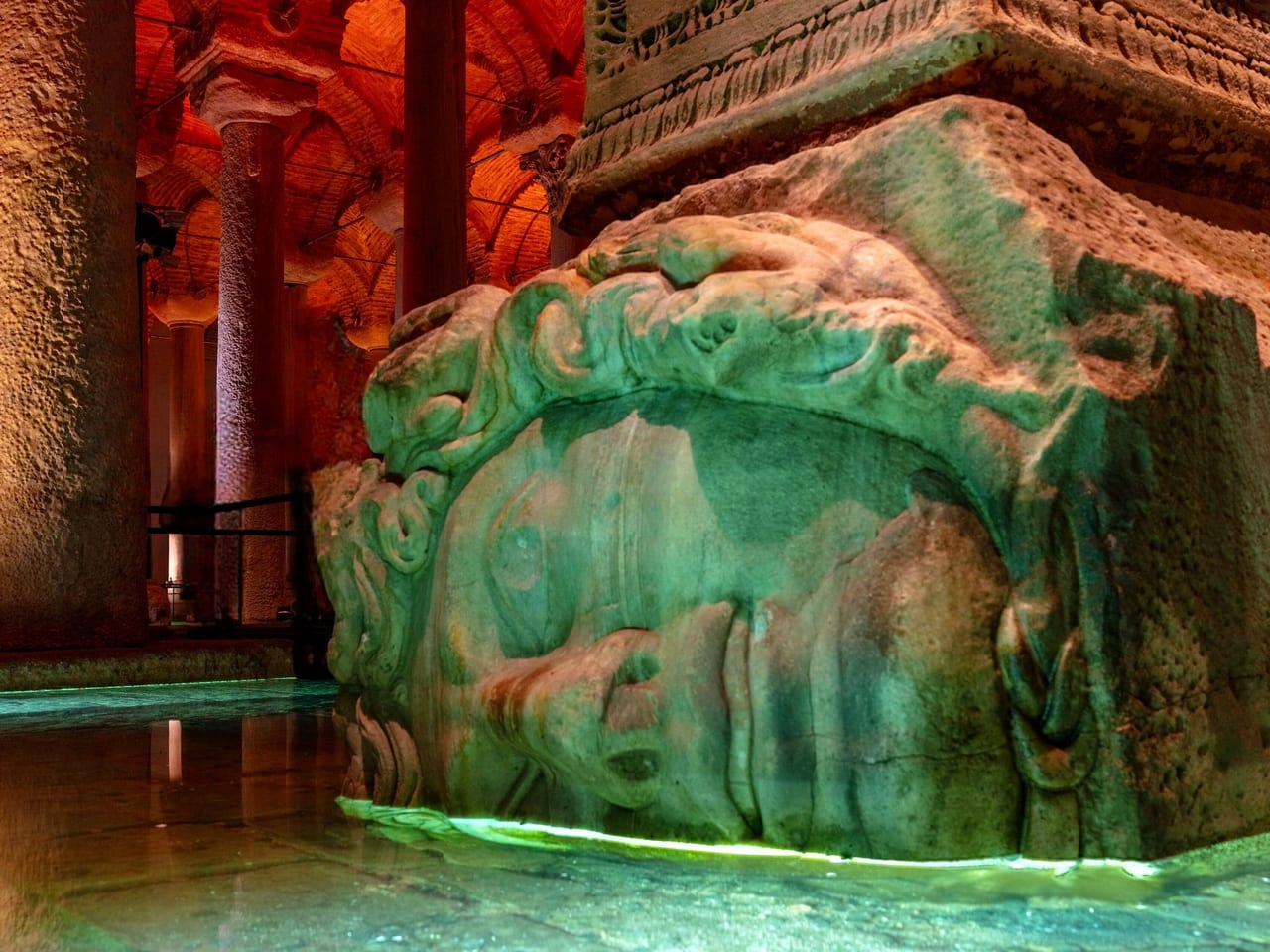
An underground cistern from the reign of Justinian: 336 columns holding up its vaults, a column carved with teardrops, and two Medusa heads used as column bases.
In the middle of the sixteenth century, a scholar named Petrus Gyllius, who was tracking down the ancient remains of the city, witnessed something strange in this neighborhood.Listen to the rest in the app
An imperial cistern
Yerebatan Sarnıcı (the Basilica Cistern) is an underground structure in Sultanahmet, near Hagia Sophia. It was built in the 6th century, under Emperor Justinian I, to supply water to the Great Palace and the buildings around it; because it lay beneath the Stoa Basilica, it is also called the Basilica Cistern. About 140 meters long, it covers an area of about 10,000 square meters. Its vaults rest on 336 columns arranged in 12 rows; each column is 9 meters tall. Most are marble and granite columns brought from older buildings; some are made of a single piece and some of two, and 98 of the capitals are Corinthian. The walls are 4.8 meters thick.
The Weeping Column and the Medusa heads
One column, decorated with peacock eyes, drooping branches, and teardrops, is known as the Weeping Column. At the northwest corner, two Medusa heads serve as column bases, one upside down and the other lying flat; they are thought to have come from a late Roman building.
Forgotten and found again
After the conquest, the cistern supplied water to the gardens of Topkapı Palace for a while and then fell out of use. In the 16th century, Petrus Gyllius, who was studying the city's ancient topography, saw residents of the houses above drawing water with buckets from wells opening into the cistern, and he examined the structure. The cistern was repaired by Kayserili Mehmed Ağa under Ahmed III and later under Abdülhamid II; nine columns at risk of breaking were encased in concrete between 1955 and 1960. During a major restoration in 1985–1987, mud was removed and walkways were built, after which the cistern opened to visitors. The Medusa heads came to light in the cleaning work of that restoration.
Practical information
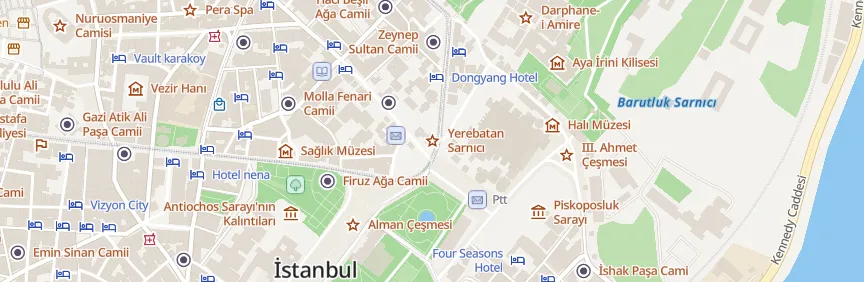
- Getting there: Sultanahmet stop on the Kabataş–Bağcılar tram; address in Alemdar, Yerebatan Avenue.
- Entry: Paid; for hours and queuing, check the official website before you go.
- Suggested time: 45 minutes.
Where
Nearby places
 Remains of the Earlier Church
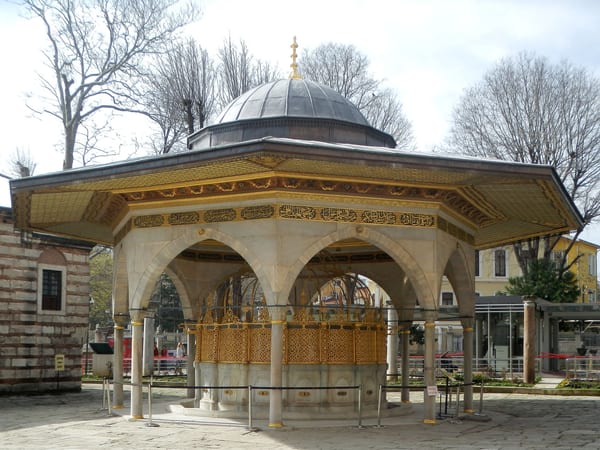 Hagia Sophia Courtyard (Fountain, Primary School, Timekeeper's House)
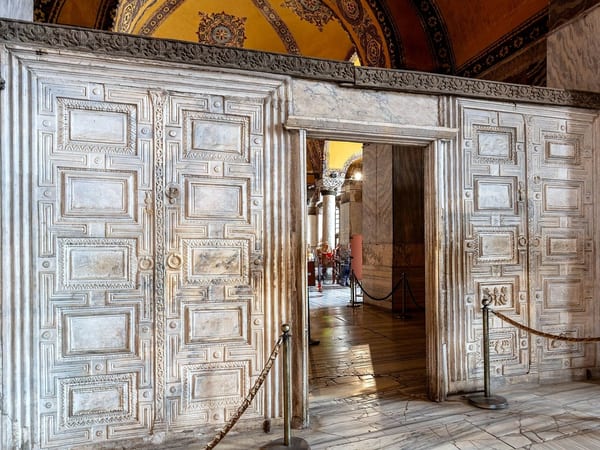 West Gallery and Marble Door
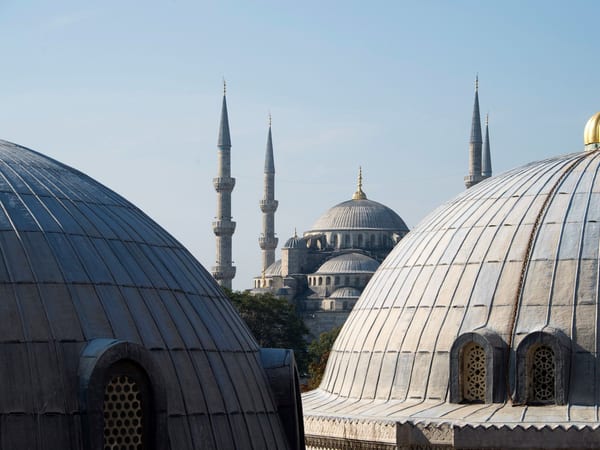 Tombs of the Sultans at Hagia Sophia

Routes that include this place
Listen as you walk
Guide & Travel starts the story by itself when you reach the place, and it works offline too.
Photos (5)
- Remains of the Earlier Church — Photo: mayatomo · CC BY-SA 3.0 · Wikimedia Commons (colour corrected)
- Hagia Sophia Courtyard (Fountain, Primary School, Timekeeper's House) — Photo: Hasibe Durmaz · CC BY-SA 4.0 · Wikimedia Commons (colour corrected)
- West Gallery and Marble Door — Photo: Diego Delso · CC BY-SA 4.0 · Wikimedia Commons (edited)
- Tombs of the Sultans at Hagia Sophia — Photo: Dosseman · CC BY-SA 4.0 · Wikimedia Commons (cropped)
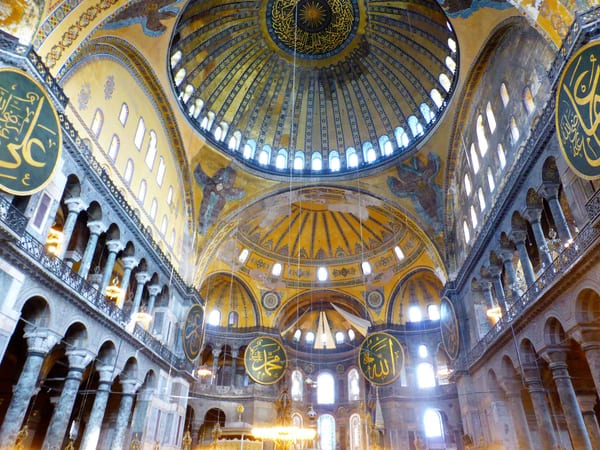
- Hagia Sophia — Photo: Kemal KOZBAEV · CC BY-SA 4.0 · Wikimedia Commons (colour corrected)


