Imperial Gate
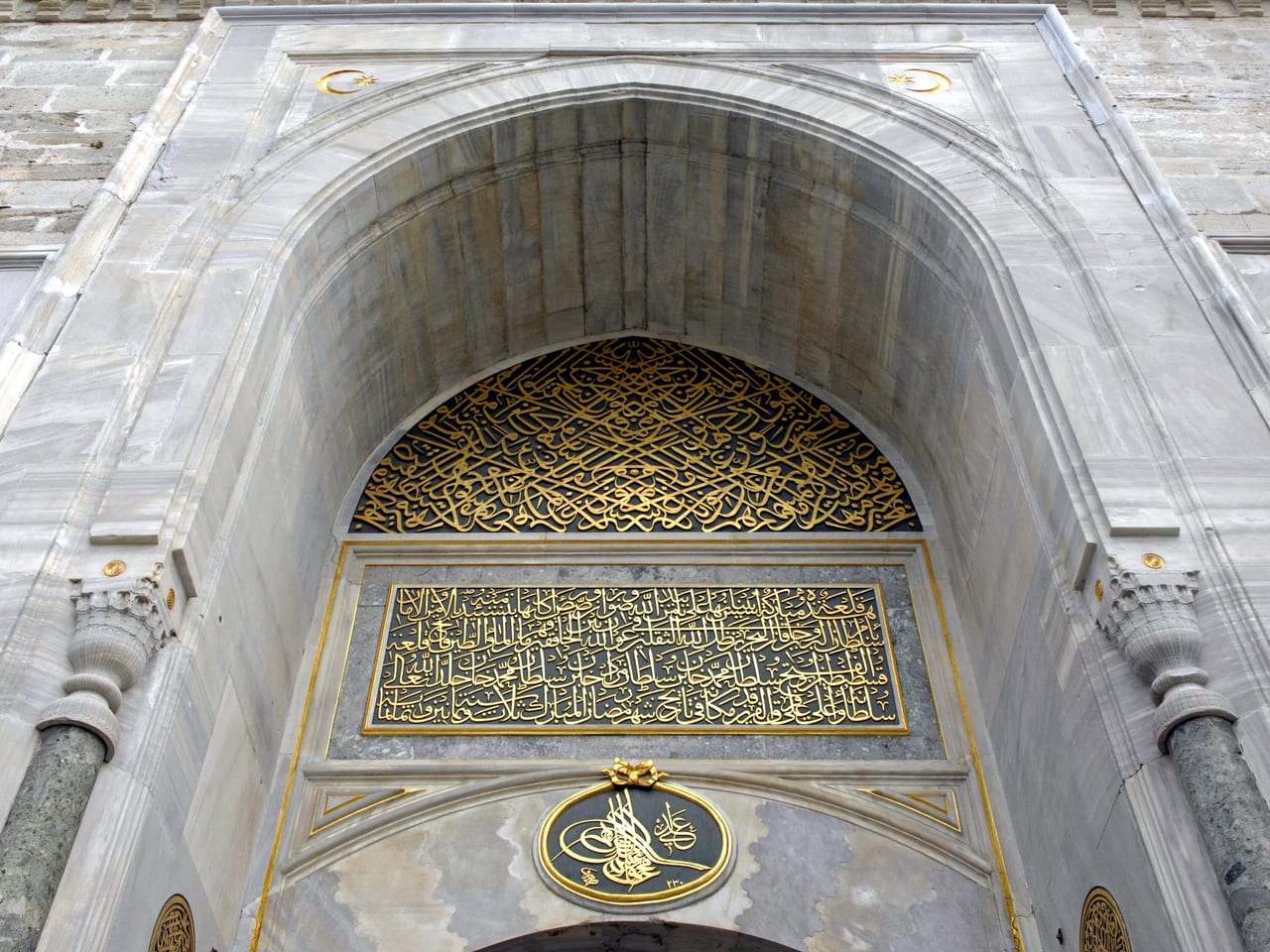
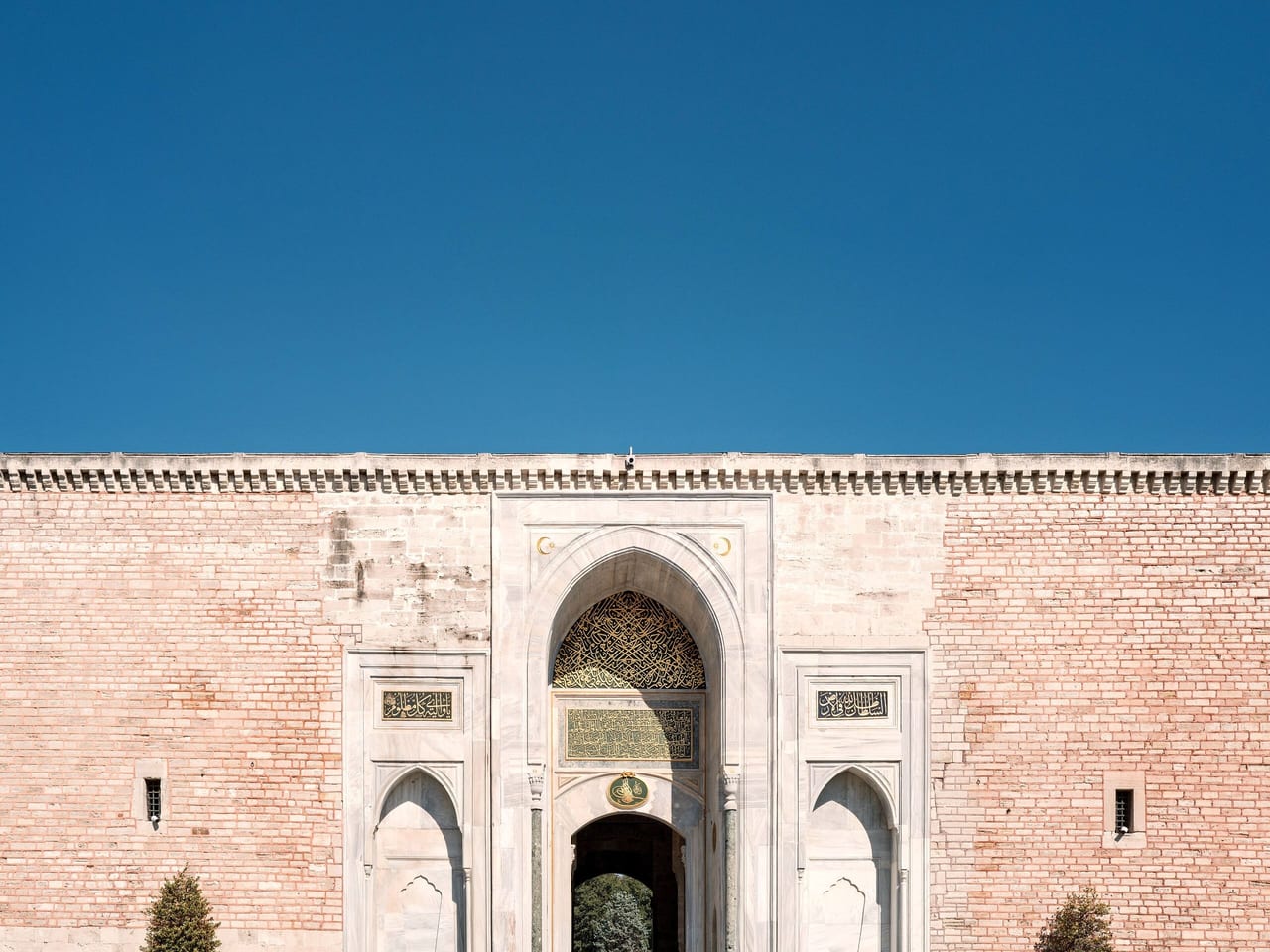
The palace's main gate behind Hagia Sophia: a Quranic verse on its marble pediment, and below it the 1478 inscription of the palace wall.
At the brow of the gate, on the white marble, letters twine around one another to spell out a verse of the Quran. The inscription just below tells that the wall this gate pierces was built in 1478.Listen to the rest in the app
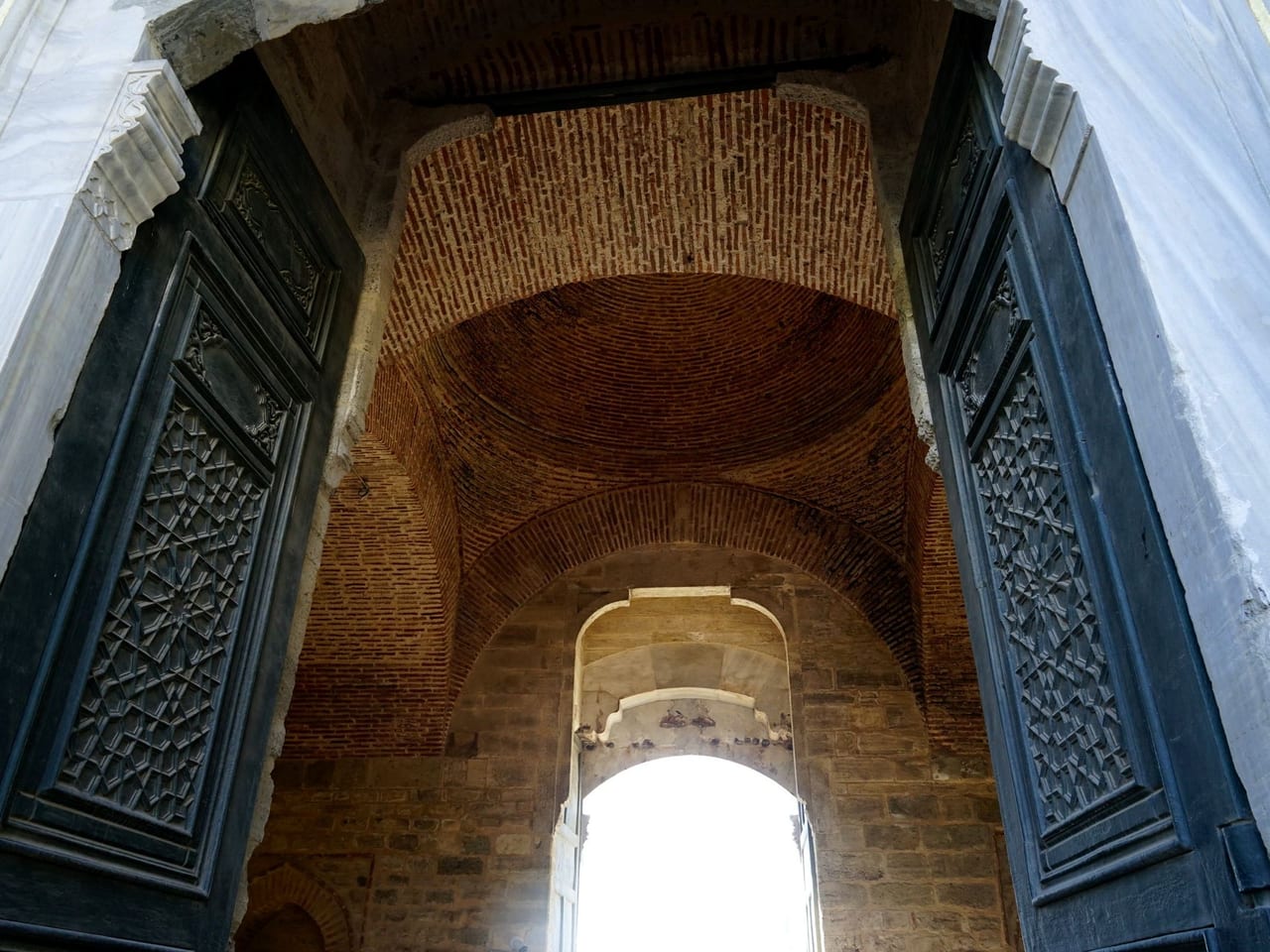
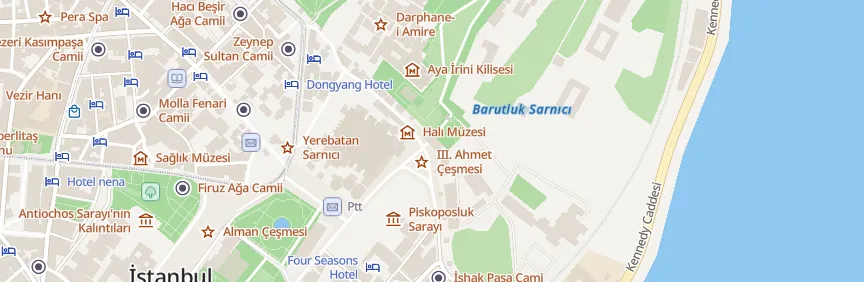
The Bâb-ı Hümâyun, the Imperial Gate, is the main gate of the palace's outer ramparts, known as the Sur-ı Sultani, enclosing Topkapı Palace, and forms the palace's face toward the city, behind Hagia Sophia. On its marble pediment is a Quranic verse, and beneath it an inscription dated 1478 that records the building of the wall. The calligrapher was Ali bin Yahyâ es-Sûfî. The gate was originally a monumental passage with a kiosk above it; the wooden kiosk disappeared in 1867. On the arch facing the courtyard are the tughra of Sultan Abdülaziz and the date 1867, and on its faces the tughras of other sultans, signs that the gate was repaired several times. The palace and Hagia Sophia were closely linked; the sultans usually performed their Friday and holiday prayers in that mosque. The Imperial Gate is the chief of the three great gates in the wall; the others are the Iron Gate and the Otluk Gate. Passing through it, you enter the first courtyard, the Alay Meydanı.
Practical information
- Visit: The gate and the first courtyard require no ticket; the museum entrance is at the Gate of Salutation.
- Suggested time: 5 minutes.
Where
Nearby places
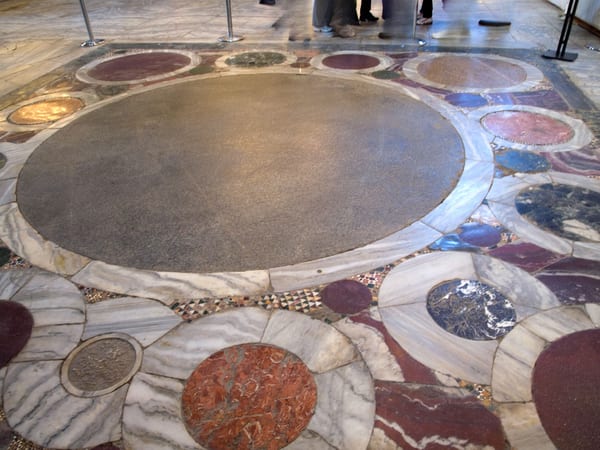 Omphalion
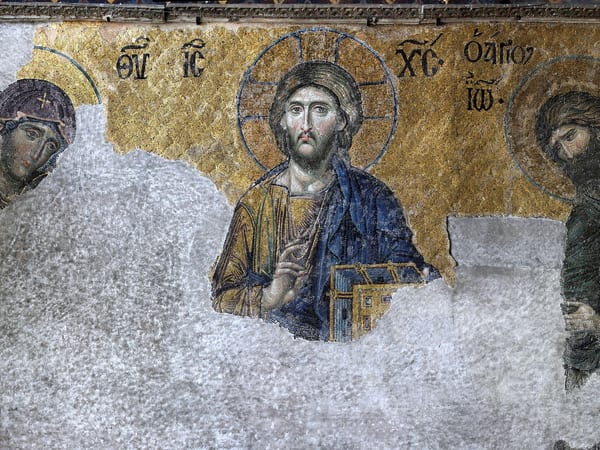 Deesis and Imperial Mosaics
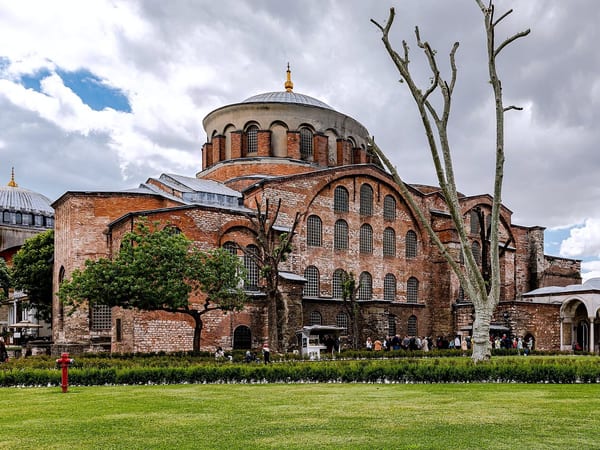 Hagia Irene

Routes that include this place
Listen as you walk
Guide & Travel starts the story by itself when you reach the place, and it works offline too.
Photos (4)
- Omphalion — Photo: Javier Losa · CC BY 2.0 · Wikimedia Commons (edited)
- Hagia Sophia — Photo: Kemal KOZBAEV · CC BY-SA 4.0 · Wikimedia Commons (colour corrected)
- Deesis and Imperial Mosaics — Photo: Till Niermann · CC BY-SA 3.0 · Wikimedia Commons (cropped)
- Hagia Irene — Photo: Ninara · CC BY 2.0 · Wikimedia Commons (cropped)


