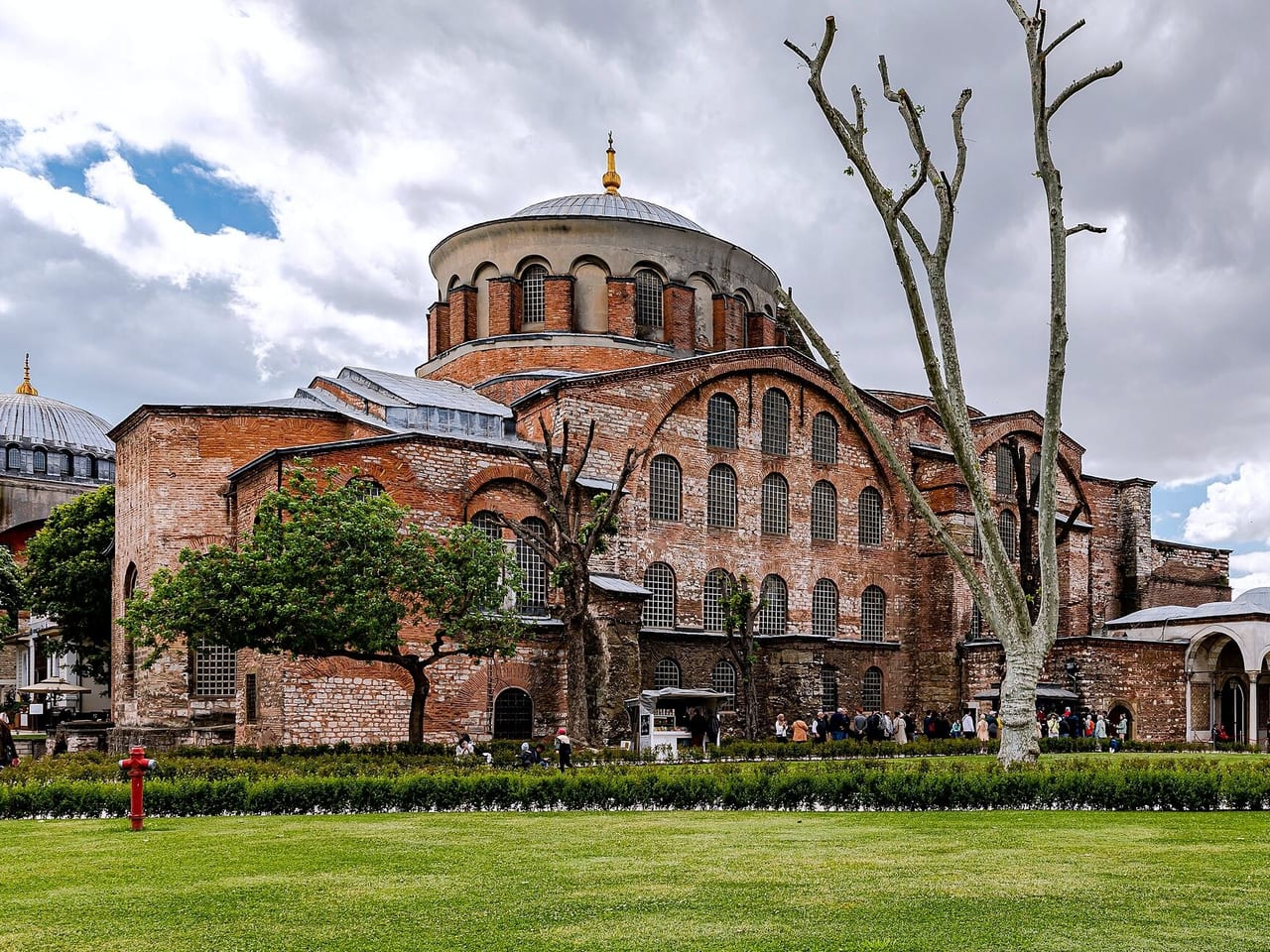
Hagia Irene
A Byzantine church in the first courtyard of Topkapı Palace: a domed basilica with a figureless cross mosaic in its apse, later an Ottoman arms depot and the first home of a museum collection.
Hagia Irene stands in the first courtyard of Topkapı Palace; its name means "Holy Peace." The church was first built under Emperor Constantine I and served as the city's cathedral. It was destroyed in the Nika Revolt of 532 and replaced under Justinian I by a domed basilica. When an earthquake brought down its upper structure in 740, Emperor Constantine V had the church rebuilt after 753, keeping the old plan. The large figureless cross mosaic in the apse was set up in this period, during the Iconoclast years. In its atrium lie floor mosaics recovered from the 6th-century Palace of Anicia Juliana. After the conquest the church was not converted into a mosque; enclosed within the palace wall, it served as an arms depot known as the İç Cebehane. Of the many service buildings in the first courtyard, only Hagia Irene and the mint next to it survive; excavations around it have revealed the remains of other buildings. In the mid-19th century Fethi Ahmed Paşa displayed two collections here, one of old weapons and one of antiquities. These collections formed the core of the İstanbul Archaeology Museums.
Practical information
- Entry: From the first courtyard of Topkapı Palace; for tickets, hours, and opening status, check the official website before you go.
- Suggested time: 20–30 minutes.
Where
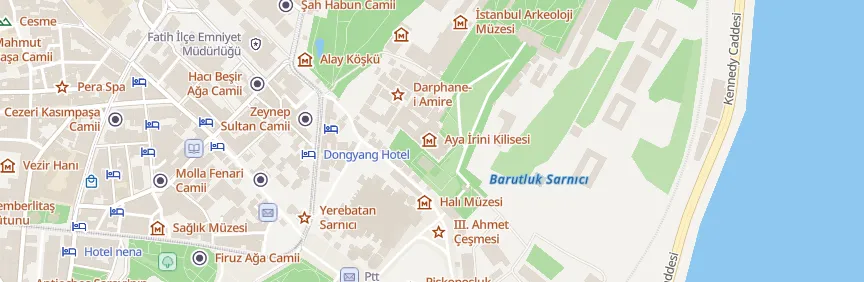
Nearby places
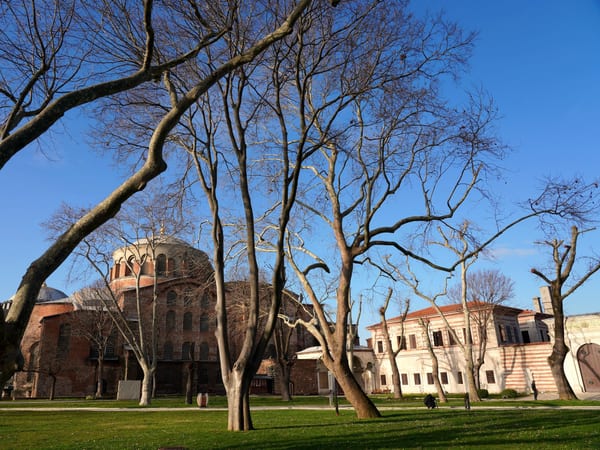 First Courtyard
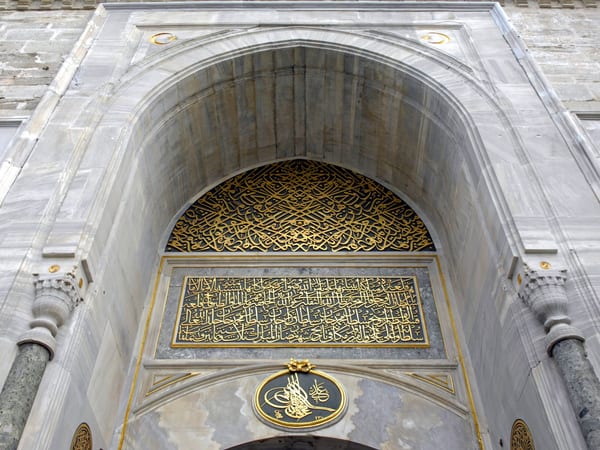 Imperial Gate
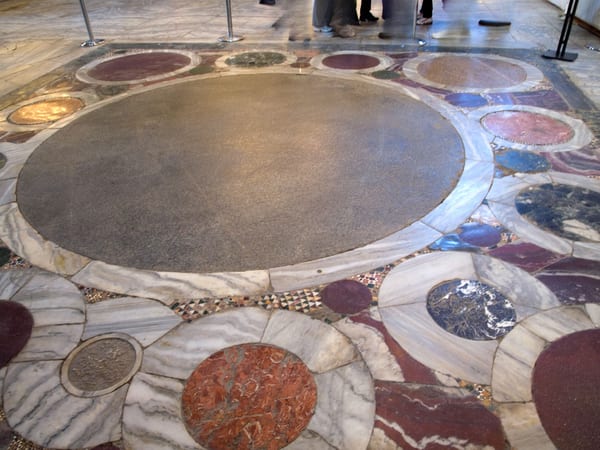 Omphalion

Routes that include this place
Listen as you walk
Guide & Travel starts the story by itself when you reach the place, and it works offline too.
Photos (4)
- First Courtyard — Photo: Ray Swi-hymn from Sijhih-Taipei, Taiwan · CC BY-SA 2.0 · Wikimedia Commons (edited)
- Imperial Gate — Photo: Dosseman · CC BY-SA 4.0 · Wikimedia Commons (cropped)
- Omphalion — Photo: Javier Losa · CC BY 2.0 · Wikimedia Commons (edited)
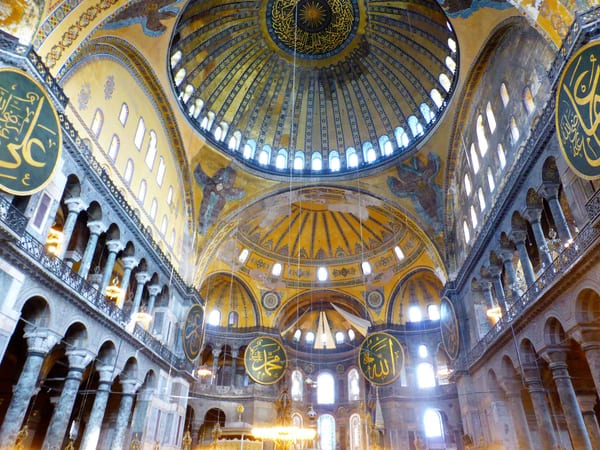
- Hagia Sophia — Photo: Kemal KOZBAEV · CC BY-SA 4.0 · Wikimedia Commons (colour corrected)


