Hippodrome
The chariot-racing ground of Byzantium and the Atmeydanı of the Ottomans: an obelisk brought from Egypt, the Serpent Column from Delphi, the Walled Obelisk, and the German Fountain.
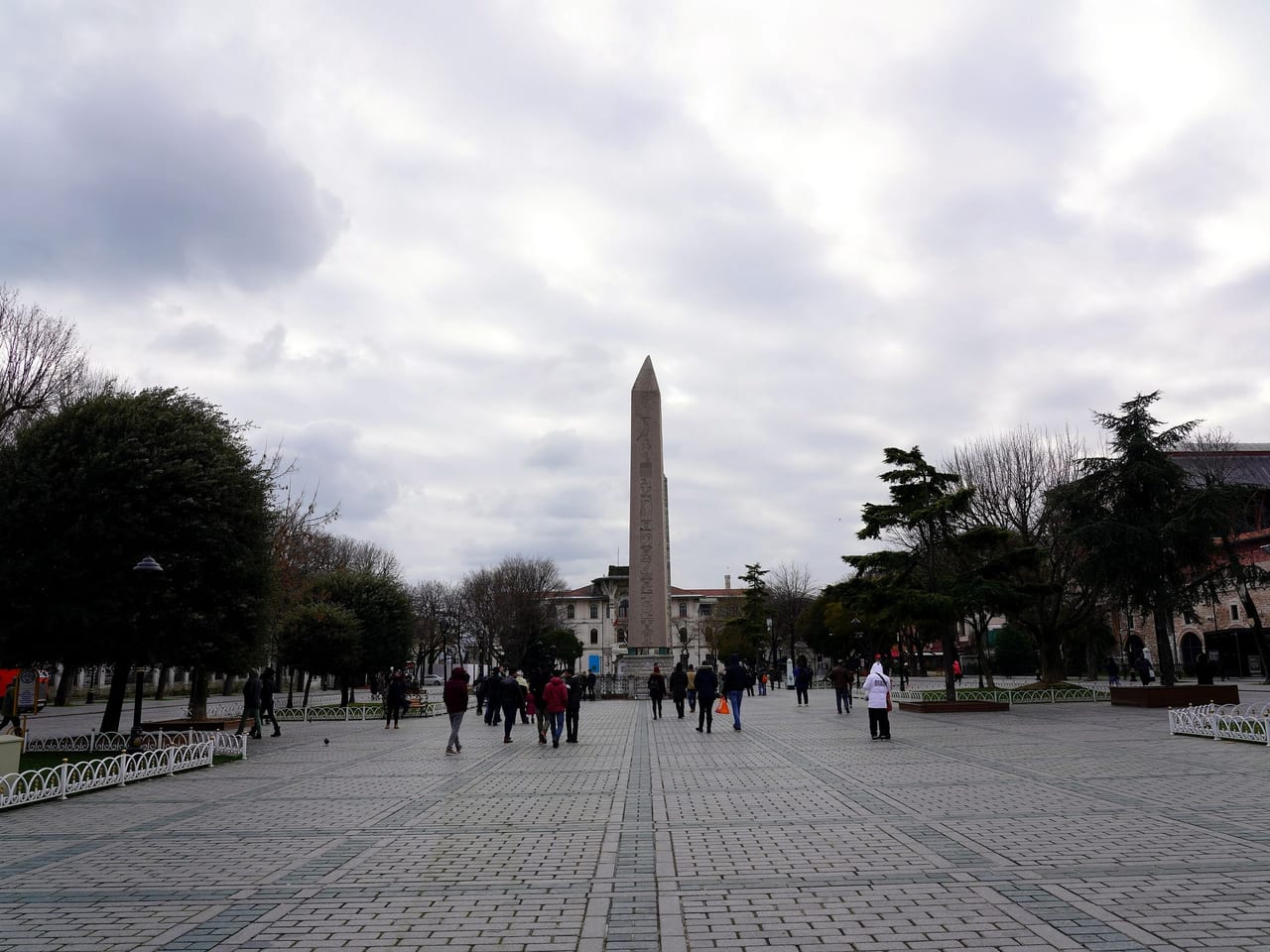
The long, narrow shape of Sultanahmet Square is no accident. Once, a racetrack stretched here, roaring with the shouts of tens of thousands of spectators.Listen to the rest in the app
From racecourse to Atmeydanı
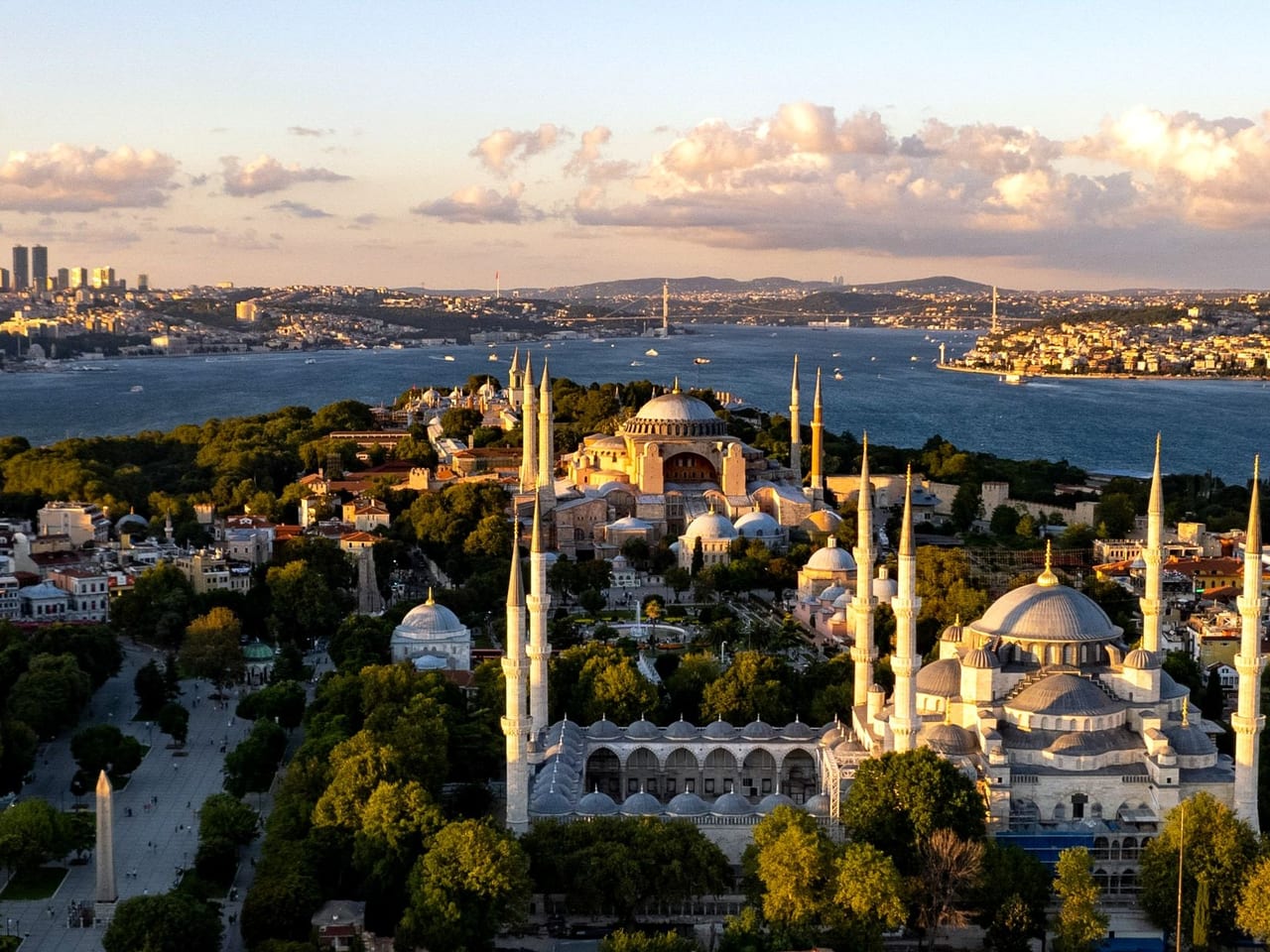
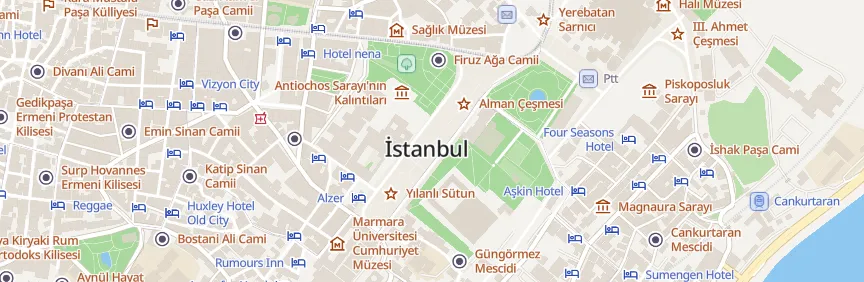
The Hippodrome was a square laid out for chariot races southwest of Hagia Sophia; its construction began under the Roman emperor Septimius Severus. Its capacity is given as either 80,000 or 100,000 spectators. In Byzantine times it hosted races, festivals, and ceremonies, and it was also where revolts broke out; a Byzantine saying held that God had Hagia Sophia, the emperor the palace, and the people the Hippodrome. After the conquest, the Ottomans called the square the Atmeydanı, and it hosted horse races, javelin games, and holiday festivities. The circumcision festivities of Prince Mehmed, son of Murad III, lasted 52 days here in 1582. Around the square rose the Firuz Ağa Mosque (1491), in the early 16th century the İbrahim Pasha Palace, the Haseki Bath (1553), and Sultanahmet Camii (the Blue Mosque). The first general exhibition opened here in 1863; an open-air rally in 1919 made the square a starting point of the national resistance. Sultanahmet Square covers the ground where the racetrack once ran; its entrance was at the large arched gates at the northern end, and the remains of the semicircular wall at the southern end (the Sphendon) still partly stand.
Monuments of the square
Down the middle of the track ran a barrier (spina) that the chariots raced around, adorned with statues and monuments; in 1204 the Crusaders looted most of them, and the four bronze horses that graced the Hippodrome were taken to Venice. Three of the barrier's monuments remain in place: the Obelisk of Theodosius brought from Egypt, the Serpent Column from Delphi, and the Walled Obelisk of stacked stone. At the entrance to the square stands the German Fountain, opened in 1901. The races were run by groups known by their colors; in time only the Blues and the Greens remained, and their rivalry spilled into the city's politics.
Practical information
- Getting there: Sultanahmet stop on the Kabataş–Bağcılar tram.
- Visit: Open square; free.
- Suggested time: 30 minutes.
Where
Inside this place
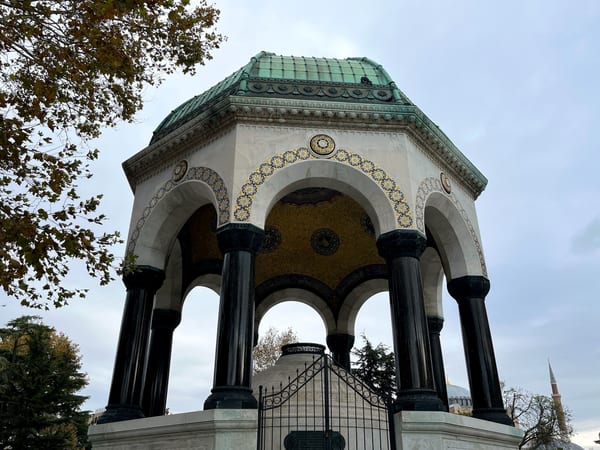 German Fountain
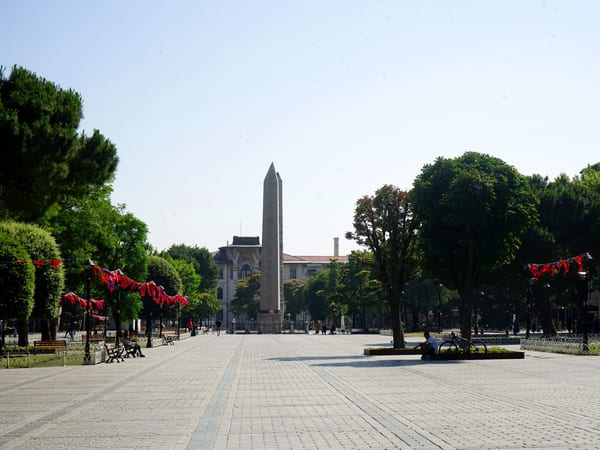 Obelisk of Theodosius
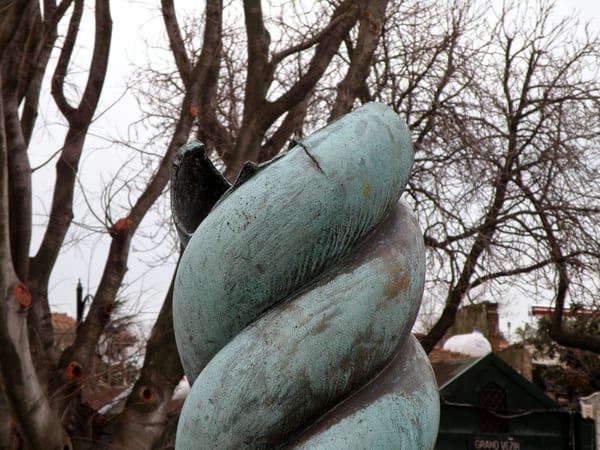 Serpent Column
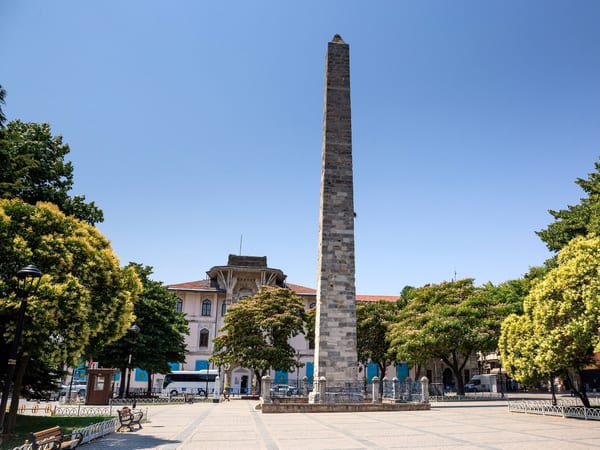 Walled Obelisk
Nearby places
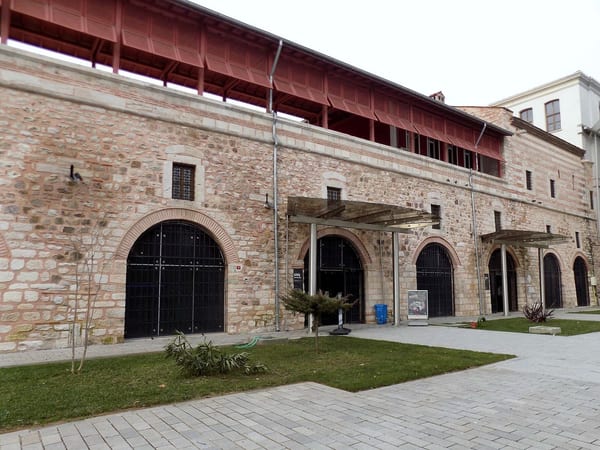 İbrahim Pasha Palace
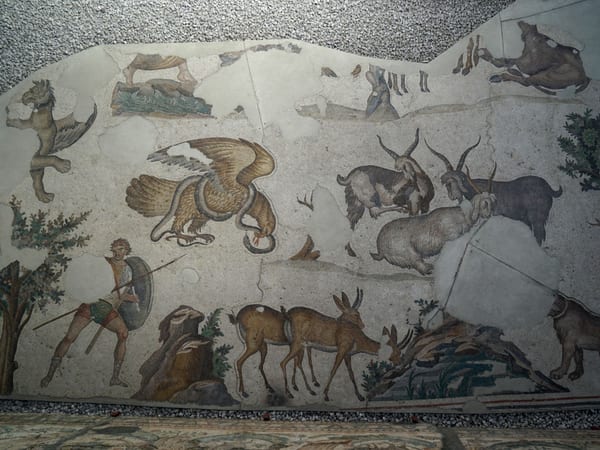 Great Palace Mosaic Museum
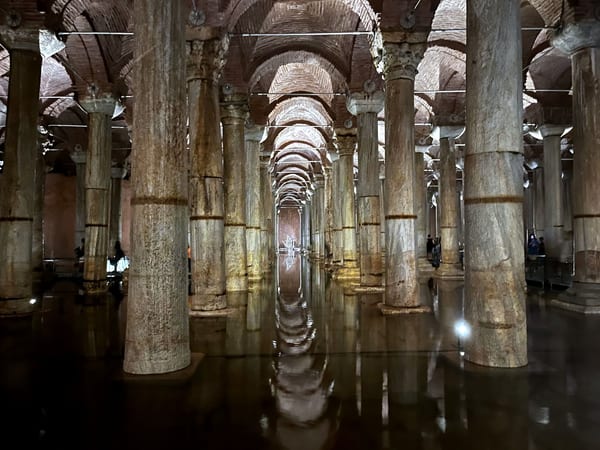 Basilica Cistern

Routes that include this place
Listen as you walk
Guide & Travel starts the story by itself when you reach the place, and it works offline too.
Photos (8)
- German Fountain — Photo: Another Believer · CC BY-SA 4.0 · Wikimedia Commons (colour corrected)
- Obelisk of Theodosius — Photo: Antonina Vyshnevska · CC BY-SA 4.0 · Wikimedia Commons (cropped)
- Serpent Column — Photo: Mikhail Malykh · CC BY 3.0 · Wikimedia Commons (colour corrected)
- Walled Obelisk — Photo: Dmityr A. Mottl · CC BY-SA 4.0 · Wikimedia Commons (edited)
- İbrahim Pasha Palace — Photo: Cobija · CC BY-SA 4.0 · Wikimedia Commons (cropped)
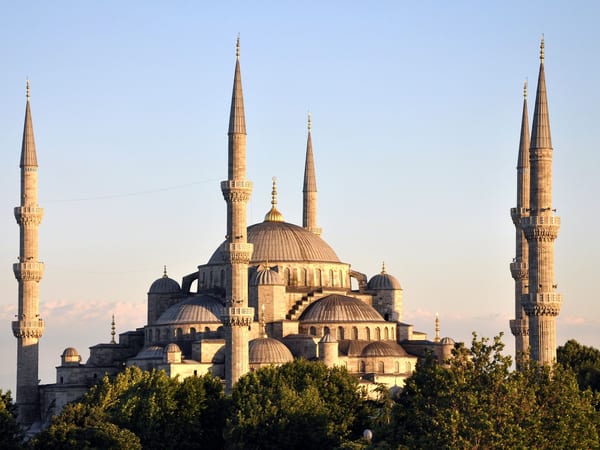
- Blue Mosque — Photo: Moonik · CC BY-SA 3.0 · Wikimedia Commons (cropped)
- Great Palace Mosaic Museum — Photo: Canercangul · CC BY-SA 4.0 · Wikimedia Commons (cropped)
- Basilica Cistern — Photo: Kurmanbek · CC BY-SA 4.0 · Wikimedia Commons (colour corrected)


