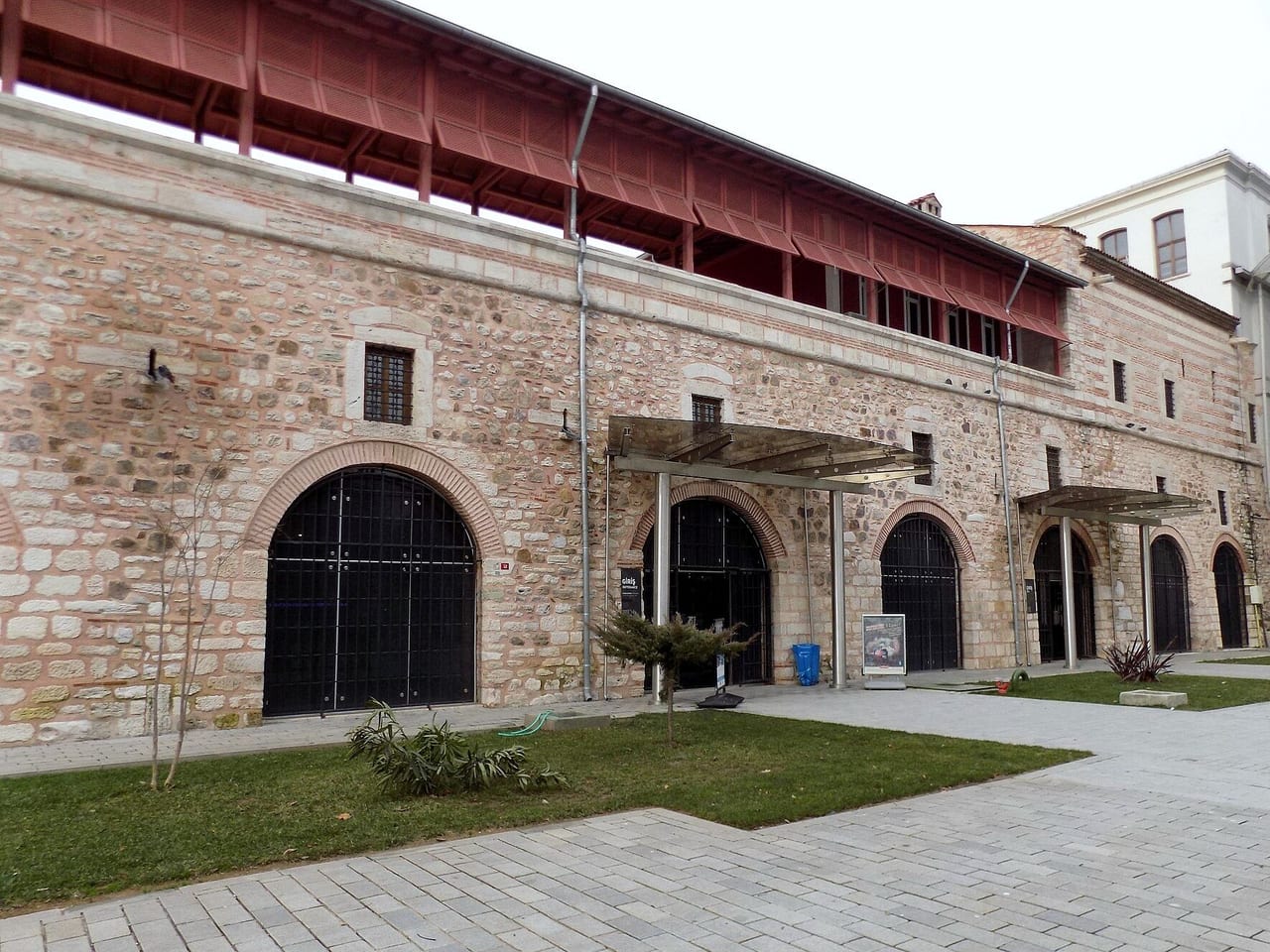
İbrahim Pasha Palace
The palace of İbrahim Pasha, grand vizier of Sultan Süleyman, on the old Hippodrome: home of the Museum of Turkish and Islamic Arts, with its carpets, manuscripts, and tiles.
This building is the palace of Makbul İbrahim Pasha, grand vizier of Sultan Süleyman. It was built in the early 16th century on the site of an earlier mansion.Listen to the rest in the app
The grand vizier's palace
The İbrahim Pasha Palace stands at the edge of the Hippodrome (Atmeydanı) in Sultanahmet. It was built in the early 16th century for Makbul İbrahim Pasha, grand vizier of Sultan Süleyman, on the site of an earlier mansion; a document describing its rooms dates from 1521. The building took shape around courtyards. Süleyman was entertained here on returning from a campaign, and İbrahim Pasha's wedding was held here in 1524. The palace was damaged in an uprising in 1525; in 1526 statues brought back from the Buda campaign were placed before it, and the circumcision festival of 1530 was watched from a nearby pavilion.
Fires and demolitions
When İbrahim Pasha was executed in 1536, his palace was confiscated and passed among statesmen and court officials. It burned in 1652 and 1741 and was not repaired after the second fire; earth dug out for the foundations of the Nuruosmaniye Mosque was dumped over its ruins. Later, parts of it served as a prison and as military ground, a land registry office went up on its site, and the fourth courtyard was pulled down in 1939 to make way for a courthouse.
The Museum of Turkish and Islamic Arts
What survives of the original building is the range around the second courtyard. After it was restored, the museum moved here in 1983; it had opened on April 27, 1914, as the Museum of Islamic Pious Foundations (Evkâf-ı İslâmiyye Müzesi) in the soup kitchen of the Süleymaniye complex, and after 1924 it took the name Museum of Turkish and Islamic Arts. It displays carpets, kilims, and prayer rugs, Seljuk carpets among them, manuscripts by noted calligraphers, woodwork such as lecterns, doors, and window shutters, and metalwork and tiles. The ethnography section shows carpet and kilim looms and methods of weaving and dyeing.
Practical information
- Getting there: In Sultanahmet, at the edge of the Hippodrome; on foot from the Sultanahmet tram stop.
- Visit: A museum; for visiting hours, closing days, and tickets, check the official website before you go.
- Suggested time: 1–1.5 hours.
Where
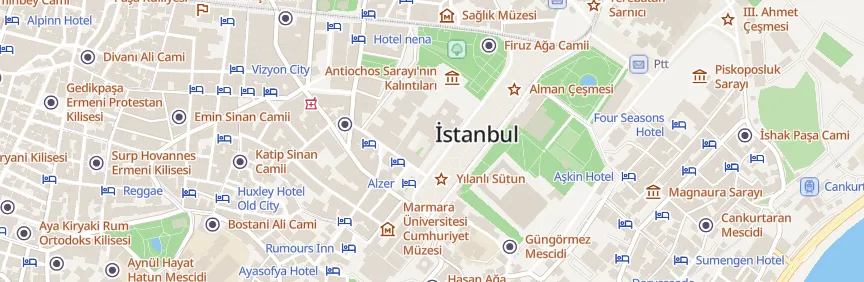
Nearby places
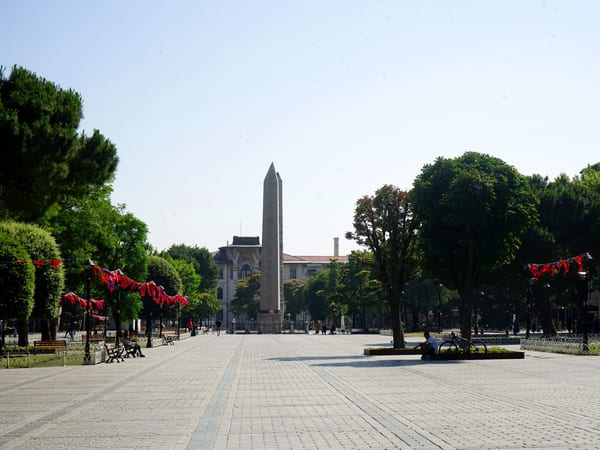 Obelisk of Theodosius
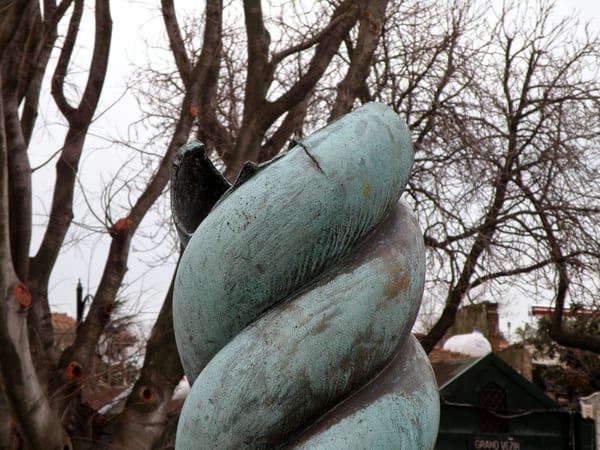 Serpent Column
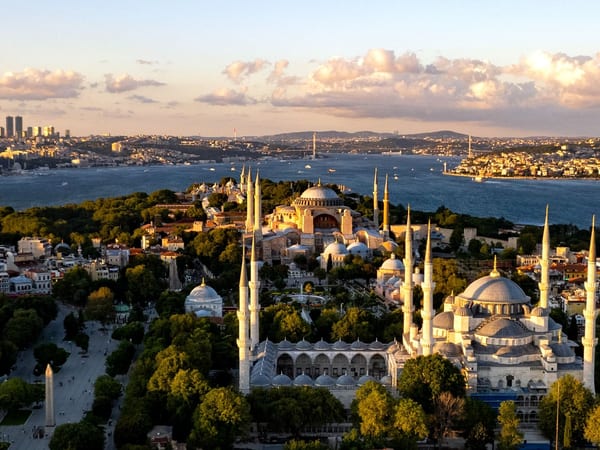 Hippodrome
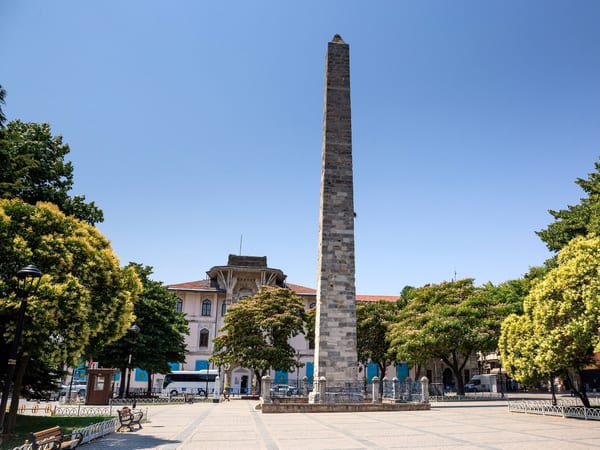 Walled Obelisk

Listen as you walk
Guide & Travel starts the story by itself when you reach the place, and it works offline too.
Photos (4)
- Obelisk of Theodosius — Photo: Antonina Vyshnevska · CC BY-SA 4.0 · Wikimedia Commons (cropped)
- Serpent Column — Photo: Mikhail Malykh · CC BY 3.0 · Wikimedia Commons (colour corrected)
- Hippodrome — Photo: Hunanuk · CC0 · Wikimedia Commons (cropped)
- Walled Obelisk — Photo: Dmityr A. Mottl · CC BY-SA 4.0 · Wikimedia Commons (edited)


