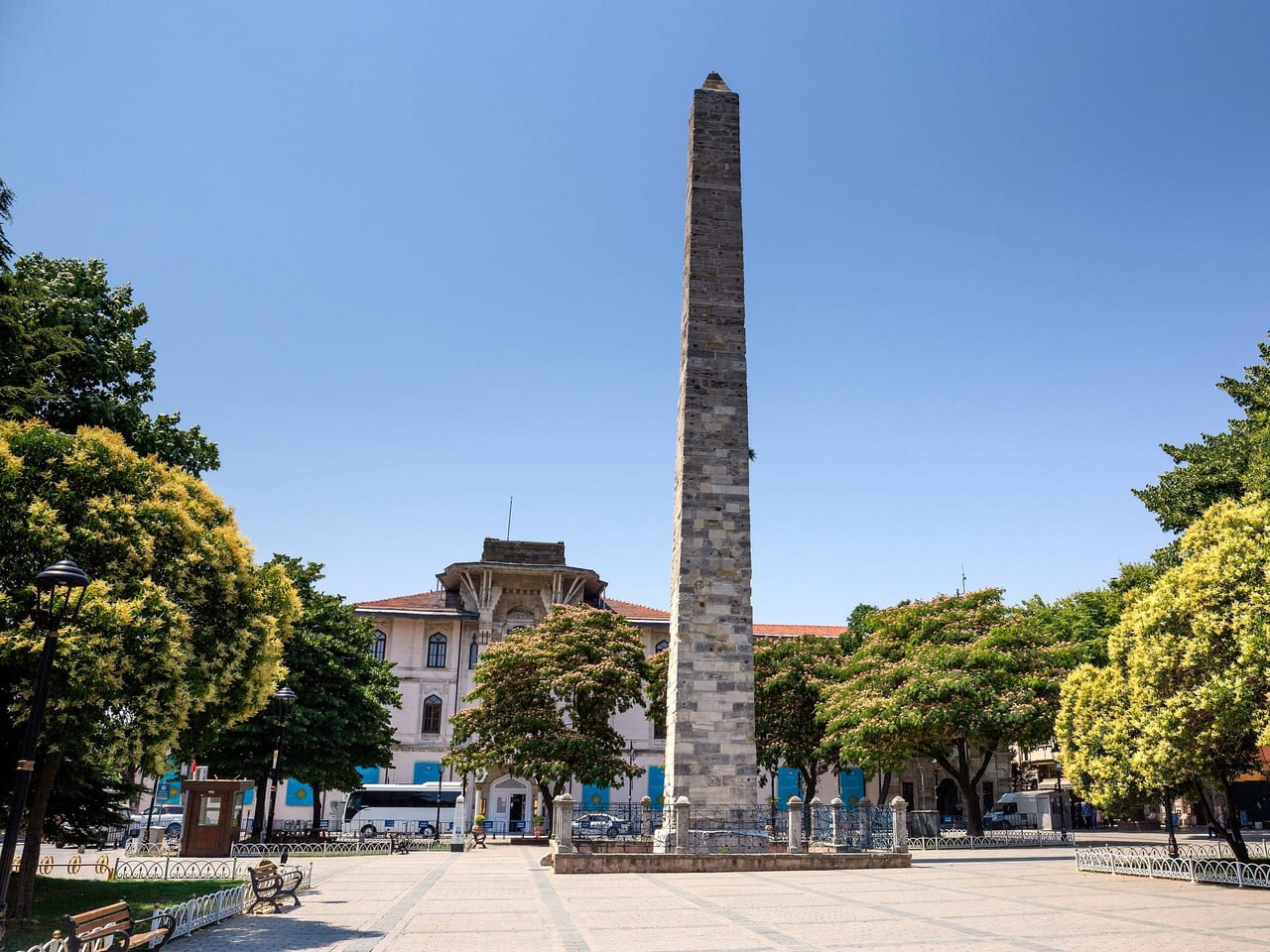
Walled Obelisk
The stone-built obelisk at the far end of the Hippodrome: once clad in bronze plates, which the Crusaders stripped away in 1204.
In 1204, the Crusader soldiers who entered the city came upon a column gleaming in the sun on this square. Its shaft was sheathed from base to tip in bronze plates.Listen to the rest in the app
The Walled Obelisk rises at the far end of the Hippodrome's central barrier, beyond the Serpent Column; it is also called the Walled Column. Unlike the single block of granite of the Obelisk of Theodosius, it was built of cut stones laid one on another. There is no firm date for its construction; it is thought to have been raised in the 4th century, under Constantine or Theodosius. The inscription on its base records that it was restored in the 10th century under Emperor Constantine VII. In that restoration its shaft was clad in bronze plates, turning it into a column that gleamed in the sun. In 1204, soldiers of the Fourth Crusade, who had taken the city, stripped the plates and carried them off. Today only the stone shaft remains. Constantine VII, who ordered the restoration, is known by the epithet Porphyrogenitus, and the monument is attributed to him and also known by his name. Its workmanship is rougher than that of the Obelisk of Theodosius. It is the southernmost of the barrier's monuments. Beyond it lies the Hippodrome's southern wall, the Sphendone.
Practical information
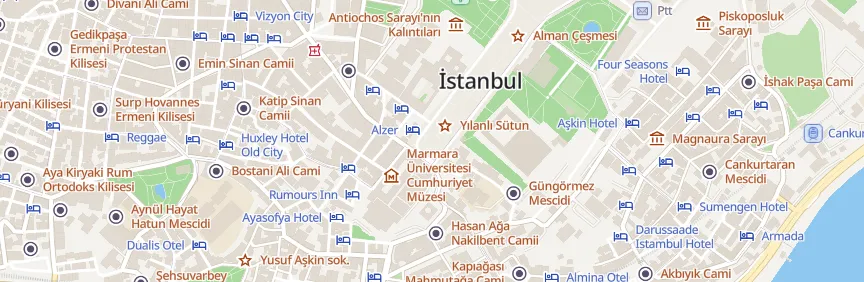
- Getting there: At the southern end of Sultanahmet Square.
- Visit: A monument in an open square, seen from outside.
- Suggested time: 5 minutes.
Where
Nearby places
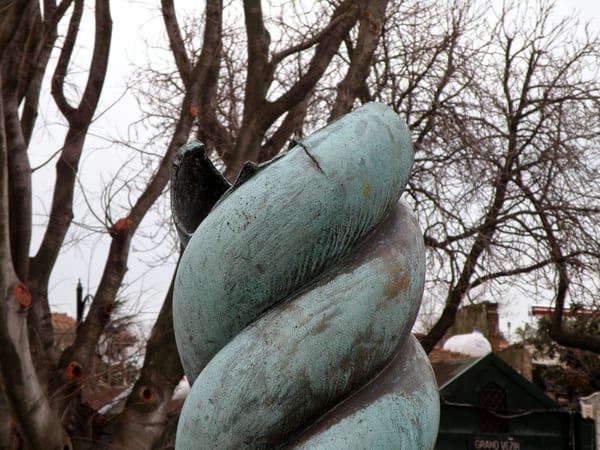 Serpent Column
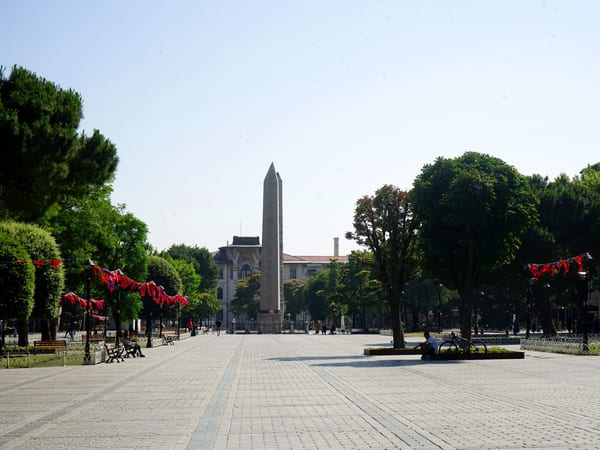 Obelisk of Theodosius
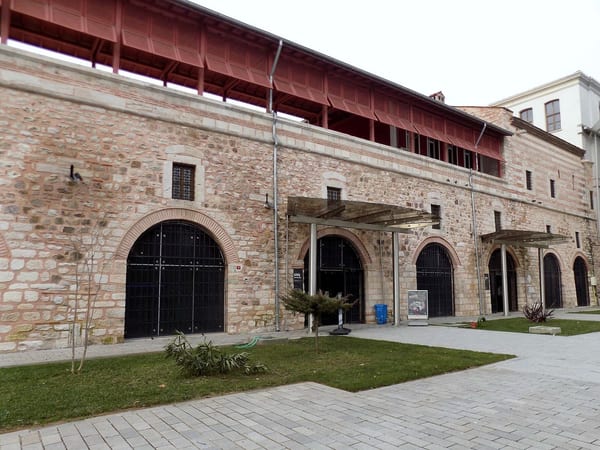 İbrahim Pasha Palace

Routes that include this place
Listen as you walk
Guide & Travel starts the story by itself when you reach the place, and it works offline too.
Photos (4)
- Serpent Column — Photo: Mikhail Malykh · CC BY 3.0 · Wikimedia Commons (colour corrected)
- Obelisk of Theodosius — Photo: Antonina Vyshnevska · CC BY-SA 4.0 · Wikimedia Commons (cropped)
- İbrahim Pasha Palace — Photo: Cobija · CC BY-SA 4.0 · Wikimedia Commons (cropped)
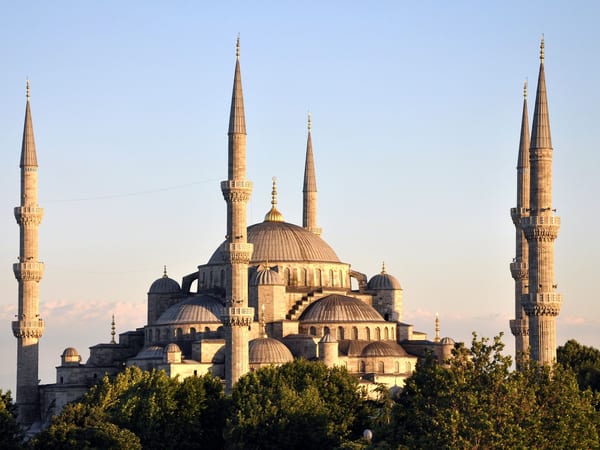
- Blue Mosque — Photo: Moonik · CC BY-SA 3.0 · Wikimedia Commons (cropped)


