Blue Mosque
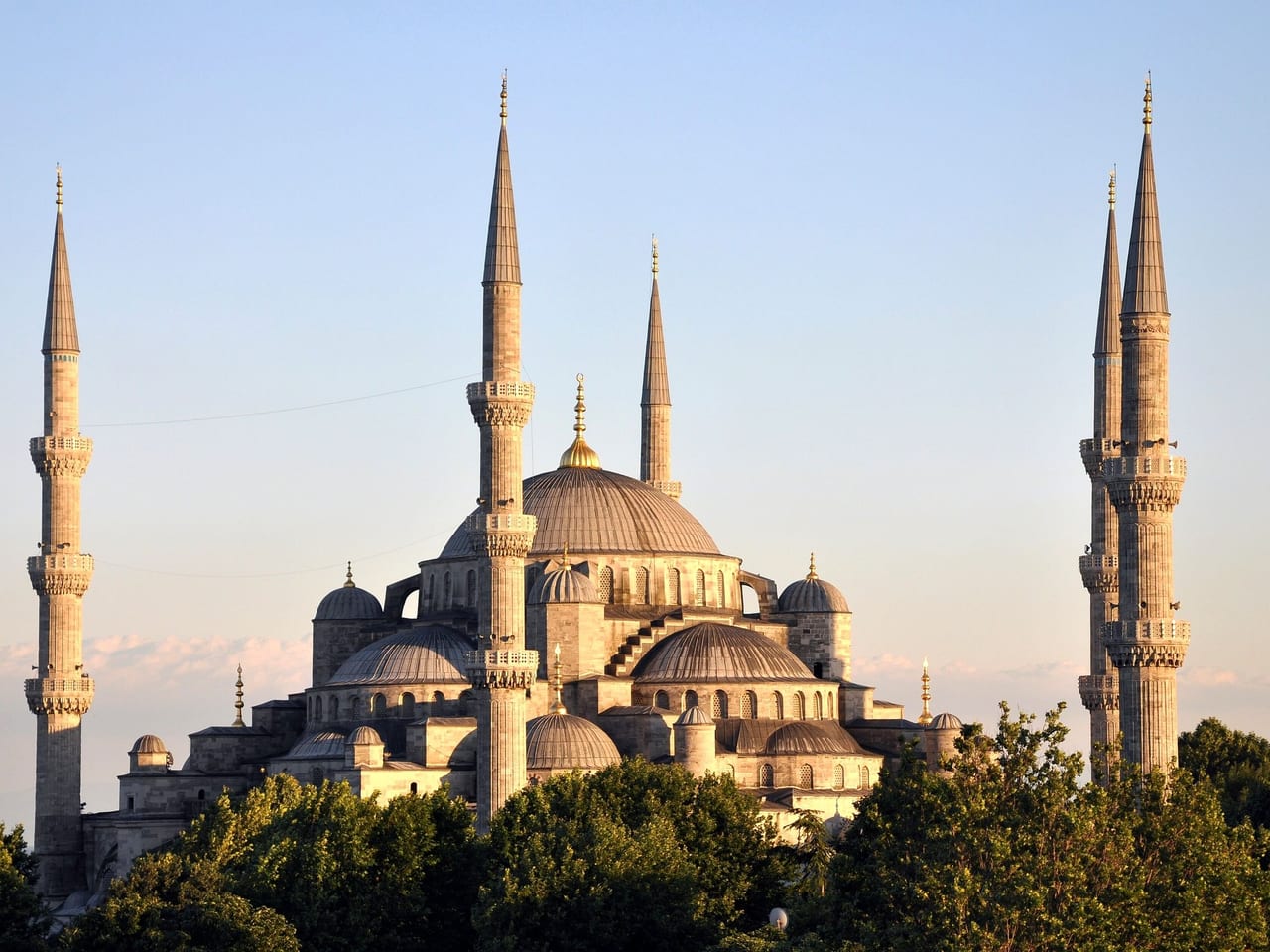
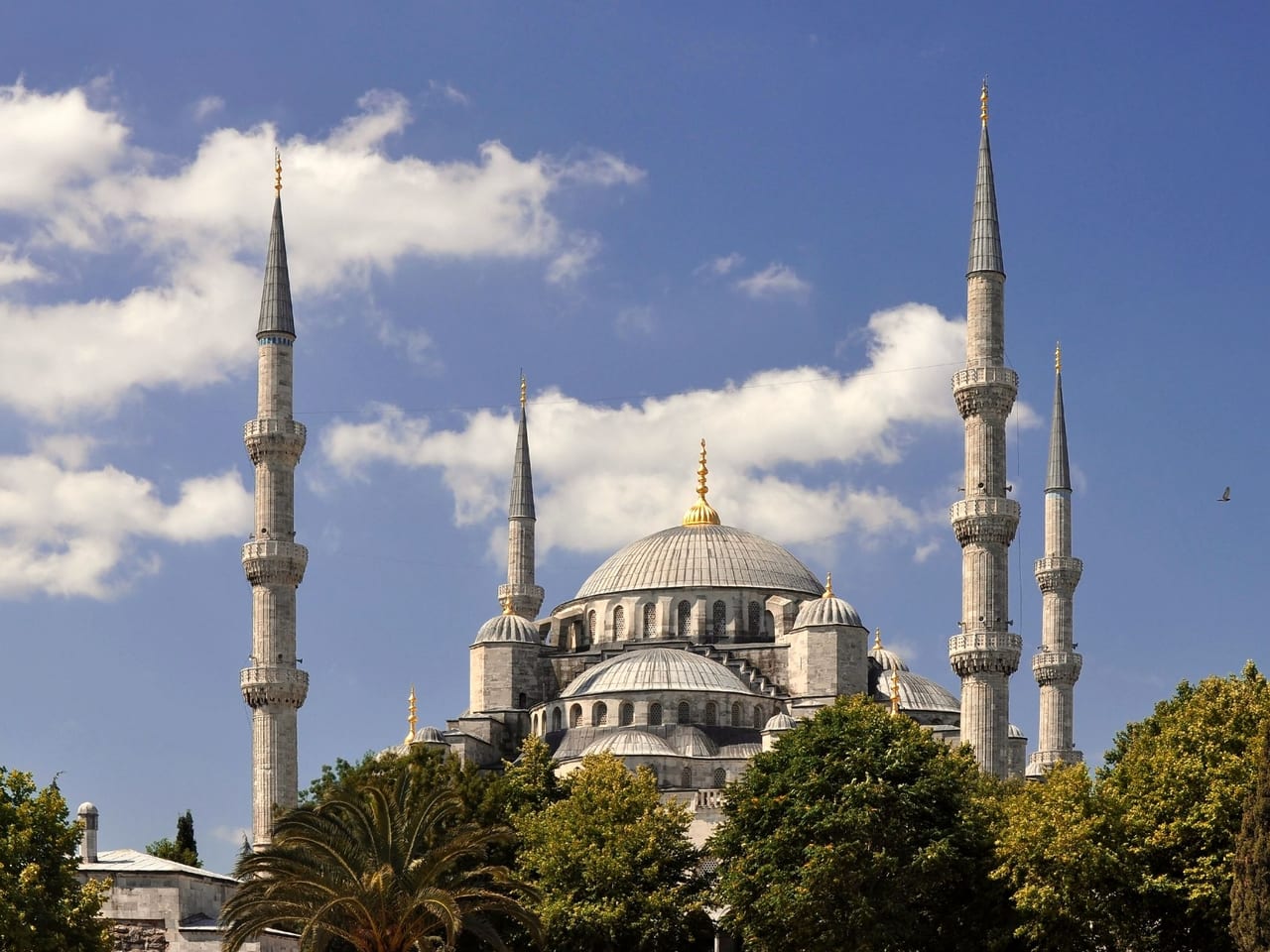
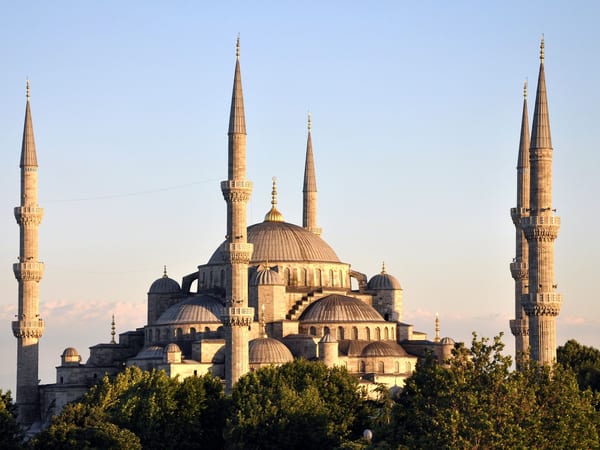
The six-minaret mosque Sultan Ahmed I built beside the Atmeydanı: the work of Sedefkâr Mehmed Ağa, known as the Blue Mosque for its more than 21,000 İznik and Kütahya tiles.
The domes of this mosque rise like a wave climbing toward the sky, each one resting on the shoulder of the next. Around them, six slender minarets stand like sentinels waiting for that wave.Listen to the rest in the app
A complex beside the Atmeydanı
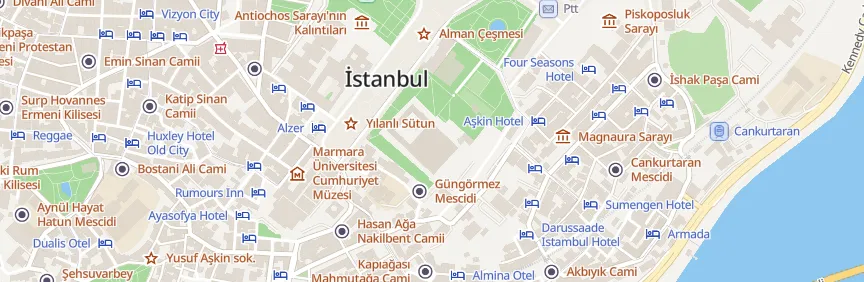
Sultanahmet Camii (the Blue Mosque) faces Hagia Sophia, on the edge of the Atmeydanı, the old Hippodrome. The complex, built for Sultan Ahmed I, was designed by the chief architect of the day, Sedefkâr Mehmed Ağa, one of the architects trained by Mimar Sinan. Construction began in 1609; the mosque opened for worship in 1616 and was completed in 1617, while the other buildings of the complex went on until 1620. The centrally planned mosque, with its arcaded courtyard, covers an area of about 64 by 72 meters; the large outer courtyard has three gates each on the north and east and two each on the west and south. Four great piers carry the main dome, with half-domes on all four sides. The main dome is 43 meters high.
Six minarets and tiles
The mosque has six minarets: the four at the corners of the prayer hall have three balconies each, and the two at the corners of the courtyard have two each, for 16 balconies in all. Inside, more than 21,000 tiles from the workshops of İznik and Kütahya appear in over 50 compositions; their deep blue gives the building its name, the Blue Mosque. The walls have six rows of windows; the painted decoration, plastered over in 1883, was uncovered again after 1976. The mihrab is of carved marble with muqarnas, and the minbar of gilded marble. The complex includes a madrasa, a primary school, a Quran school, a tomb, an arasta, a bath, a hospital, and a public kitchen; the hospital and kitchen were built on the curved wall of the Hippodrome, and five of the eight sebils, or public drinking fountains, survive today. The tomb of Sultan Ahmed I holds 36 cenotaphs, including those of his wife Kösem Sultan, Osman II, and Murad IV. The two-story royal pavilion at the mosque's southeast corner was ruined in the fire of 1912 and later restored. The mosque lies within the Sultanahmet section of the UNESCO World Heritage area.
Practical information
- Getting there: Sultanahmet stop on the Kabataş–Bağcılar tram.
- Suggested time: 45 minutes.
[bilgi: An active mosque; visits are restricted during prayer times, especially Friday noon prayers. For the dress code and visitor entrance, check the official website before you go.]
Where
Nearby places
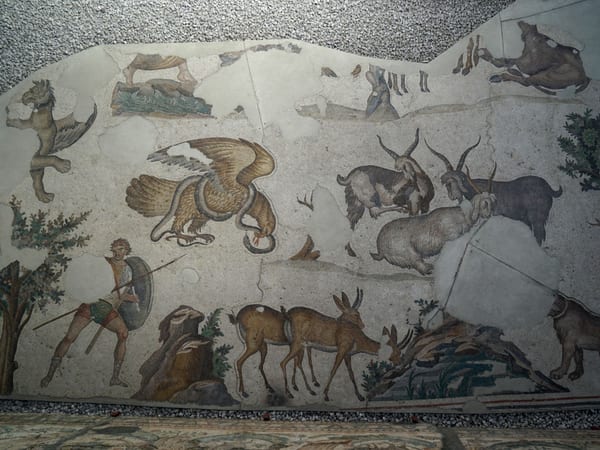 Great Palace Mosaic Museum
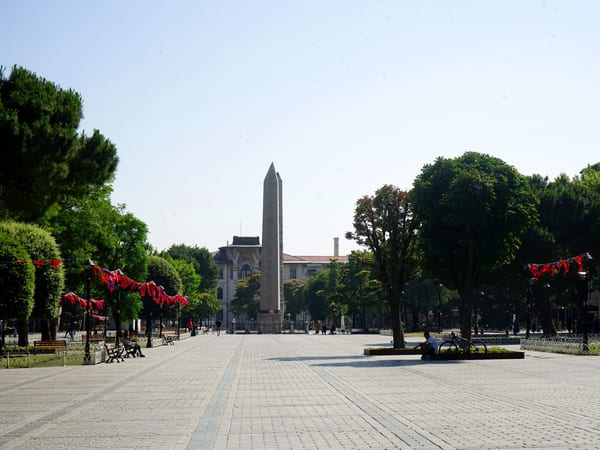 Obelisk of Theodosius
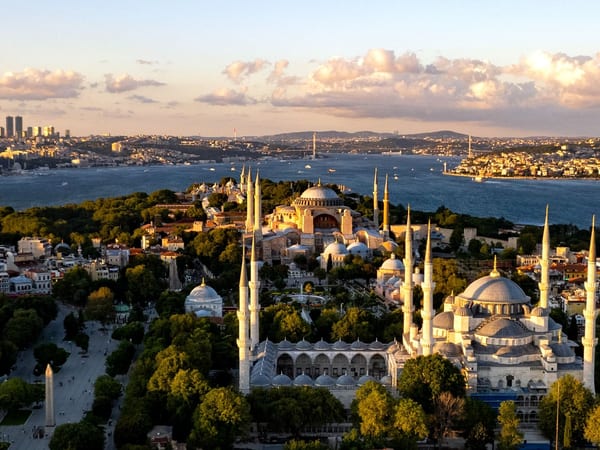 Hippodrome
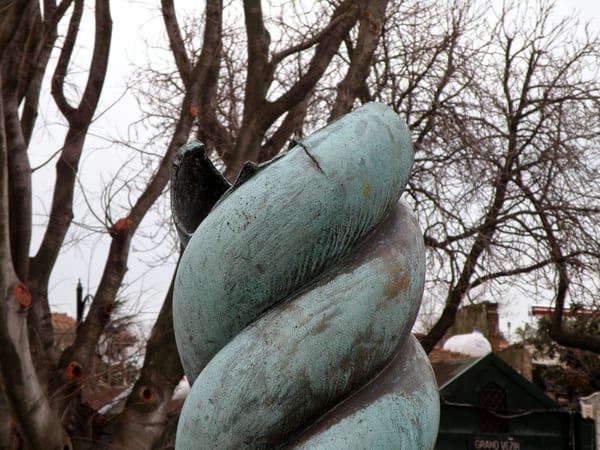 Serpent Column

Routes that include this place
Listen as you walk
Guide & Travel starts the story by itself when you reach the place, and it works offline too.
Photos (6)
- Great Palace Mosaic Museum — Photo: Canercangul · CC BY-SA 4.0 · Wikimedia Commons (cropped)
- Obelisk of Theodosius — Photo: Antonina Vyshnevska · CC BY-SA 4.0 · Wikimedia Commons (cropped)
- Hippodrome — Photo: Hunanuk · CC0 · Wikimedia Commons (cropped)
- Serpent Column — Photo: Mikhail Malykh · CC BY 3.0 · Wikimedia Commons (colour corrected)
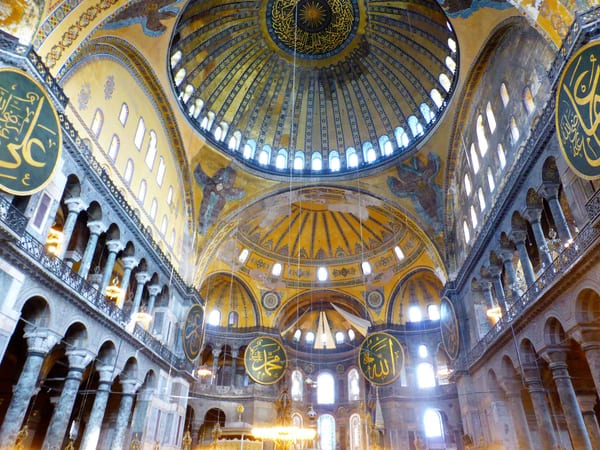
- Hagia Sophia — Photo: Kemal KOZBAEV · CC BY-SA 4.0 · Wikimedia Commons (colour corrected)
- Blue Mosque — Photo: Moonik · CC BY-SA 3.0 · Wikimedia Commons (cropped)


