Çandarlı Castle
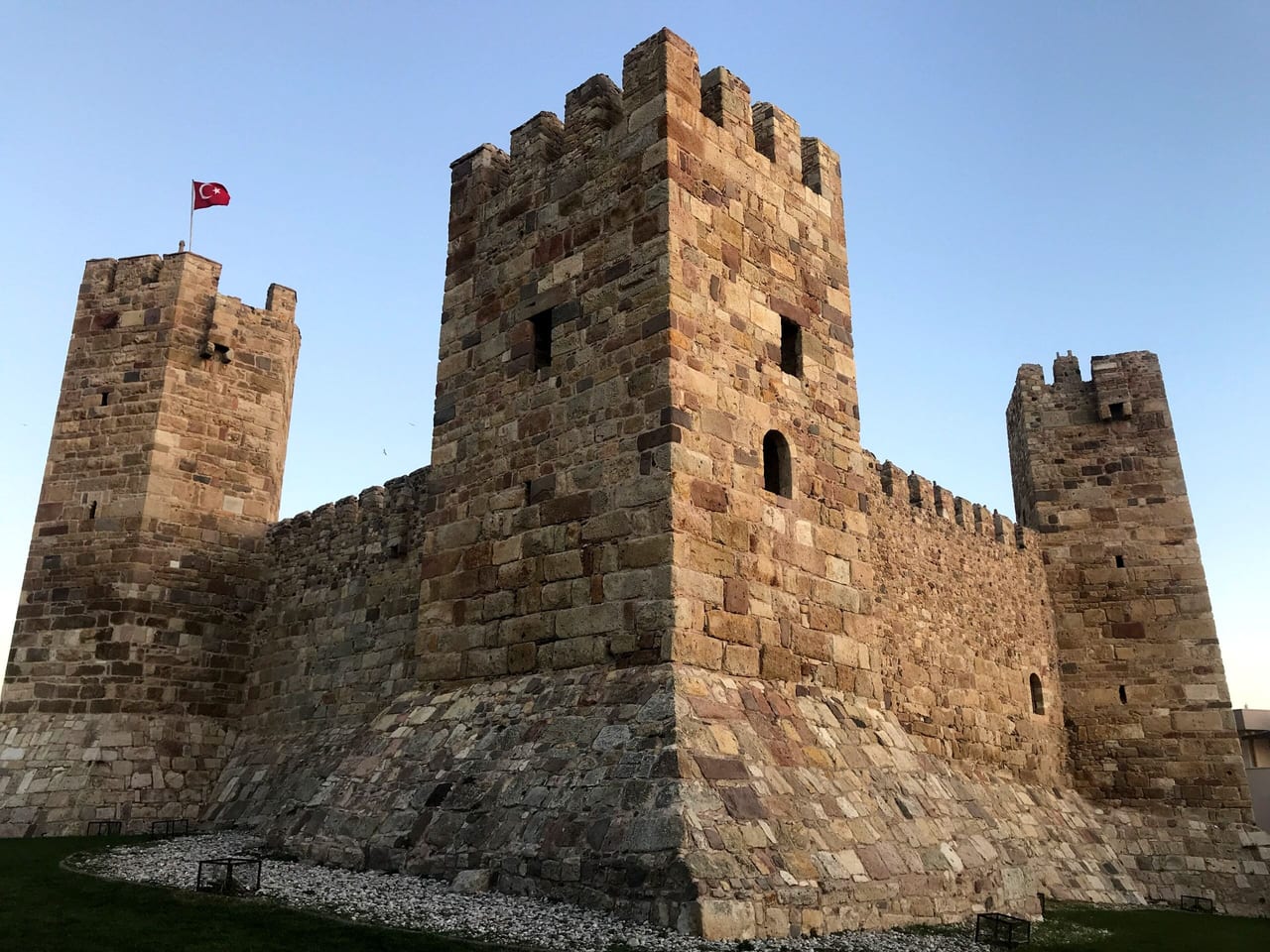
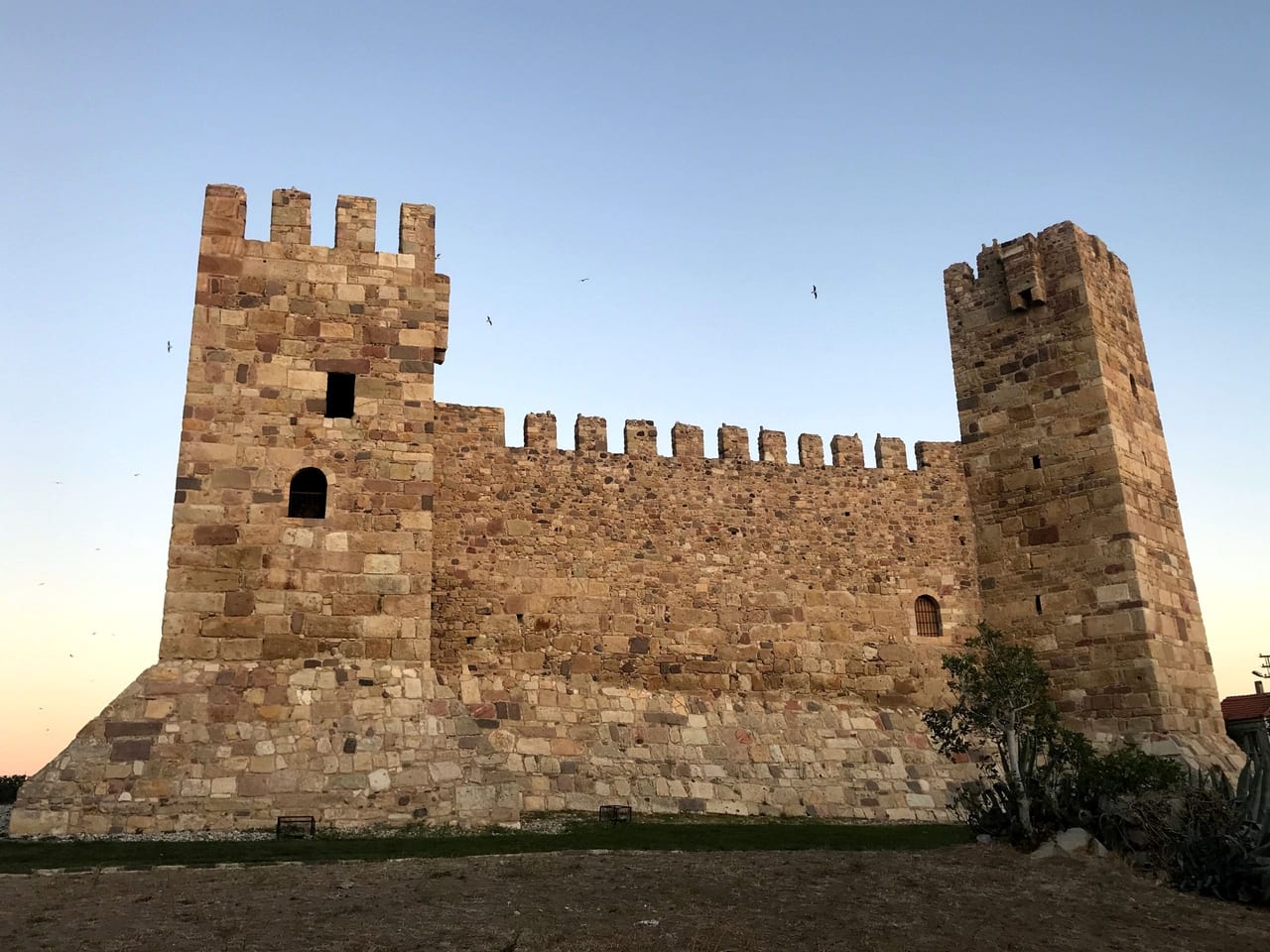
A five-towered coastal castle where the Çandarlı peninsula meets the mainland in Dikili: built by the Genoese on the land of ancient Pitane and repaired by the Ottomans.
The year is the 1st century BC. Mithridates VI, king of Pontus, has been defeated by the Roman army under Sulla.Listen to the rest in the app
The peninsula of Pitane
Çandarlı Castle rises in the Çandarlı settlement of Dikili, where the peninsula joins the mainland, on ground created by terracing the natural rock. The peninsula and its surroundings are the site of Pitane, one of the 12 Aeolian cities. Pitane, whose name means "rich in water," had two natural harbors, to the east and to the west, and minted its own coins from the 5th century BC. In the 1st century BC, Mithridates VI, king of Pontus, defeated by the Roman army under Sulla, took refuge in Pitane and, when it was besieged, escaped from here by sea.
From the Genoese to the Ottomans
The castle was built by the Genoese in the 14th century. Nearly rectangular in plan and with five towers, it was built of large cut stones, with mostly rubble stone used in the upper parts of the walls. In the 15th century the Ottomans repaired the castle; the repair was commissioned by the grand vizier Çandarlı Halil Pasha. A round-arched gate leads into an entrance space, and a second gate from there into the castle itself. The castle was restored to its original form in 1955.
A city under the ground
Few remains of ancient Pitane have survived: parts of the city wall near the western harbor and a few steps of a building on the eastern side of the peninsula. Building that began with the settlement of immigrants in the 1950s largely destroyed the ancient city. Test excavations have found mostly Roman-period walls, and fragments of a type of pottery common in the eastern Mediterranean in the 2nd to 4th centuries AD are plentiful on the peninsula. In 1958–1959 Ekrem Akurgal's excavations uncovered an Archaic cemetery in the marshy area north of the settlement. Some of the finds from Pitane are displayed in the Bergama Museum.
Practical information
- Location: Çandarlı, Dikili; where the peninsula joins the mainland.
- Suggested time: 30–45 minutes.
- Status: access restricted.
[bilgi: No official visiting hours are published; the castle can be seen from outside.]
Where

Nearby places
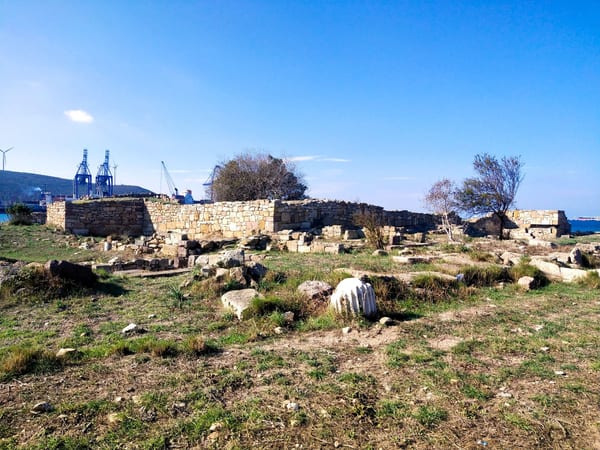 Kyme Ancient City
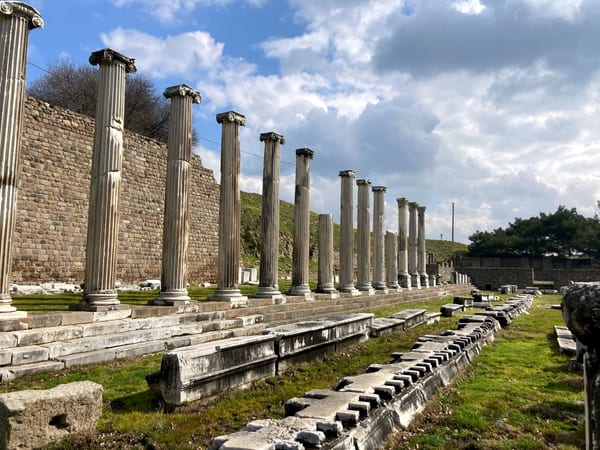 Asklepion
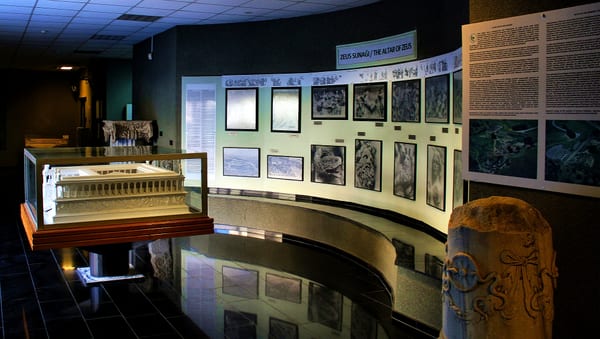 Bergama Museum
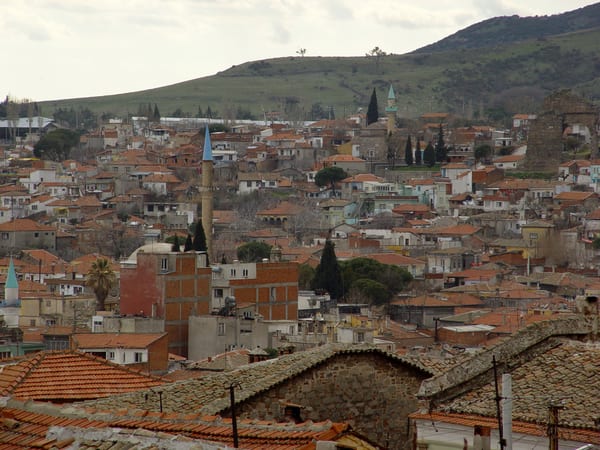 Bergama Historic Center

Listen as you walk
Guide & Travel starts the story by itself when you reach the place, and it works offline too.
Photos (4)
- Kyme Ancient City — Photo: Ollios · CC BY-SA 4.0 · Wikimedia Commons (colour corrected)
- Asklepion — Photo: Ayratayrat · CC BY-SA 4.0 · Wikimedia Commons (colour corrected)
- Bergama Museum — Photo: Fatih Renkligil · CC BY-SA 4.0 · Wikimedia Commons (colour corrected)
- Bergama Historic Center — Photo: Dosseman · CC BY-SA 4.0 · Wikimedia Commons (colour corrected)


