Bergama Museum
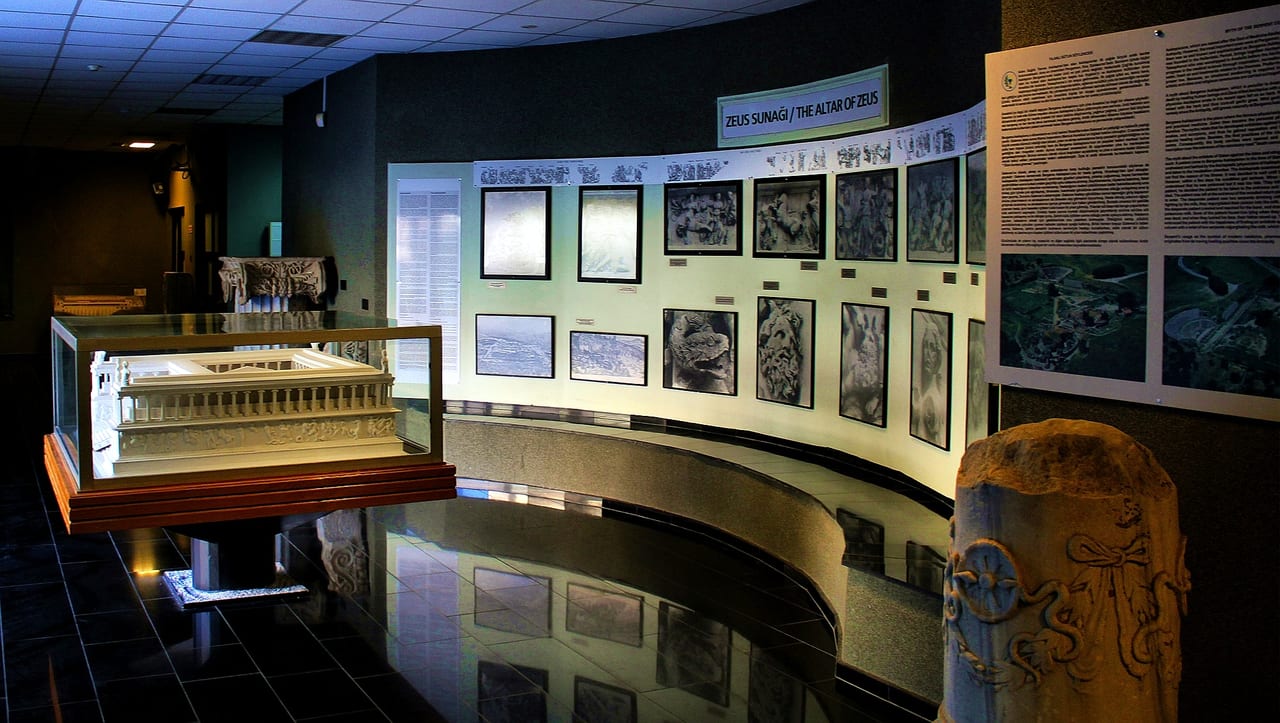
A museum opened in 1936 in a building inspired by the plan of the Altar of Zeus: finds from Pergamon and its surroundings, Bergama carpets and regional costumes.
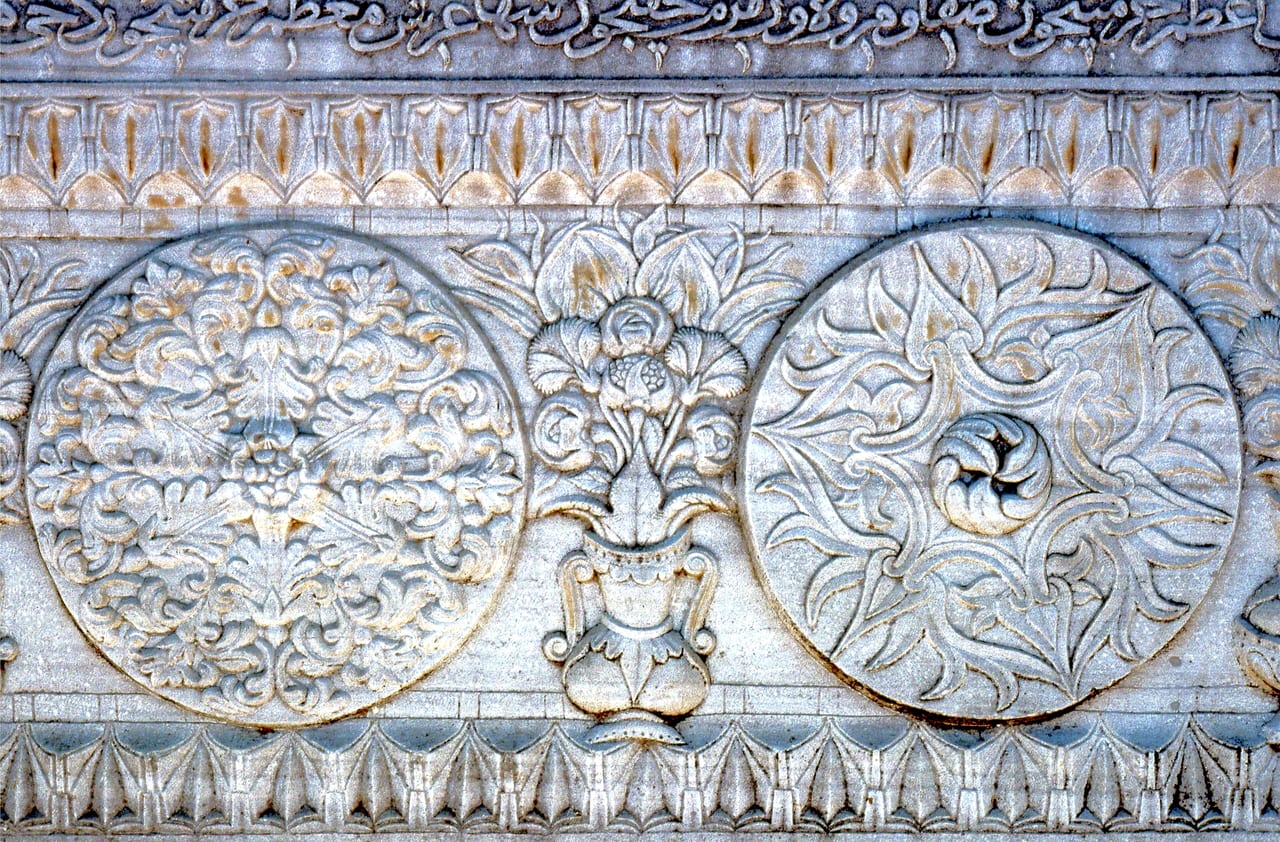
The huge marble jar that once graced the pool of a Bergama bath now stands in Paris, in the Louvre, but its lid is here, in this museum.Listen to the rest in the app
From a dig house to a museum
After the excavations of Humann and Conze on the acropolis in 1878–1886, a small storage museum was set up in the garden of the dig house to protect the finds. In 1900–1913, as the excavations of Dörpfeld, Hepding and Schazmann continued on the acropolis and digging began at the Asklepion, the finds outgrew the building. In 1924 part of the collection moved to a building in the town center that later served as the People's House; Osman Bayatlı, who took charge of the museum in 1928, added the region's ethnographic objects to the collection. In 1932 Marshal Fevzi Çakmak, visiting Bergama, ordered a new museum to be built. Designed by the architects Bruno Meyer and Harold Hanson after the plan of the Altar of Zeus, and begun on the site of an old cemetery in 1933, the museum opened to visitors on October 30, 1936.
From the Bronze Age to the Ottomans
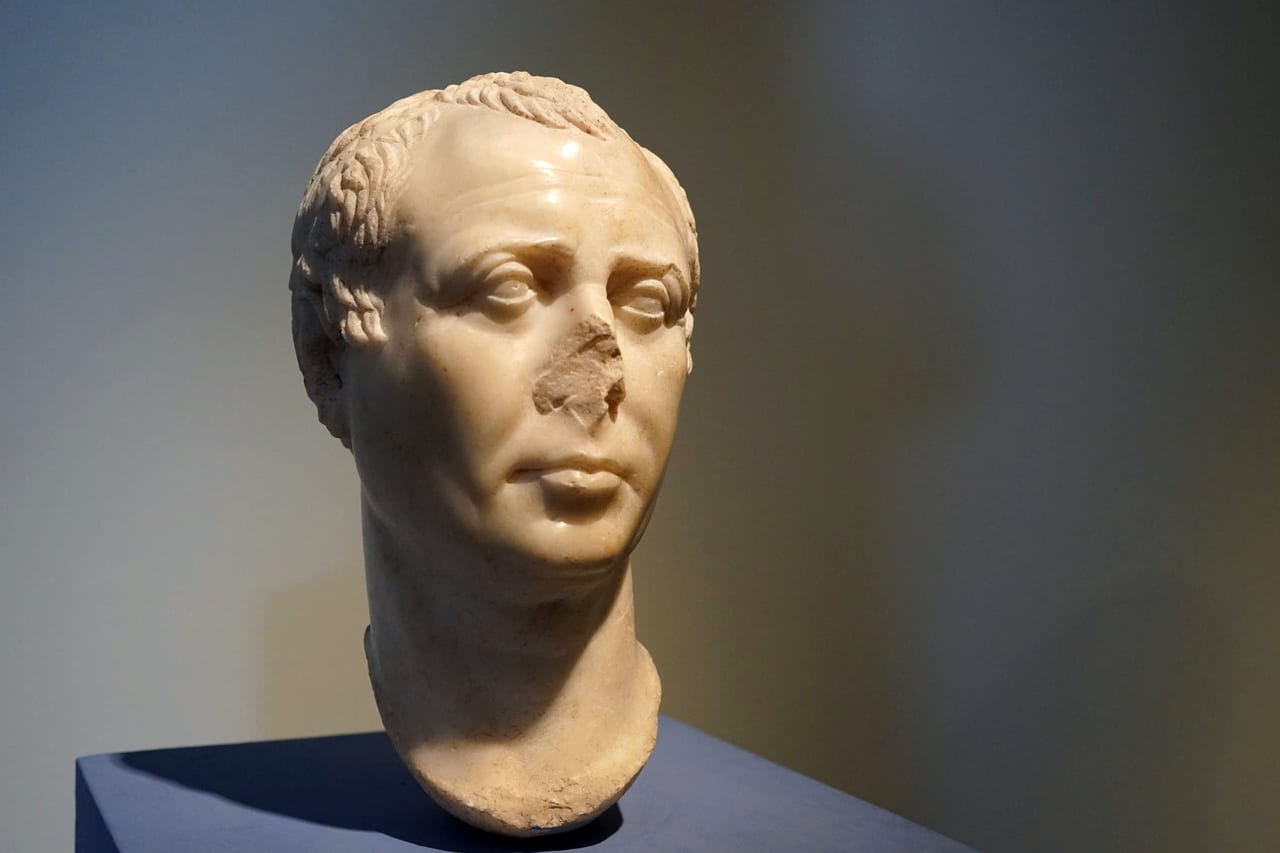
Most of the archaeological pieces come from the excavations on the acropolis, at the Asklepion, at Kızıl Avlu (the Red Basilica) and at the Musalla Cemetery; finds from nearby cities such as Pitane (Çandarlı), Myrina and Gryneion and from the rescue excavations at the Kestel and Yortanlı dams are also on display. The exhibition runs from the Bronze Age to the end of the Ottoman period: Yortanlı vessels and beak-spouted jugs represent the Bronze Age, while Megarian bowls, appliqué pottery, Pergamene sigillata, oil lamps and the cistophoric coins first struck in Bergama represent the ancient city's own production. The ethnography section tells of everyday life in Bergama, one of Anatolia's major carpet-making centers: costumes of the Yörük, Turkmen and Çepni tribes, Bergama bridal dresses, carpets and kilims from Yuntdağı, Kozak and Yağcıbedir, and the clothes worn by Tuzcu Efe in the War of Independence.
Practical information
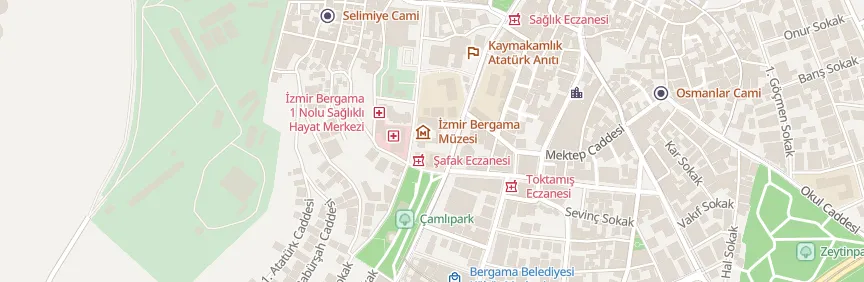
- Getting there: central Bergama, Zafer Mahallesi, Cumhuriyet Caddesi No: 10.
- Admission: For current prices and MüzeKart validity, see the official website.
- Opening hours: daily 08:30–17:30; ticket office closes at 17:00. Hours vary by season; check the official website for current times.
- Suggested time: 1–1.5 hours.
- Status: open.
Where
Nearby places
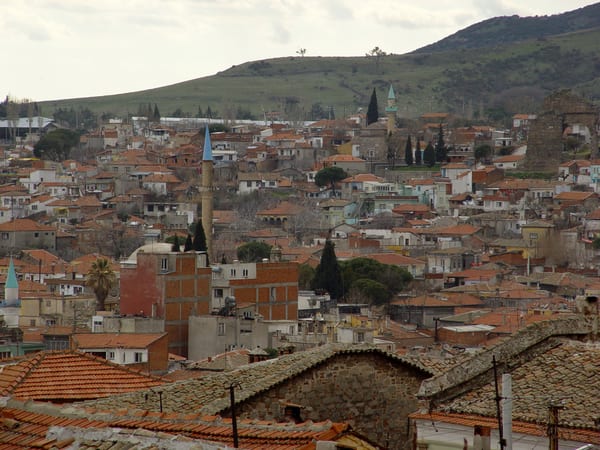 Bergama Historic Center
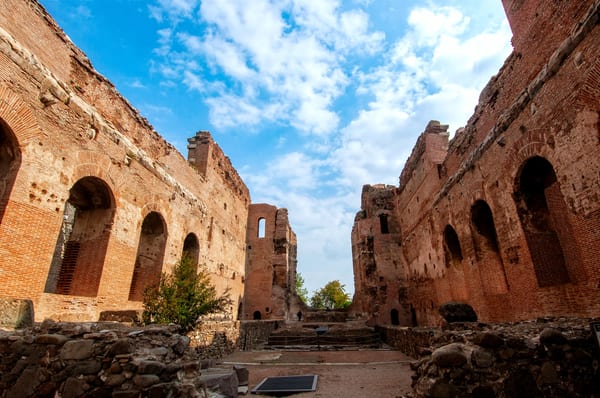 Red Basilica
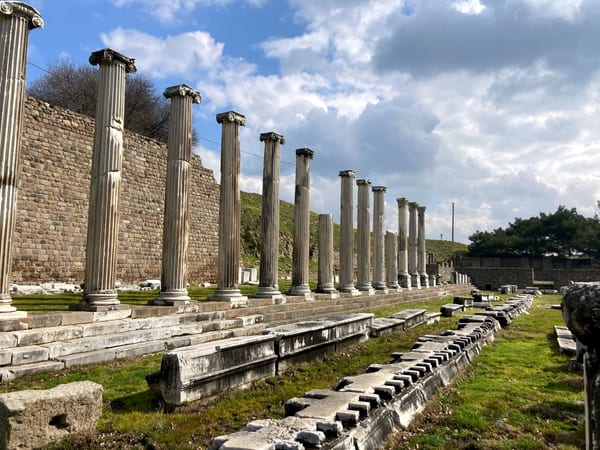 Asklepion
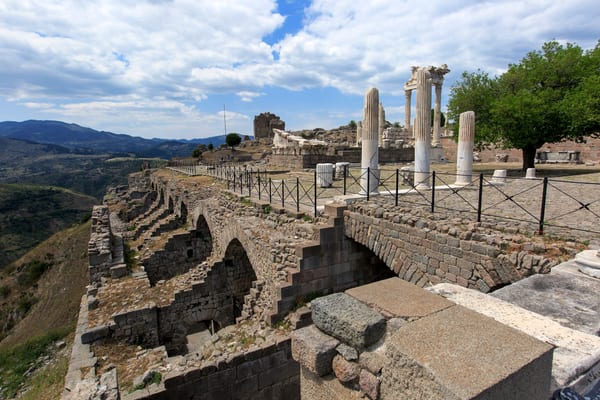 Pergamon Acropolis

Listen as you walk
Guide & Travel starts the story by itself when you reach the place, and it works offline too.
Photos (4)
- Bergama Historic Center — Photo: Dosseman · CC BY-SA 4.0 · Wikimedia Commons (colour corrected)
- Red Basilica — Photo: Arif miletli · CC BY-SA 4.0 · Wikimedia Commons (colour corrected)
- Asklepion — Photo: Ayratayrat · CC BY-SA 4.0 · Wikimedia Commons (colour corrected)
- Pergamon Acropolis — Photo: Marmaracalypso · CC BY-SA 4.0 · Wikimedia Commons (colour corrected)


