Kadifekale
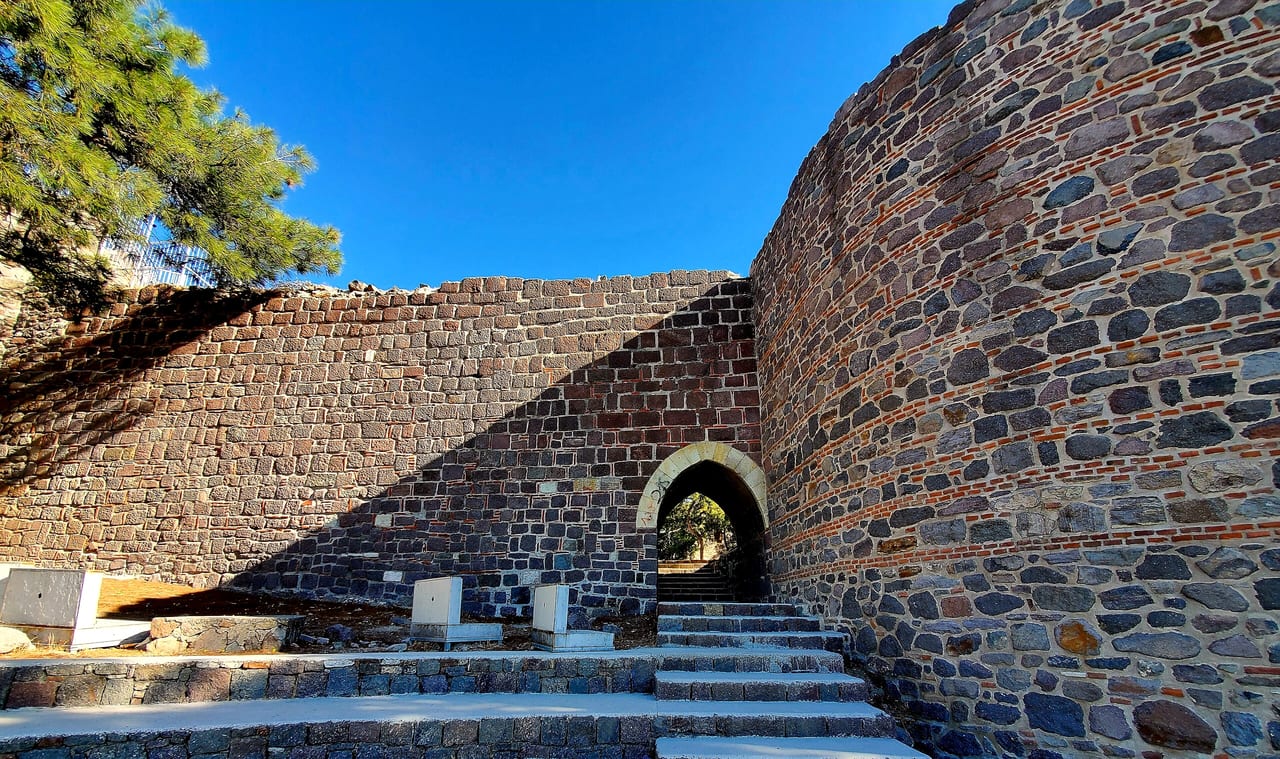
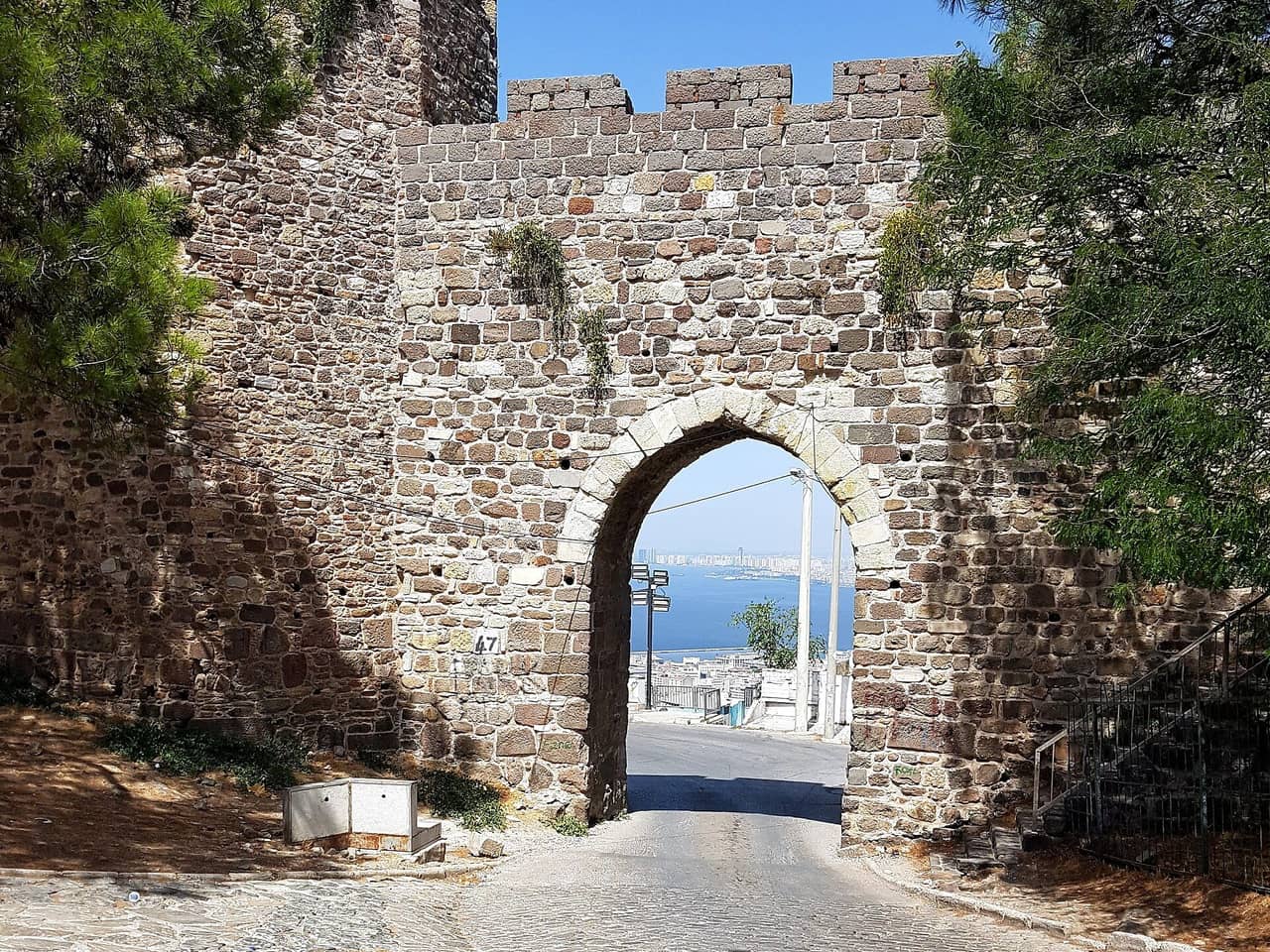
The castle on Mount Pagos, acropolis of ancient Smyrna, offers a view over the Gulf of İzmir and the whole city.
Legend says that one day Alexander the Great, after hunting on this hill, fell asleep in the shade of a great plane tree in front of the sanctuary of Nemesis.Listen to the rest in the app
A city born of a dream
According to the legend also told by the ancient writer Pausanias, Alexander the Great, after hunting on Mount Pagos, then covered in forest, fell asleep under a plane tree in front of a sanctuary. In a dream, nymphs told him to found a new city here. The people of Smyrna consulted the oracle of Apollo at Klaros, which said that those who settled at the foot of Pagos would be many times happier than before. Behind the legend lay the political and economic needs of the time: the new city was founded by the Macedonian kings Antigonus and Lysimachus, and the Smyrnaeans, scattered in small villages around the Meles stream since the Lydian invasion, came together again.
The city's most sacred place
Pagos was both Smyrna's safest refuge and its most sacred spot. Excavations begun in 2009 uncovered a Hellenistic tower with a rectangular plan and a section of wall about 75 meters long; pottery fragments inscribed "to Artemis" suggest there was a sanctuary on the hill. The finds show the hill was used much earlier too, at the end of the 2nd millennium BC.
Upper Castle and Lower Castle
Early in the 14th century the castle passed to Mehmed Bey of the Aydınids, and one of the first buildings the Turks put up here was a small mosque; its foundations, found in excavation, make it the earliest known mosque in the city. When the harbor castle fell to a Crusader army in 1344, the city was divided for a time into the Upper Castle and the Lower Castle. For the castle's name, Evliya Çelebi mentions the legendary queen Kaydafe; another popular story says the name, meaning "velvet castle," comes from the bean fields on the slopes looking like velvet in the wind.
Practical information
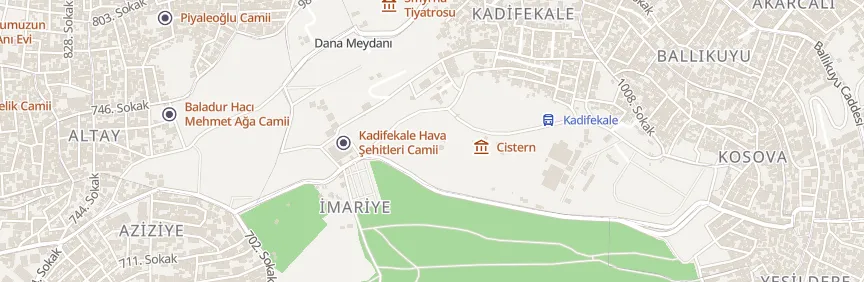
- Getting there: On the hill southeast of Konak and the Agora.
- Admission: open area, free.
- Suggested time: 45 minutes to 1 hour.
- Status: open.
Where
Nearby places
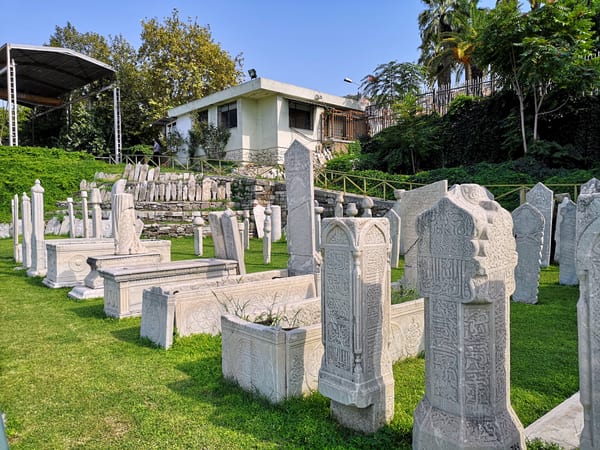 Ottoman cemetery
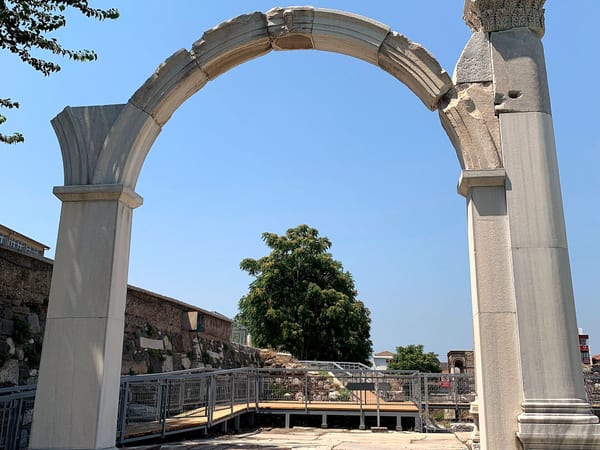 Faustina Gate
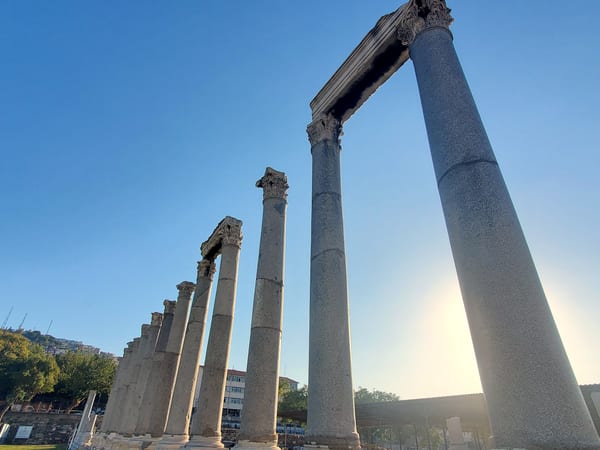 West Stoa
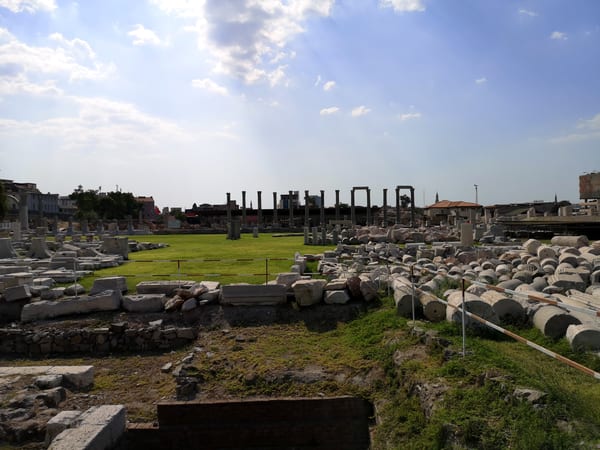 Smyrna Agora

Listen as you walk
Guide & Travel starts the story by itself when you reach the place, and it works offline too.
Photos (4)
- Ottoman cemetery — Photo: Gargarapalvin · CC BY-SA 4.0 · Wikimedia Commons (colour corrected)
- Faustina Gate — Photo: Robot8A · CC BY-SA 4.0 · Wikimedia Commons (cropped)
- West Stoa — Photo: Rəcəb Yaxşı · CC BY-SA 4.0 · Wikimedia Commons (colour corrected)
- Smyrna Agora — Photo: Gargarapalvin · CC BY-SA 4.0 · Wikimedia Commons (colour corrected)


