Ottoman cemetery
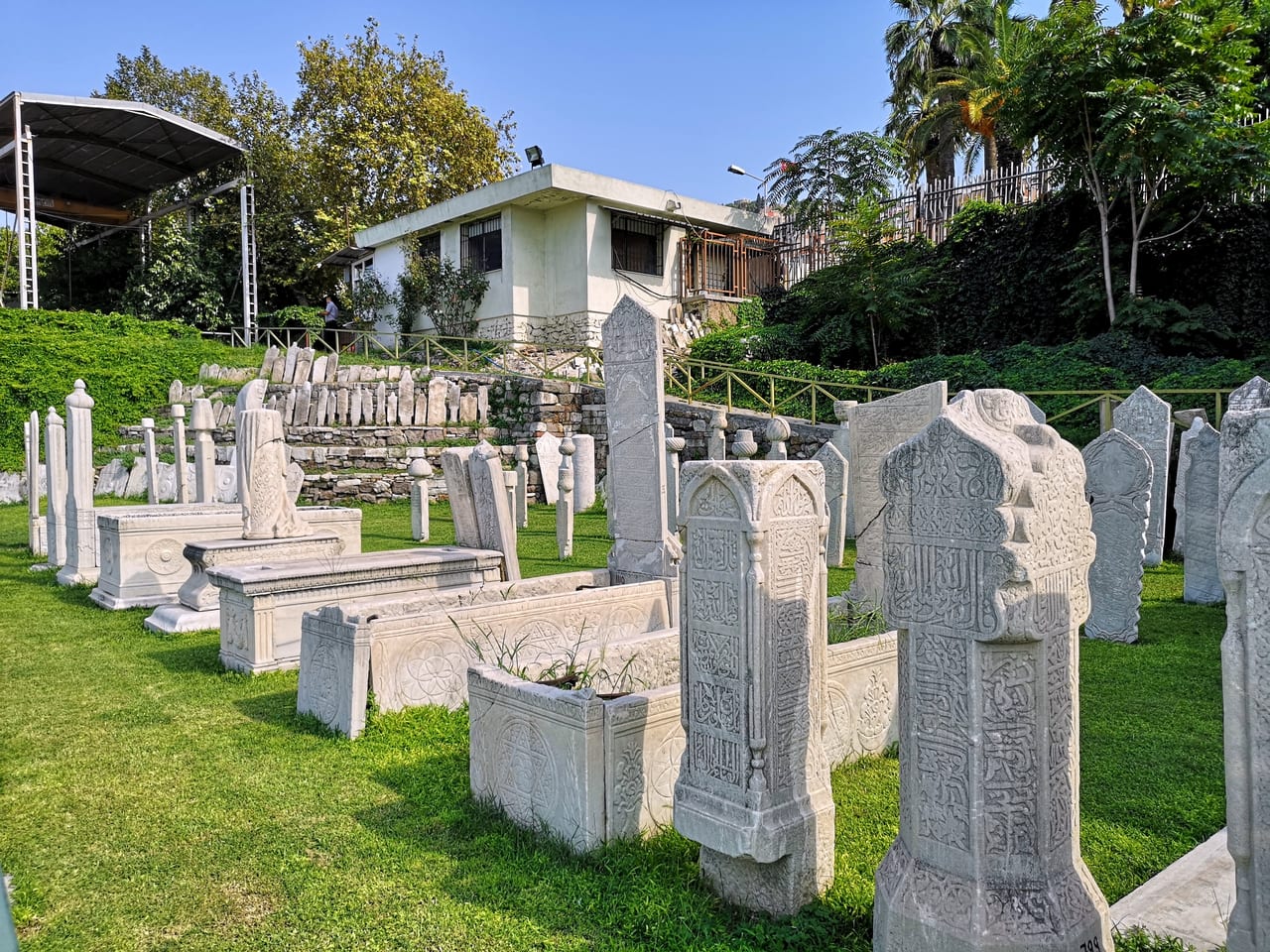
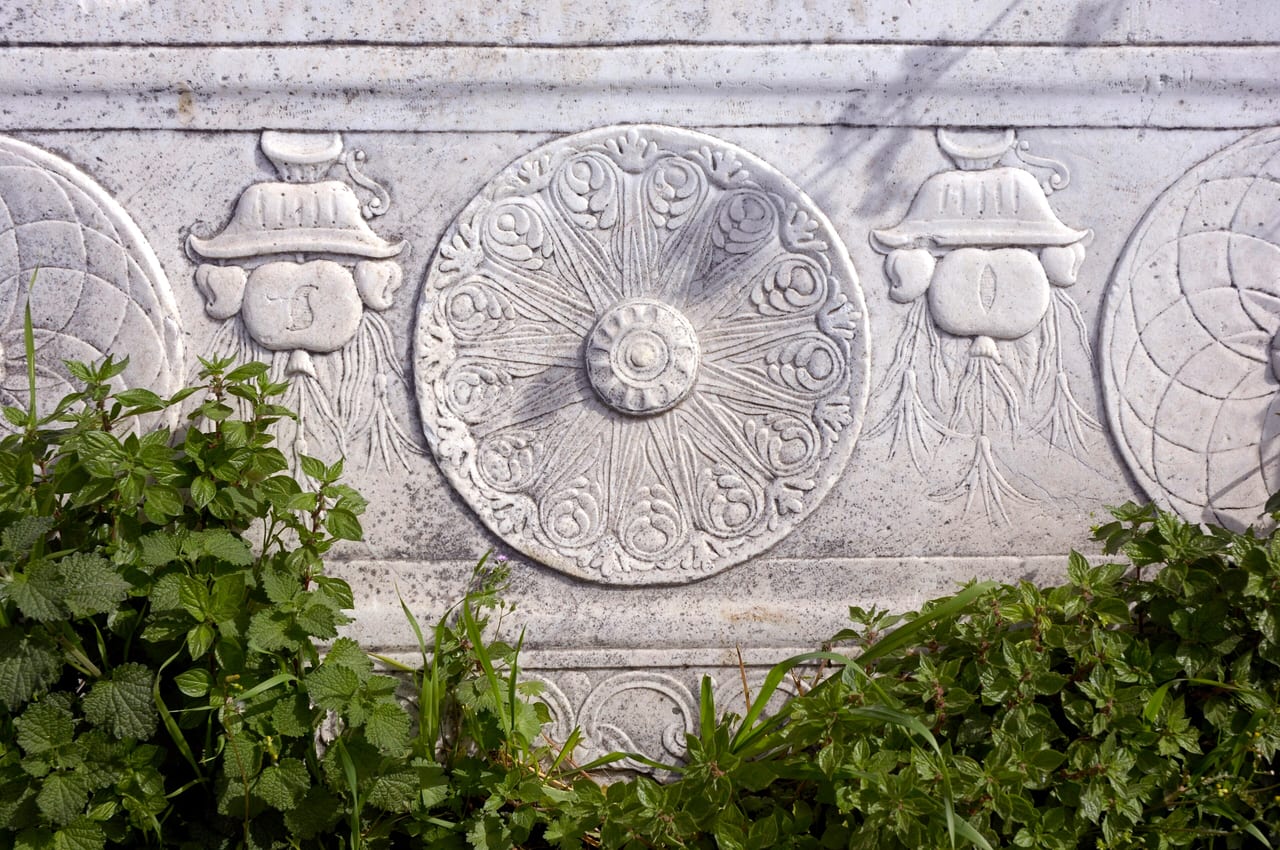
The Ottoman cemetery and prayer ground that lay over the ancient agora for centuries: the use that named the district and carried the ruins into our time.
Until recently, some Ottoman gravestones on this site were holding up ancient steps. In the 1950s, when the steps of the basilica and the west colonnade were repaired with concrete, old gravestones were used as supports together with rubble stone.Listen to the rest in the app
A cemetery above the agora
After the agora fell out of use in the early 7th century AD, the site gradually became a cemetery. Coins found in excavation show that the site was also used between the 10th and 14th centuries; after İzmir passed entirely into Turkish hands in the 15th century, the burial tradition continued until the 19th century. The earliest coin from this period dates from the reign of Bayezid II. Ottoman buildings from the 16th century on followed the foundations of the ancient remains, often reusing ancient stones; even the cemetery wall traced the back wall of the West Stoa.
A prayer ground and a district
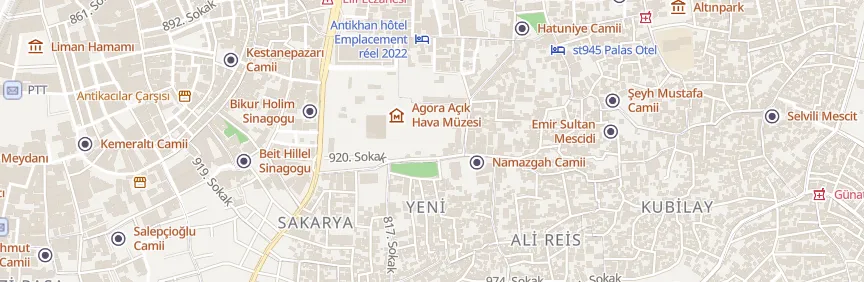
In the 16th century an open-air prayer ground, a namazgâh, took shape in the eastern part of the agora; the district takes its name from it. Respect for the cemetery and the prayer ground protected the site for centuries from stone robbers and treasure hunters. To the west of the agora, civil and commercial buildings rose in the Ottoman period; excavations there found Çanakkale and Kütahya ceramics, European ceramics and a large number of pipes. The graves began to be removed with the first excavations in 1932, and in 1944 the area of the cemetery was thoroughly cleared.
Practical information
Traces of the cemetery can be seen from the Agora site. Tickets and hours are the same as for Smyrna Agora.
Where
Nearby places
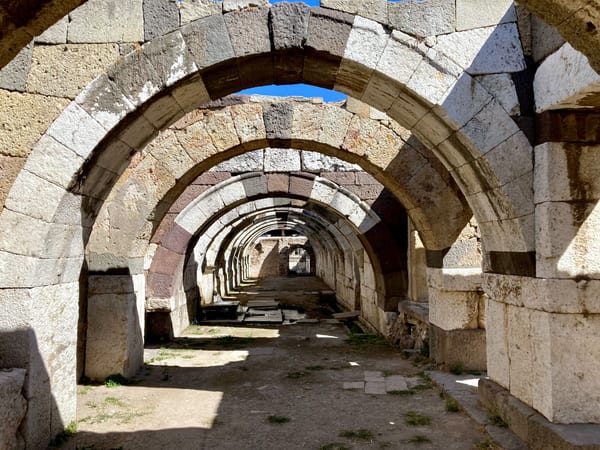
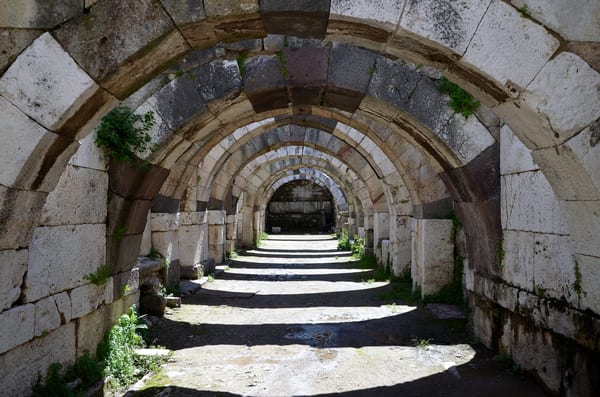 North Stoa and its basement
 Basilica graffiti
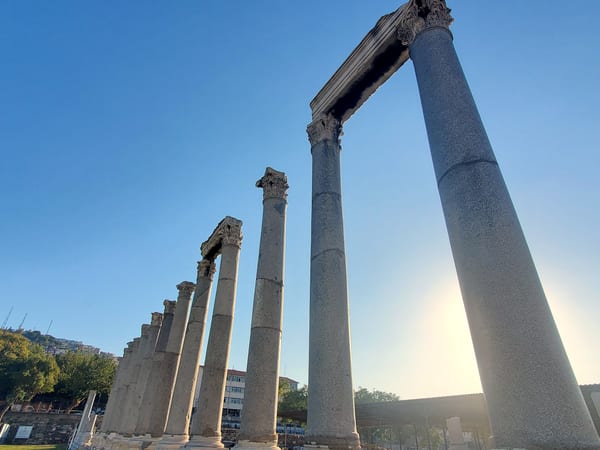 West Stoa
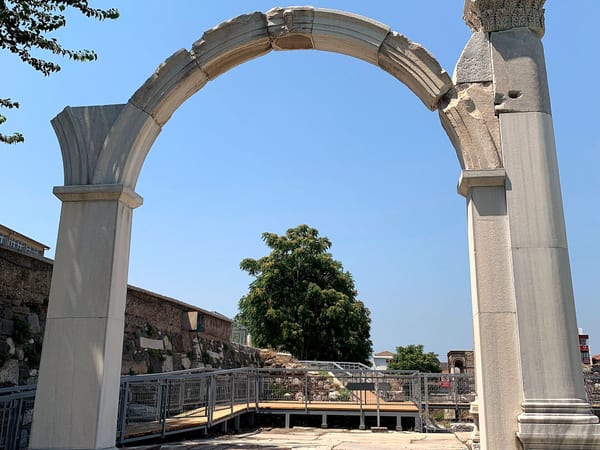 Faustina Gate

Routes that include this place
Listen as you walk
Guide & Travel starts the story by itself when you reach the place, and it works offline too.
Photos (5)
- North Stoa and its basement — Photo: Carole Raddato from FRANKFURT, Germany · CC BY-SA 2.0 · Wikimedia Commons (colour corrected)
- Basilica graffiti — Photo: Dudva · CC BY-SA 4.0 · Wikimedia Commons (colour corrected)
- West Stoa — Photo: Rəcəb Yaxşı · CC BY-SA 4.0 · Wikimedia Commons (colour corrected)
- Faustina Gate — Photo: Robot8A · CC BY-SA 4.0 · Wikimedia Commons (cropped)
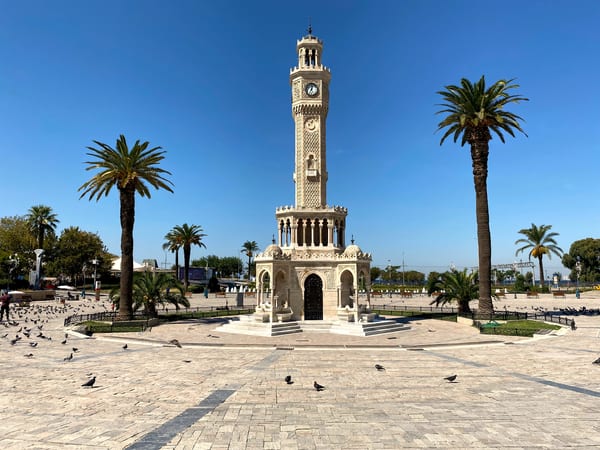
- İzmir Clock Tower — Photo: Cezmi3555 · Pexels License · Pexels (colour corrected)


