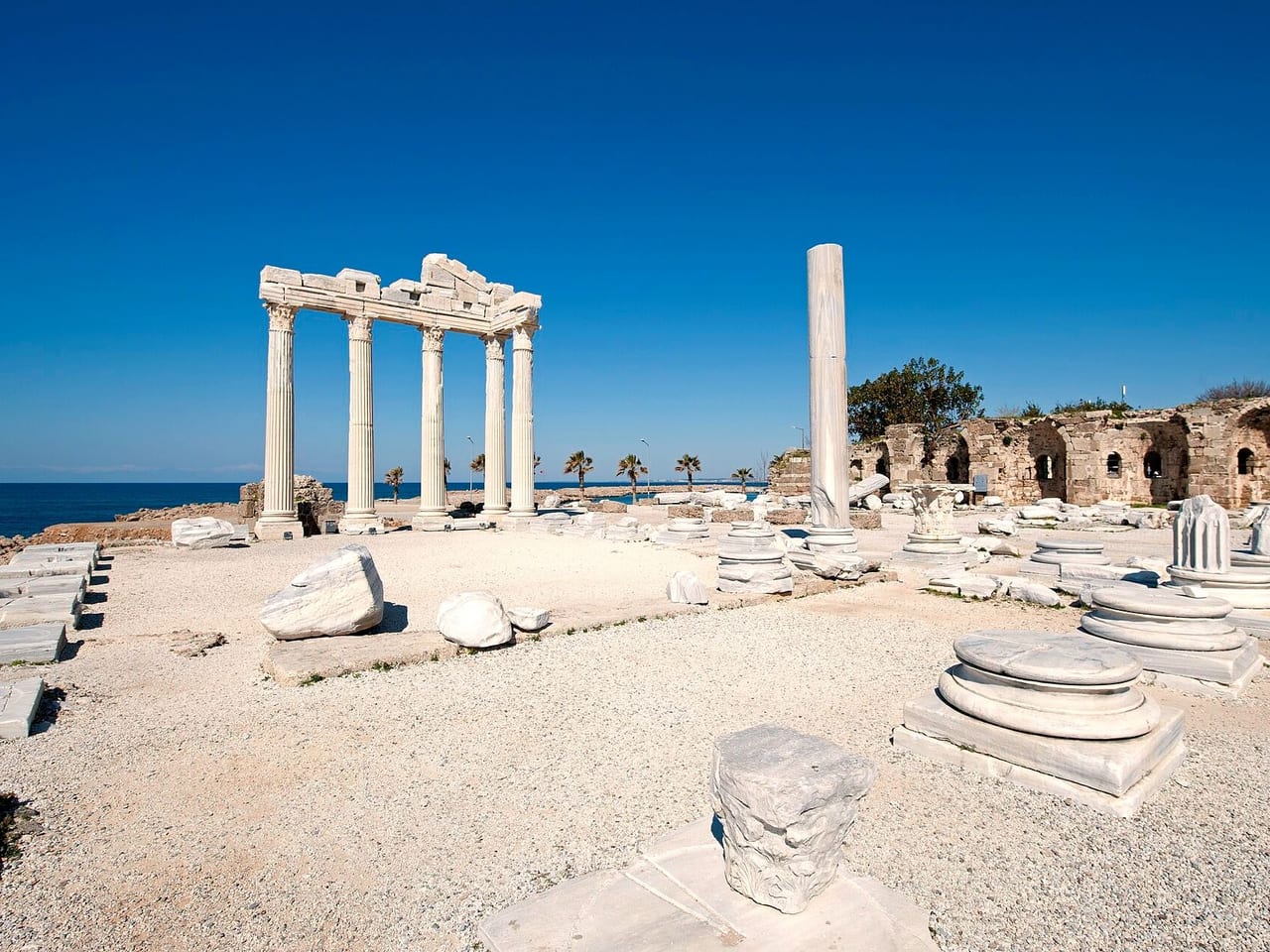
Side Ancient City
A port city whose name means "pomegranate" in an ancient Anatolian language: a colonnaded street running from a monumental fountain and towered gate to the temples of Apollo and Athena at the tip of the peninsula, agoras, and a museum in a Roman bath.
City of the pomegranate
Side stands on a peninsula 350–400 meters wide, about 7 km southwest of Manavgat. Its name means "pomegranate" in an ancient Anatolian language, Luwian in one view, and the fruit was the city's emblem, from its first 5th-century BC staters to the silver coins struck after 205 BC. Side was settled by the 7th century BC. Ancient writers say settlers from Kyme on the Aegean founded it; some researchers, noting that the name is Anatolian, think the settlement is older. A local language, Sidetic, was spoken here; Arrian tells how the settlers soon forgot their own tongue and spoke this one. The language lived on until the early Roman Empire. Ruled by Lydia and then Persia from the 6th century BC, Side struck its own coins, and in 334 BC it opened its gates to Alexander the Great.
Centuries of a port city
Falling under the sway of pirates in the 1st century BC, Side came under Rome once they were cleared out. Researchers give different years, between the late 2nd and the 1st century BC. The 2nd and 3rd centuries AD were its finest age; the theater, the Agora Baths, and the great temples date from this era. In the 5th and 6th centuries Side was the seat of the Metropolitan See of Eastern Pamphylia. Shrunk by 7th-century attacks, it was largely abandoned in the 10th. Excavations began in 1947.
Outside the walls in the northeast stands a monumental fountain, with the Main Gate opposite. The colonnaded street from the gate runs past the Commercial Agora and the theater to the temples of Apollo and Athena, lined by agoras, baths, temples, Late Antique churches, and the late Wall of Attius Philippus. One of its 2nd-century baths is now the Side Museum.
Practical information
- Getting there: by minibus (dolmuş) from Manavgat; about 80 km from Antalya.
- Hours and fees: for current hours and fees, check the official website before you go.
- Suggested time: 2 hours (with the museum).
- Status: open; the ancient theater is temporarily closed to visitors for restoration. The Side Museum has a separate ticket.
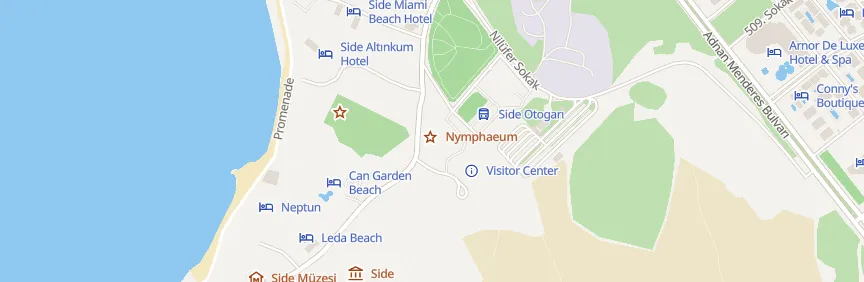
Where
Inside this place
 NymphaeumHistorical PlaceAqueductHistorical PlaceMain GateHistorical PlaceCity WallsHistorical PlaceColonnaded StreetHistorical PlaceHousesHistorical PlaceAgora Baths – Side MuseumHistorical PlaceCommercial AgoraHistorical PlaceTemple of TycheHistorical PlaceLatrineHistorical PlaceTemple of DionysusHistorical PlaceMonument of VespasianHistorical PlaceThe ArchHistorical PlaceWall of Attius PhilippusHistorical PlaceState Agora (Building M)Historical PlaceEpiscopal Palace and BasilicaHistorical PlaceHarbor StreetHistorical PlaceGreat BathsHistorical PlaceHarbor BathsHistorical PlaceAncient HarborHistorical PlaceBasilica AAHistorical PlaceTemples of Apollo and AthenaHistorical PlaceTemple of MenHistorical Place
Nearby places
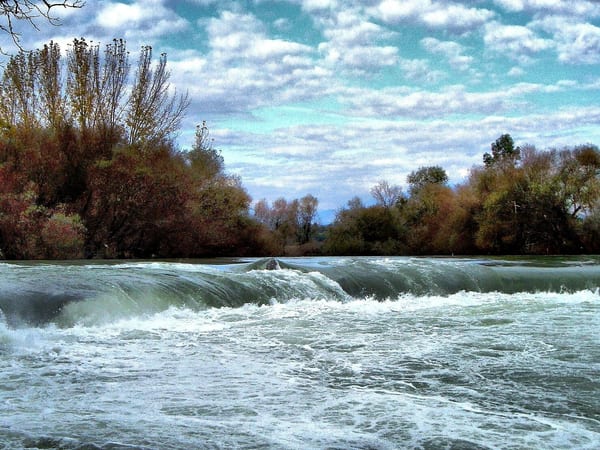 Manavgat Waterfall
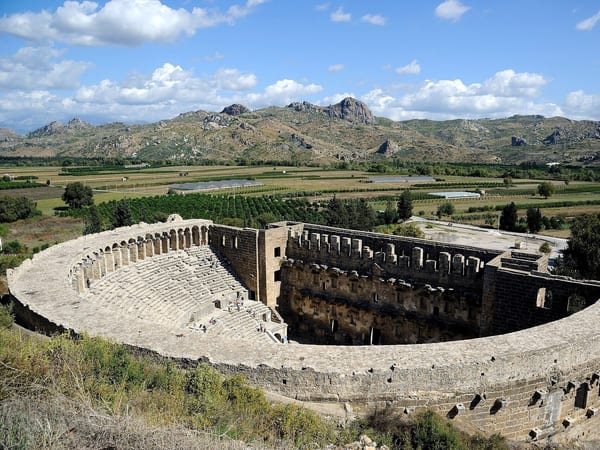 East City Gate

Routes that include this place
Listen as you walk
Guide & Travel starts the story by itself when you reach the place, and it works offline too.
Photos (28)
- Nymphaeum — Photo: Dosseman · CC BY-SA 4.0 · Wikimedia Commons (cropped)
- Aqueduct — Photo: Dosseman · CC BY-SA 4.0 · Wikimedia Commons (cropped)
- Main Gate — Photo: Dosseman · CC BY-SA 4.0 · Wikimedia Commons (cropped)
- City Walls — Photo: Dosseman · CC BY-SA 4.0 · Wikimedia Commons (cropped)
- Colonnaded Street — Photo: Dosseman · CC BY-SA 4.0 · Wikimedia Commons (cropped)
- Houses — Photo: Dosseman · CC BY-SA 4.0 · Wikimedia Commons (cropped)
- Agora Baths – Side Museum — Photo: Dosseman · CC BY-SA 4.0 · Wikimedia Commons (cropped)
- Commercial Agora — Photo: Dosseman · CC BY-SA 4.0 · Wikimedia Commons (cropped)
- Temple of Tyche — Photo: Dosseman · CC BY-SA 4.0 · Wikimedia Commons (cropped)
- Latrine — Photo: Dosseman · CC BY-SA 4.0 · Wikimedia Commons (cropped)
- Temple of Dionysus — Photo: Dosseman · CC BY-SA 4.0 · Wikimedia Commons (cropped)
- Monument of Vespasian — Photo: Dosseman · CC BY-SA 4.0 · Wikimedia Commons (cropped)
- The Arch — Photo: Dosseman · CC BY-SA 4.0 · Wikimedia Commons (cropped)
- Wall of Attius Philippus — Photo: Dosseman · CC BY-SA 4.0 · Wikimedia Commons (cropped)
- State Agora (Building M) — Photo: Dosseman · CC BY-SA 4.0 · Wikimedia Commons (cropped)
- Episcopal Palace and Basilica — Photo: Dosseman · CC BY-SA 4.0 · Wikimedia Commons (cropped)
- Harbor Street — Photo: Dosseman · CC BY-SA 4.0 · Wikimedia Commons (cropped)
- Great Baths — Photo: Dosseman · CC BY-SA 4.0 · Wikimedia Commons (cropped)
- Harbor Baths — Photo: Dosseman · CC BY-SA 4.0 · Wikimedia Commons (cropped)
- Ancient Harbor — Photo: Dosseman · CC BY-SA 4.0 · Wikimedia Commons (cropped)
- Basilica AA — Photo: Dosseman · CC BY-SA 4.0 · Wikimedia Commons (cropped)
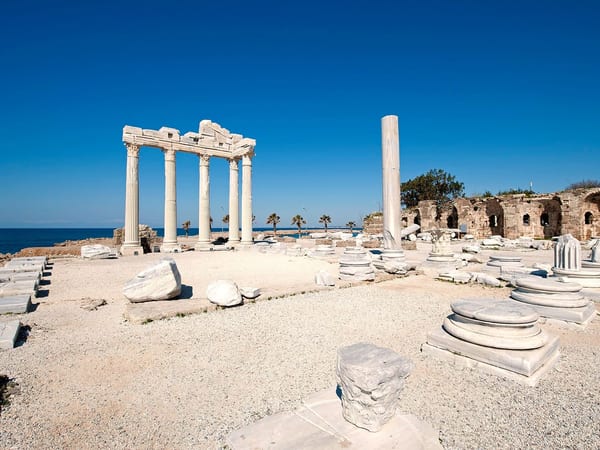
- Temples of Apollo and Athena — Photo: Dosseman · CC BY-SA 4.0 · Wikimedia Commons (cropped)
- Temple of Men — Photo: Dosseman · CC BY-SA 4.0 · Wikimedia Commons (cropped)
- Manavgat Waterfall — Photo: HALUK COMERTEL · CC BY 3.0 · Wikimedia Commons (cropped)
- East City Gate — Photo: Saffron Blaze · CC BY-SA 3.0 · Wikimedia Commons (cropped)
- Roman Villa — Photo: Saffron Blaze · CC BY-SA 3.0 · Wikimedia Commons (cropped)
- Bakery — Photo: Saffron Blaze · CC BY-SA 3.0 · Wikimedia Commons (cropped)
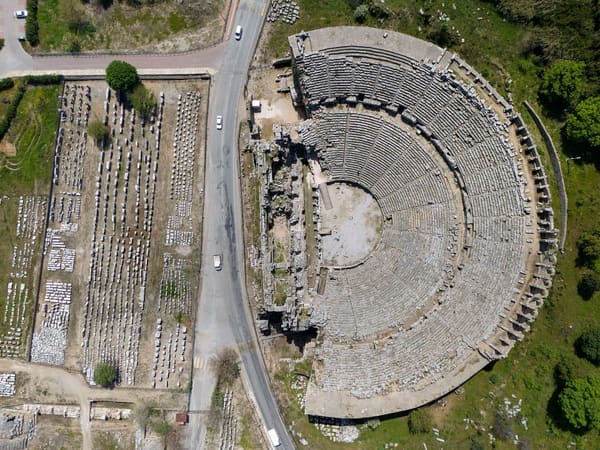
- Perge — Photo: Mehmety11maz · CC BY-SA 4.0 · Wikimedia Commons (colour corrected)


