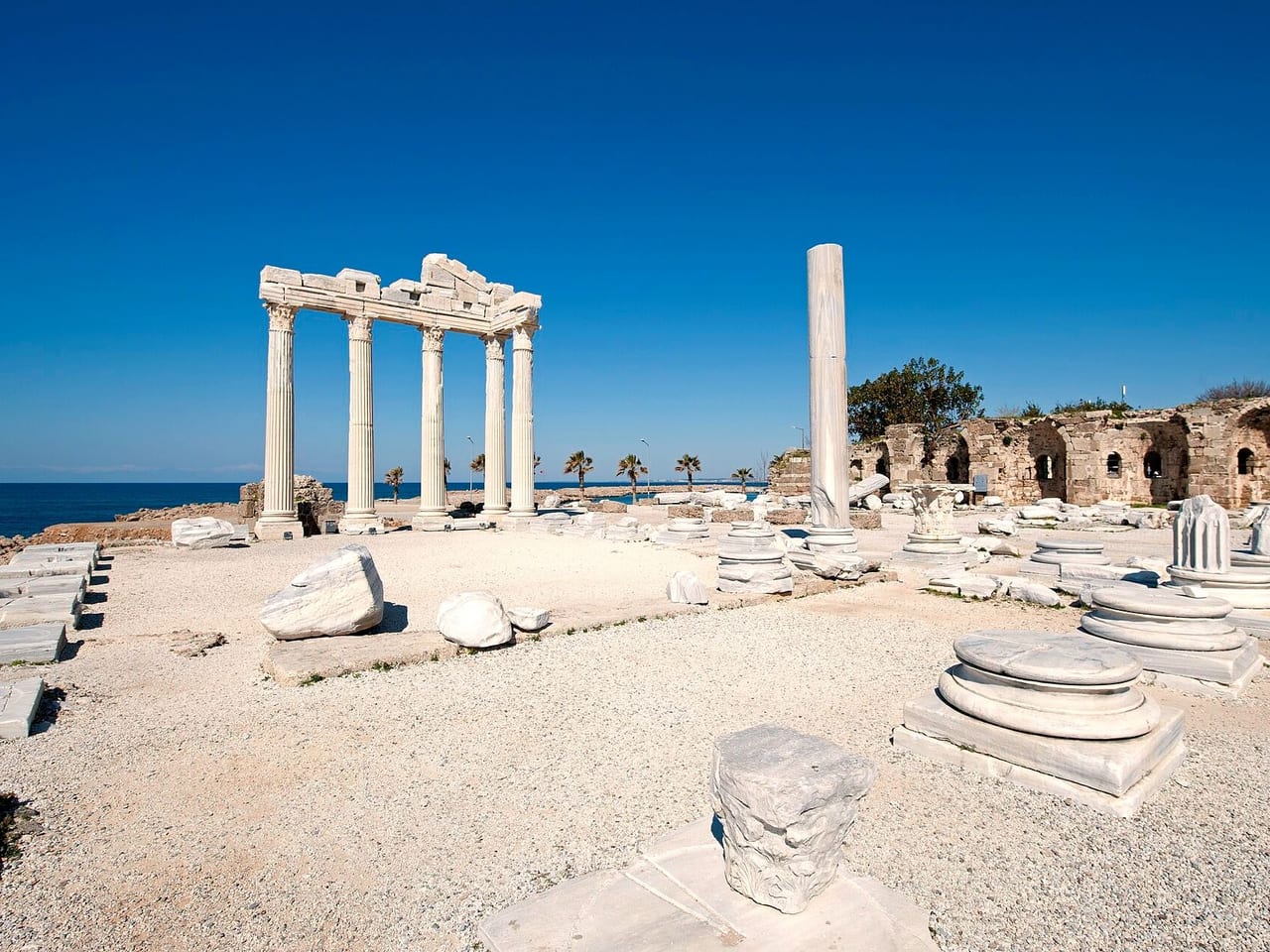
Ancient Harbor
The old harbor on the west side of the peninsula that made Side the most important port of Pamphylia: the stones of its mole still rise from the water, while its basin slowly filled with sand.
A city open to the sea
In almost every period, the history of Side is bound up with its harbor and with sea trade; the city owed its trade to the harbor, the most important in Pamphylia. The great harbor lay on the west side of the peninsula; the stones of its mole still rise from the water today. According to one researcher, the basin was artificially widened and deepened, the stone dug out of it may have been used in the walls, and the mole was a continuation of the city wall into the sea. To the north lay a second, smaller harbor. Over the centuries the basin filled with sand.
Ships, pirates and festivals
According to Livy, in 190 BC the ships of Side stood on the right wing of the fleet of Antiochus III. In one view, when the kingdom of Pergamon failed to take the harbor of Side, it had to found Attaleia as its own port instead. In the 1st century BC the people of Side were forced to open their harbor and markets to pirates. Much later the Arabs, who plundered the city, used the harbor to supply their campaigns. The Epibaterios, a festival held in honor of Athena, the city's chief goddess, whose name means "the opening of the harbor," shows the place the harbor held in the life of the city.
Where
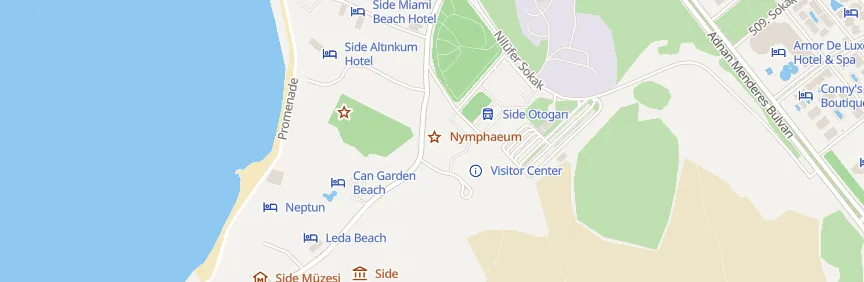
Nearby places
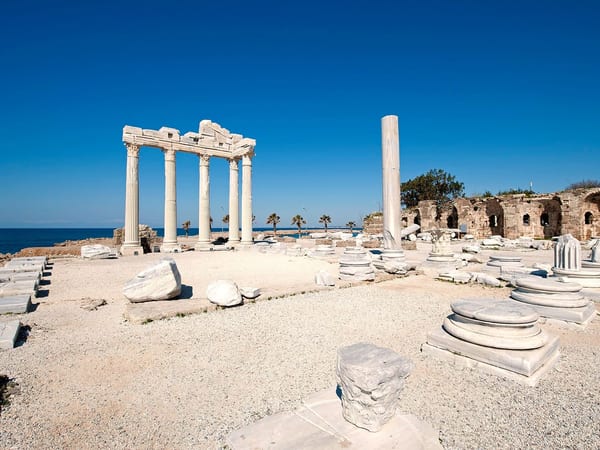 Harbor Street

Routes that include this place
Listen as you walk
Guide & Travel starts the story by itself when you reach the place, and it works offline too.
Photos (5)
- Harbor Street — Photo: Dosseman · CC BY-SA 4.0 · Wikimedia Commons (cropped)
- Nymphaeum — Photo: Dosseman · CC BY-SA 4.0 · Wikimedia Commons (cropped)
- Aqueduct — Photo: Dosseman · CC BY-SA 4.0 · Wikimedia Commons (cropped)
- Wall of Attius Philippus — Photo: Dosseman · CC BY-SA 4.0 · Wikimedia Commons (cropped)
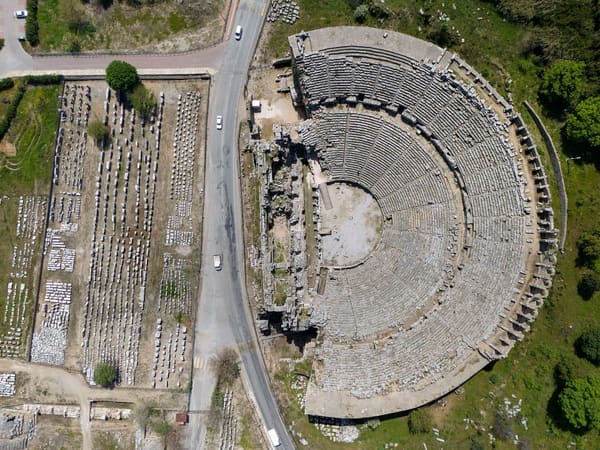
- Perge — Photo: Mehmety11maz · CC BY-SA 4.0 · Wikimedia Commons (colour corrected)
