Myra
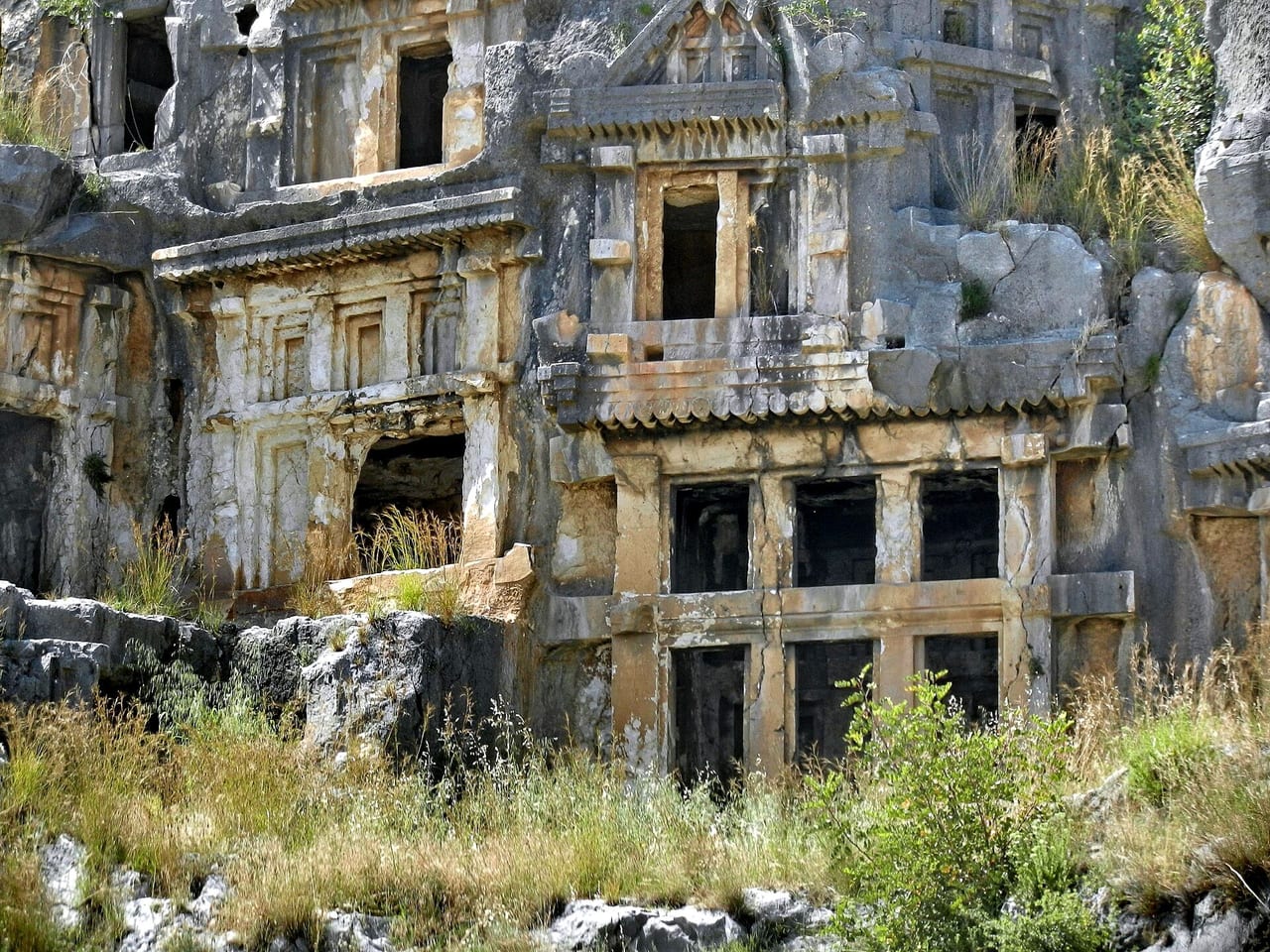
Myra, a leading city of the Lycian League and capital of the province in the 5th century: Lycian tombs cut into the cliff like house fronts, and a Roman theater standing with its stage building.
From Myrrh to Myra
Myra was built in and around the center of Demre, on the plain formed by the Myros River (the Demre Çayı); in Lycian inscriptions the city's name appears as "Myrrh." Rock tombs, Lycian inscriptions, and coins show the city existed at least from the 5th century BC, and recent excavations point to an even earlier settlement. Myra was one of the leading cities of the Lycian League and held the title of metropolis. It grew greatly in the 2nd century AD, and in the 5th century, under Emperor Theodosius II, it became the capital of the province of Lycia. In Byzantine times it was an important religious and administrative center. Christian history remembers it too: Saint Paul and his companions stopped here on their travels, and in the 4th century Saint Nicholas served here as bishop.
The city the earth covered
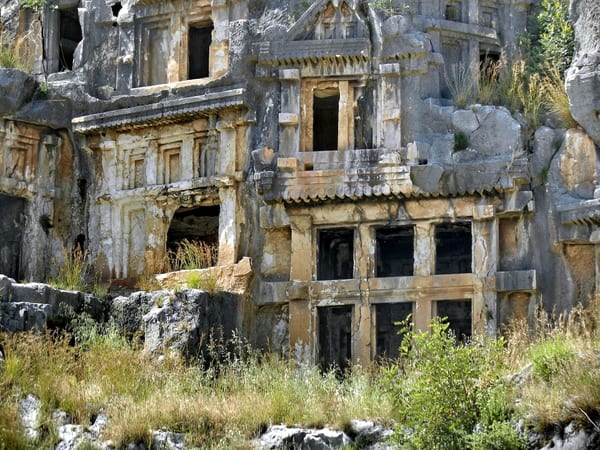
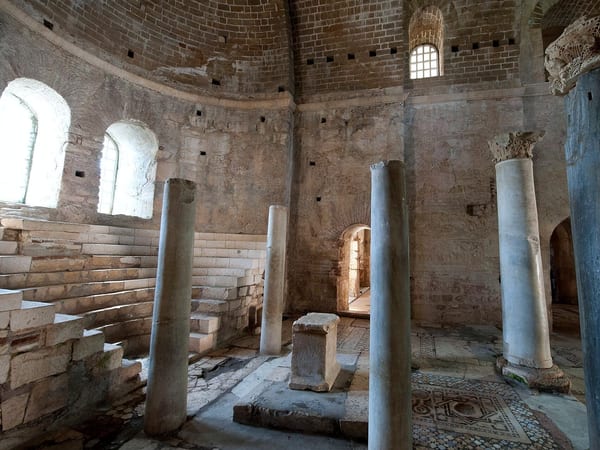
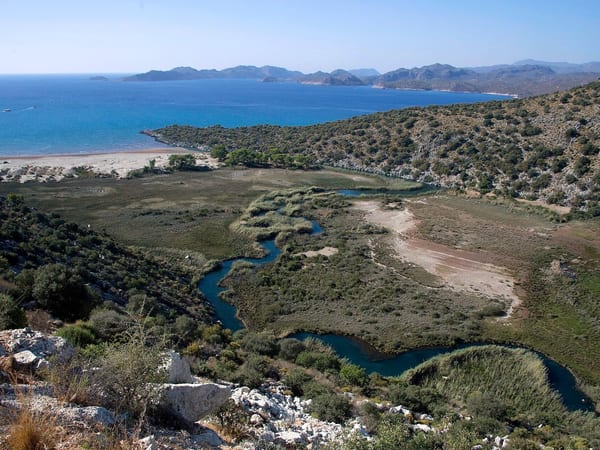
Myra lay inland; a canal west of the river linked it to the sea, and the port of Andriake (Çayağzı) on the far bank carried its shipping and trade. After the 7th century, earthquakes, floods, silt, and Arab raids drained the city's strength, and by the 12th century it had become a village. Silt carried by the river buried its lower parts; most of the ruins now lie beneath that earth, and even the site of the agora, which early travelers mentioned near the theater, is unknown. On the slope the silt could not reach, the Roman theater stands, with Lycian rock tombs lining the cliff around it, and a Roman bath remains beside the path to the theater. On the eastern slope of the acropolis lies a second field of rock tombs; on the hilltop are the walls and a rock-cut gathering place; in the valley are water channels; and west of the theater stands a Byzantine chapel dug out from under the earth.
Practical information
- Getting there: in central Demre; by Antalya–Demre bus.
- Hours and fees: for current hours and fees, check the official website before you go.
- Suggested time: 1–1.5 hours.
- Status: open.
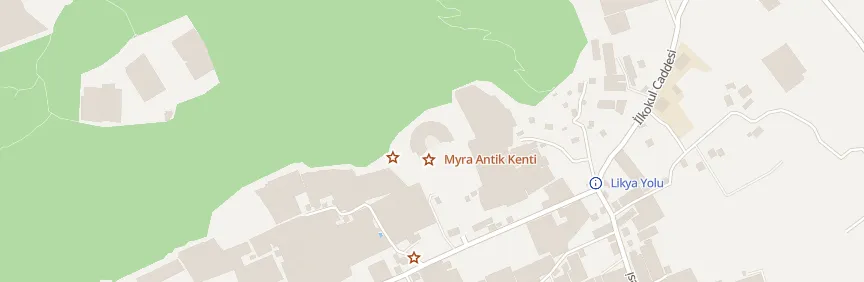
Where
Inside this place
 Roman Baths
Nearby places
 Church of St. Nicholas
 Plakoma

Routes that include this place
Listen as you walk
Guide & Travel starts the story by itself when you reach the place, and it works offline too.
Photos (8)
- Roman Baths — Photo: Tanya Dedyukhina · CC BY 3.0 · Wikimedia Commons (colour corrected)
- Theater — Photo: Tanya Dedyukhina · CC BY 3.0 · Wikimedia Commons (colour corrected)
- Sea Necropolis — Photo: Tanya Dedyukhina · CC BY 3.0 · Wikimedia Commons (colour corrected)
- Church of St. Nicholas — Photo: Dosseman · CC BY-SA 4.0 · Wikimedia Commons (cropped)
- Plakoma — Photo: Dosseman · CC BY-SA 4.0 · Wikimedia Commons (cropped)
- Murex Workshops — Photo: Dosseman · CC BY-SA 4.0 · Wikimedia Commons (cropped)
- Square Fountain (Nymphaeum) — Photo: Dosseman · CC BY-SA 4.0 · Wikimedia Commons (cropped)
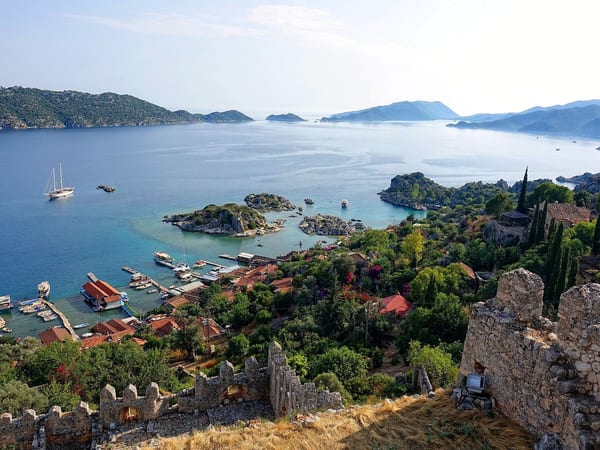
- Kekova — Photo: Bjørn Christian Tørrissen · CC BY-SA 4.0 · Wikimedia Commons (cropped)


