Roman Baths
A bath beside the path to the theater, its walls built entirely of brick and mortar: one of the early examples of Roman brick architecture.
A bath of brick
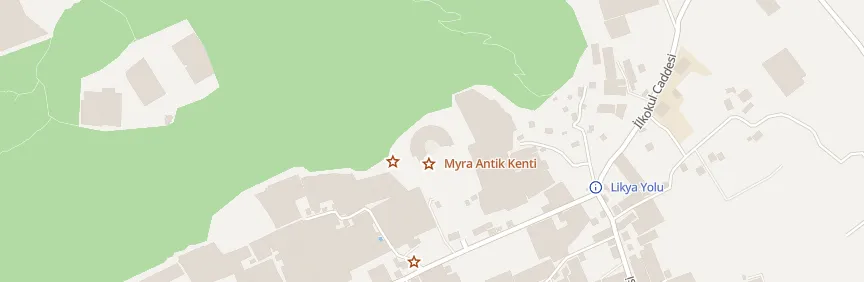
Near the theater, to the left of the road into the city center, rise the remains of a Roman bath. It is among the early examples of Roman brick architecture: its walls are built entirely of brick and mortar in the Roman technique, and the raw material of its bricks resembles that of the bricks used in the theater. Some researchers date the bath to the 3rd century AD, others to the 2nd or 3rd century. Its plan follows the classic layout of Lycian baths, and five of its rooms can still be made out. The bath was heated from beneath the floor and through the walls. One researcher once wrote that the remains might belong either to a bath or to a basilica. Today the building is surrounded by greenhouses, so some parts of it cannot be seen.
Where
Nearby places
 Theater
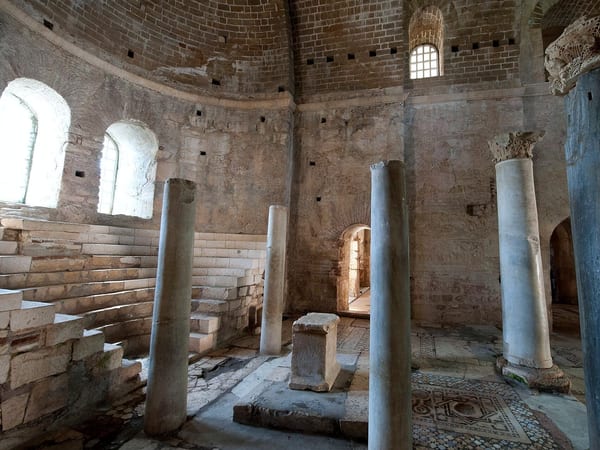 Church of St. Nicholas
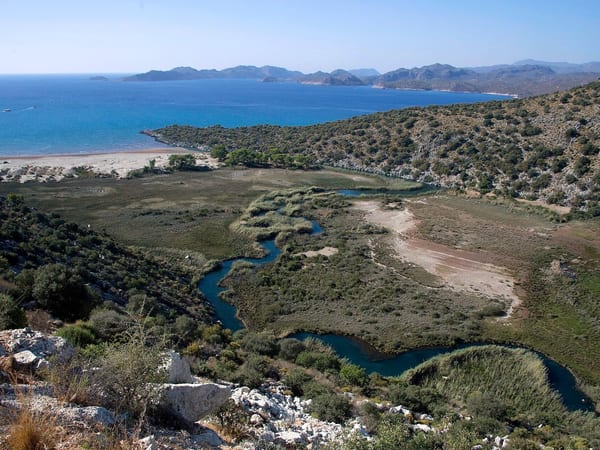 Plakoma

Routes that include this place
Listen as you walk
Guide & Travel starts the story by itself when you reach the place, and it works offline too.
Photos (5)
- Theater — Photo: Tanya Dedyukhina · CC BY 3.0 · Wikimedia Commons (colour corrected)
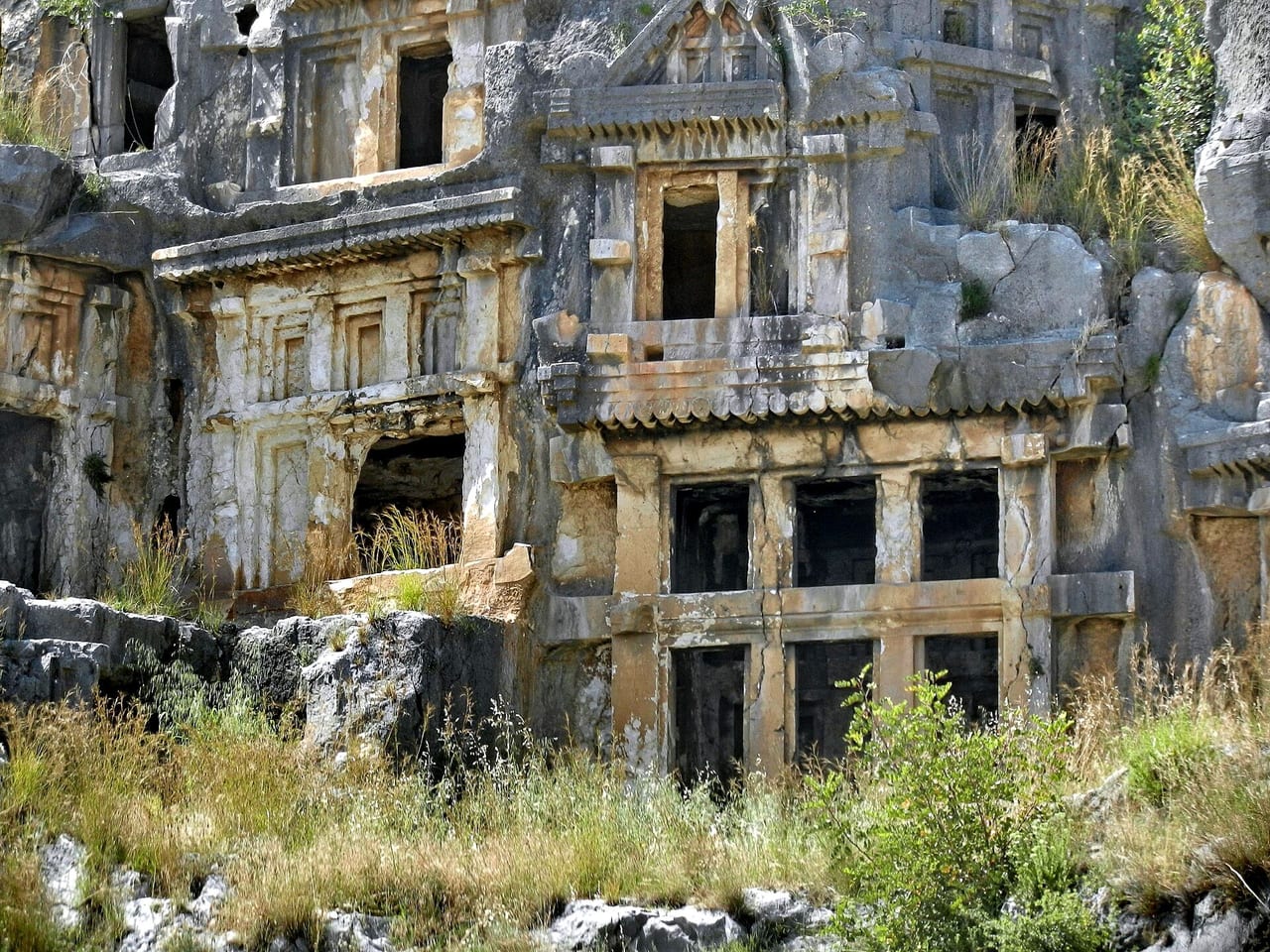
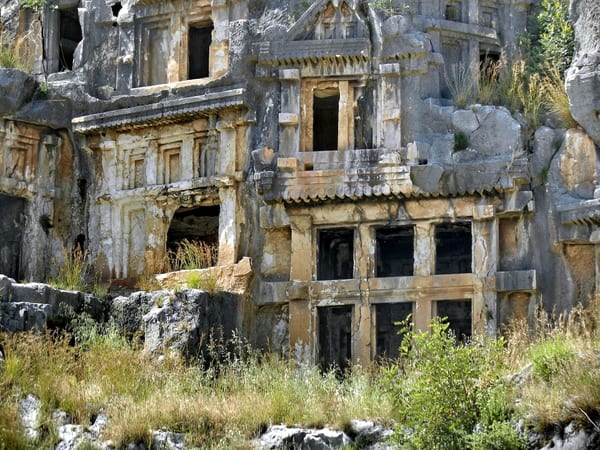
- Sea Necropolis — Photo: Tanya Dedyukhina · CC BY 3.0 · Wikimedia Commons (colour corrected)
- Church of St. Nicholas — Photo: Dosseman · CC BY-SA 4.0 · Wikimedia Commons (cropped)
- Plakoma — Photo: Dosseman · CC BY-SA 4.0 · Wikimedia Commons (cropped)
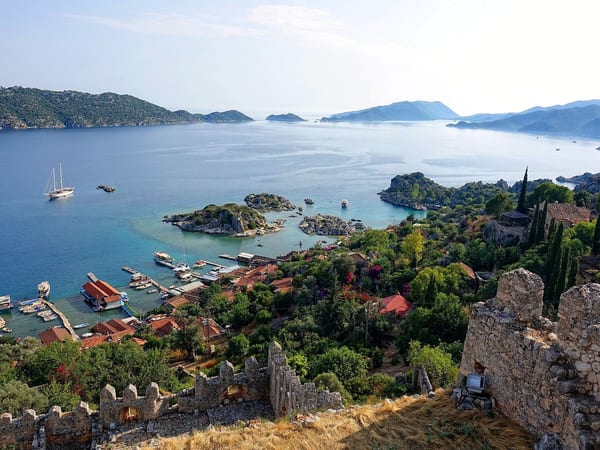
- Kekova — Photo: Bjørn Christian Tørrissen · CC BY-SA 4.0 · Wikimedia Commons (cropped)


