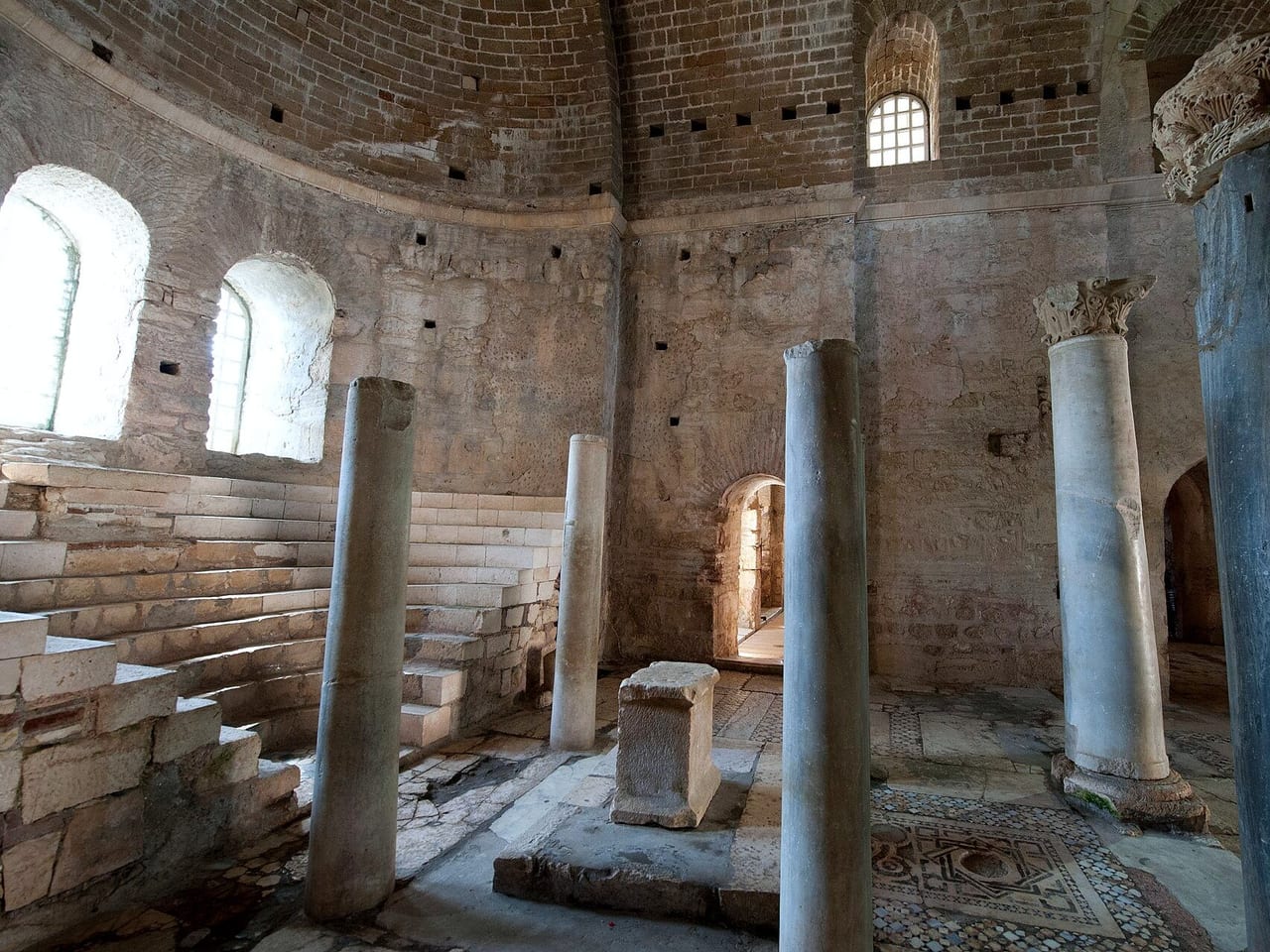
Church of St. Nicholas
A Byzantine church built in honor of Saint Nicholas, bishop of Myra, linked with Santa Claus: wall paintings, marble floors, and a building buried in silt for centuries.
From Patara to Myra
Saint Nicholas was born in Patara in the second half of the 3rd century AD and served as bishop of Myra in the 4th century. He was recognized as a saint after his death and is known around the world as Santa Claus. He was loved for helping the poor and giving gifts, and he was called the "Saint of Miracles."
Layers of a church
After his death, a monument and then a large basilica were built at Myra. Researchers differ on the date of the basilica: some place it in the 5th century, others in the 6th. Badly damaged by earthquakes and raids in the 8th century, the building was rebuilt as a domed church. An inscription dated 1042 records repairs by Emperor Constantine IX Monomachos and Empress Zoe. Most of the wall paintings and floors date from this time.
Pilgrims and excavations
Pilgrims bound for Jerusalem by sea in the Middle Ages stopped at Myra, and the church became a place of pilgrimage. Excavations, begun in 1989, uncovered monastery buildings, a bishop's residence, and graves around the church. The church appears as a complex of buildings from different periods.
Wall paintings and floors
The inner narthex has 11th-century scenes of church councils. In the tomb chamber on the south side of the church, 12th-century wall paintings tell the saint's life. The south chapel holds a 13th-century Deesis scene. The marble floor panels were made in fine opus sectile work.
The church beneath the earth
In 1087, merchants from Bari opened the saint's tomb and took most of his bones to Italy; the relics are kept in the Basilica of San Nicola in Bari. At the end of the 12th century, the Myros River changed its course, and floods and silt filled the church. Today its floor lies about 6 meters below the surrounding townscape.
The Russian restoration
In the mid-19th century, a restoration carried out with Russian support added a bell tower. Researchers differ on how the central bay was covered: some say a new central dome was built, while others say it was roofed with a cut-stone cross vault instead of a dome. These additions depart from the building's original plan. The church joined UNESCO's World Heritage Tentative List in 2000.
Practical information
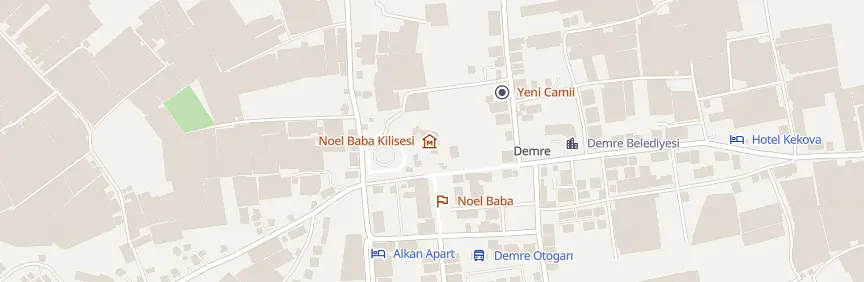
- Getting there: In central Demre; by Antalya–Demre bus.
- Suggested time: 45 minutes–1 hour.
- Status: open, memorial museum.
Where
Nearby places
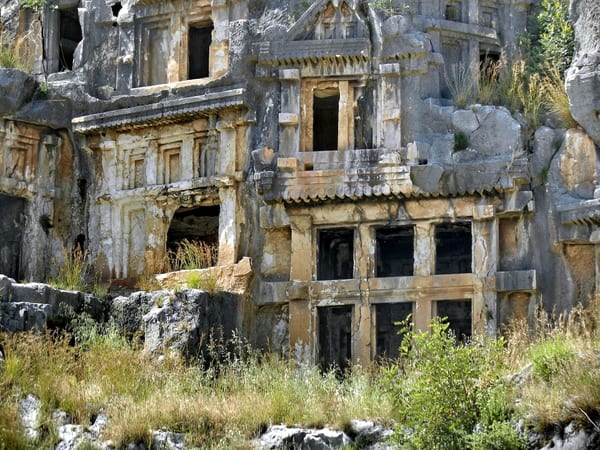 Sea Necropolis

Routes that include this place
Listen as you walk
Guide & Travel starts the story by itself when you reach the place, and it works offline too.
Photos (5)
- Sea Necropolis — Photo: Tanya Dedyukhina · CC BY 3.0 · Wikimedia Commons (colour corrected)
- Myra — Photo: Tanya Dedyukhina · CC BY 3.0 · Wikimedia Commons (colour corrected)
- Theater — Photo: Tanya Dedyukhina · CC BY 3.0 · Wikimedia Commons (colour corrected)
- Roman Baths — Photo: Tanya Dedyukhina · CC BY 3.0 · Wikimedia Commons (colour corrected)
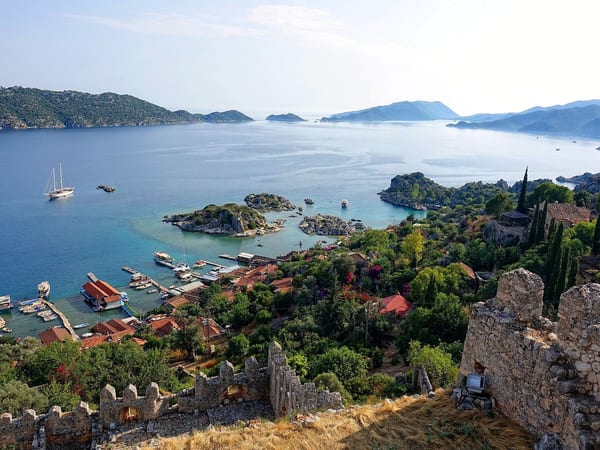
- Kekova — Photo: Bjørn Christian Tørrissen · CC BY-SA 4.0 · Wikimedia Commons (cropped)

