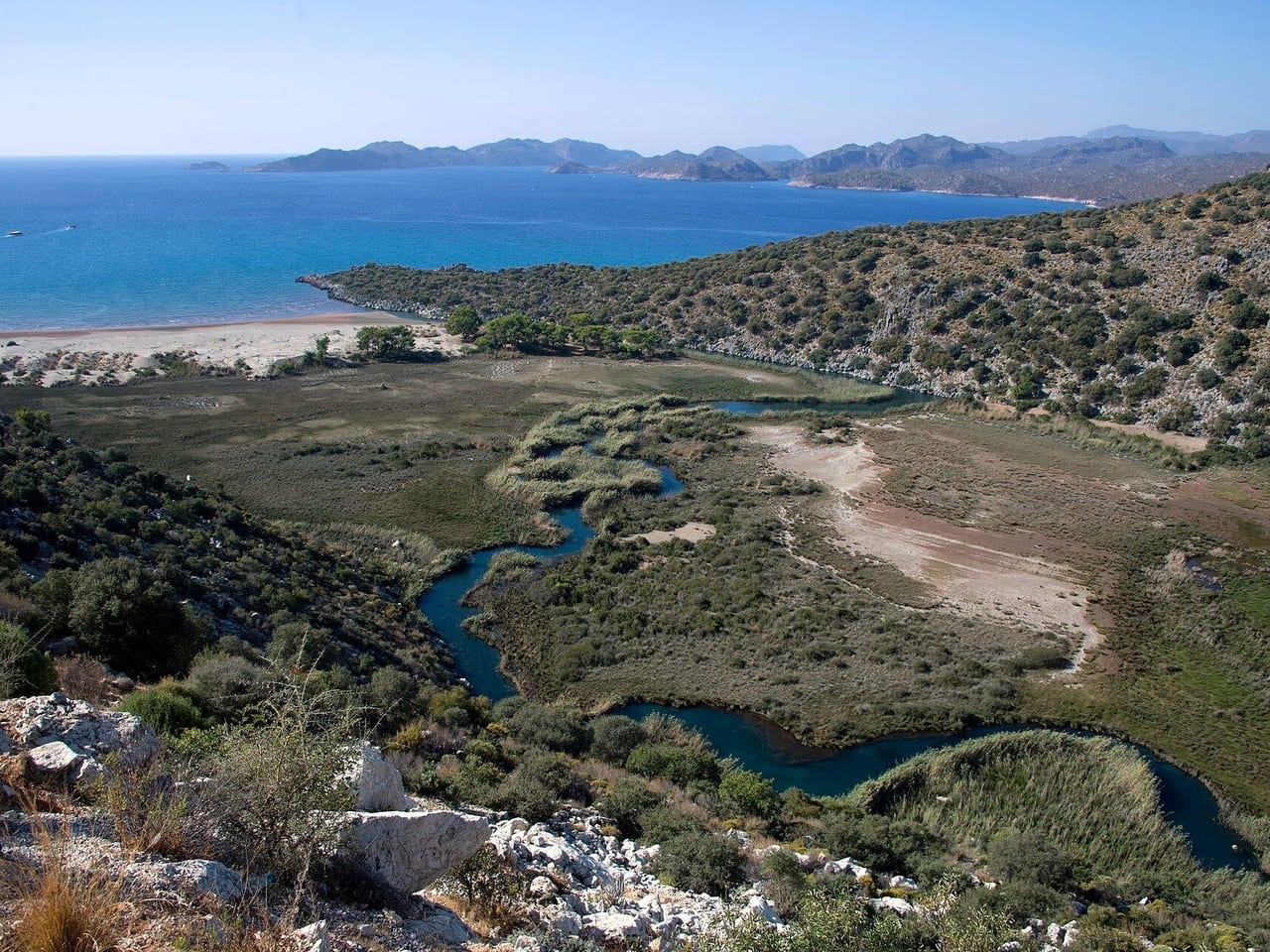
Andriake
The ancient harbor of Myra at Çayağzı: a great granary from the reign of Hadrian, an agora ringed with shops, a synagogue, and traces of purple dye making.
The harbor of Myra
Andriake lies at Çayağzı in Demre, where the Andriakos River meets the sea, southwest of Myra. The settlement clusters on a low hill south of the harbor, which has now turned into a marshy lake. Myra's link to the sea and its sea trade ran through this harbor. Andriake is usually known as the harbor quarter of Myra; some researchers, however, see it as a separate town beside Myra and think it belonged to the Lycian League as an independent city at certain periods. The harbor was the region's main port in the Hellenistic, Roman, and Byzantine periods and stayed in use until the 7th century AD; over time it silted into a marsh and lost its link to the sea.
Grain, trade, and travelers
In Roman times grain set the harbor's place in trade: under Emperor Hadrian, a great granary was built beside the harbor; also known as the "Imperial Granary," it now houses the Museum of Lycian Civilizations. In AD 60, St. Paul changed ships at this harbor of Myra on his way to Rome. Excavations began in 2009, and many buildings have since been restored.
The buildings of the town
Among the first structures seen when arriving from Demre is the aqueduct that comes down into the town from the northeast; at the entrance to the town rises a Roman monumental square fountain. The Plakoma agora east of the granary, the houses nearby, a synagogue, the harbor street and ship sheds between the granary and the harbor, honorific monuments, churches, and workshops where purple dye was made from a sea snail called the murex all lie within the settlement. A watchtower stands on the hill to the west, and the necropolis spreads north and northeast of the harbor mouth.
Practical information
- Getting there: by Demre buses or private car to Çayağzı.
- Hours: for current hours, check the official website before you go.
- Admission: for current fees, check the official website before you go.
- Suggested time: 1 hour.
- Status: the site is open; the Museum of Lycian Civilizations (Granarium) is temporarily closed to visitors for exhibition and site works.
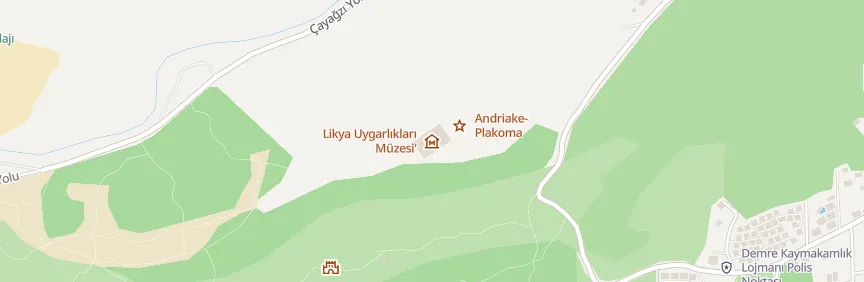
Where
Inside this place
 AqueductHistorical PlaceSquare Fountain (Nymphaeum)Historical PlacePlakomaHistorical PlaceHousesHistorical PlaceSynagogueHistorical PlaceHarbor Street and Ship ShedsHistorical PlaceAncient HarborHistorical PlaceHonorific MonumentsHistorical PlaceChurchesHistorical PlaceMurex WorkshopsHistorical Place
Nearby places
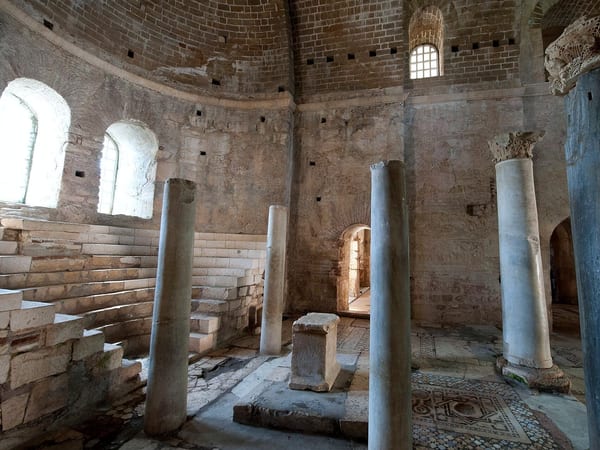 Church of St. Nicholas
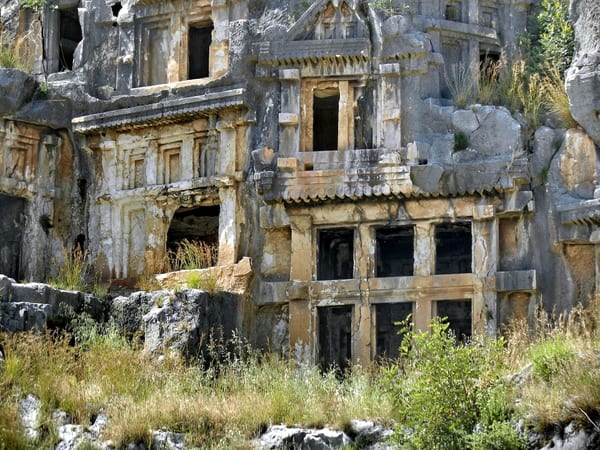 Sea Necropolis

Listen as you walk
Guide & Travel starts the story by itself when you reach the place, and it works offline too.
Photos (14)
- Aqueduct — Photo: Dosseman · CC BY-SA 4.0 · Wikimedia Commons (cropped)
- Square Fountain (Nymphaeum) — Photo: Dosseman · CC BY-SA 4.0 · Wikimedia Commons (cropped)
- Plakoma — Photo: Dosseman · CC BY-SA 4.0 · Wikimedia Commons (cropped)
- Houses — Photo: Dosseman · CC BY-SA 4.0 · Wikimedia Commons (cropped)
- Synagogue — Photo: Dosseman · CC BY-SA 4.0 · Wikimedia Commons (cropped)
- Harbor Street and Ship Sheds — Photo: Dosseman · CC BY-SA 4.0 · Wikimedia Commons (cropped)
- Ancient Harbor — Photo: Dosseman · CC BY-SA 4.0 · Wikimedia Commons (cropped)
- Honorific Monuments — Photo: Dosseman · CC BY-SA 4.0 · Wikimedia Commons (cropped)
- Churches — Photo: Dosseman · CC BY-SA 4.0 · Wikimedia Commons (cropped)
- Murex Workshops — Photo: Dosseman · CC BY-SA 4.0 · Wikimedia Commons (cropped)
- Church of St. Nicholas — Photo: Dosseman · CC BY-SA 4.0 · Wikimedia Commons (cropped)
- Sea Necropolis — Photo: Tanya Dedyukhina · CC BY 3.0 · Wikimedia Commons (colour corrected)
- Myra — Photo: Tanya Dedyukhina · CC BY 3.0 · Wikimedia Commons (colour corrected)
- Theater — Photo: Tanya Dedyukhina · CC BY 3.0 · Wikimedia Commons (colour corrected)

