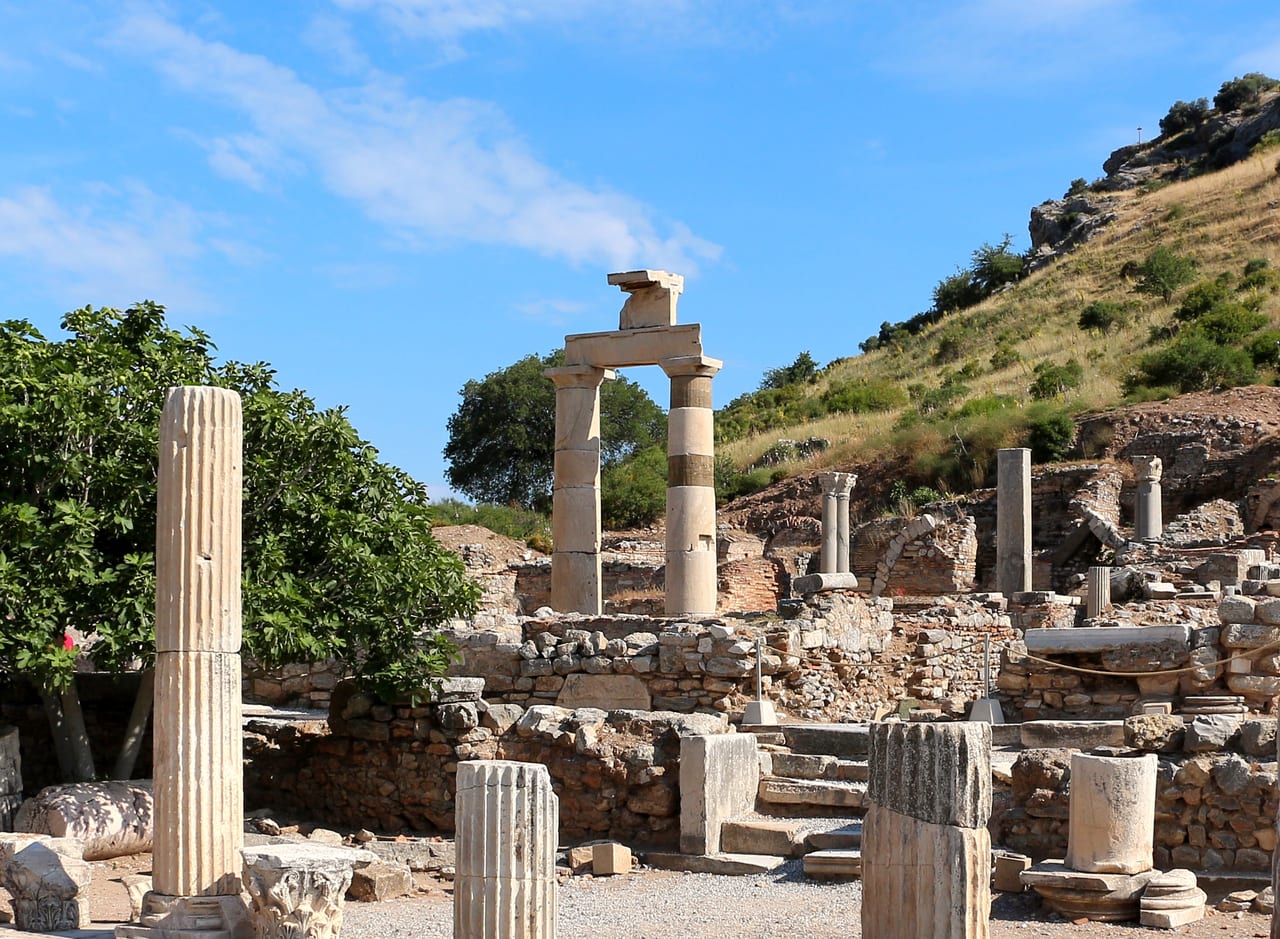
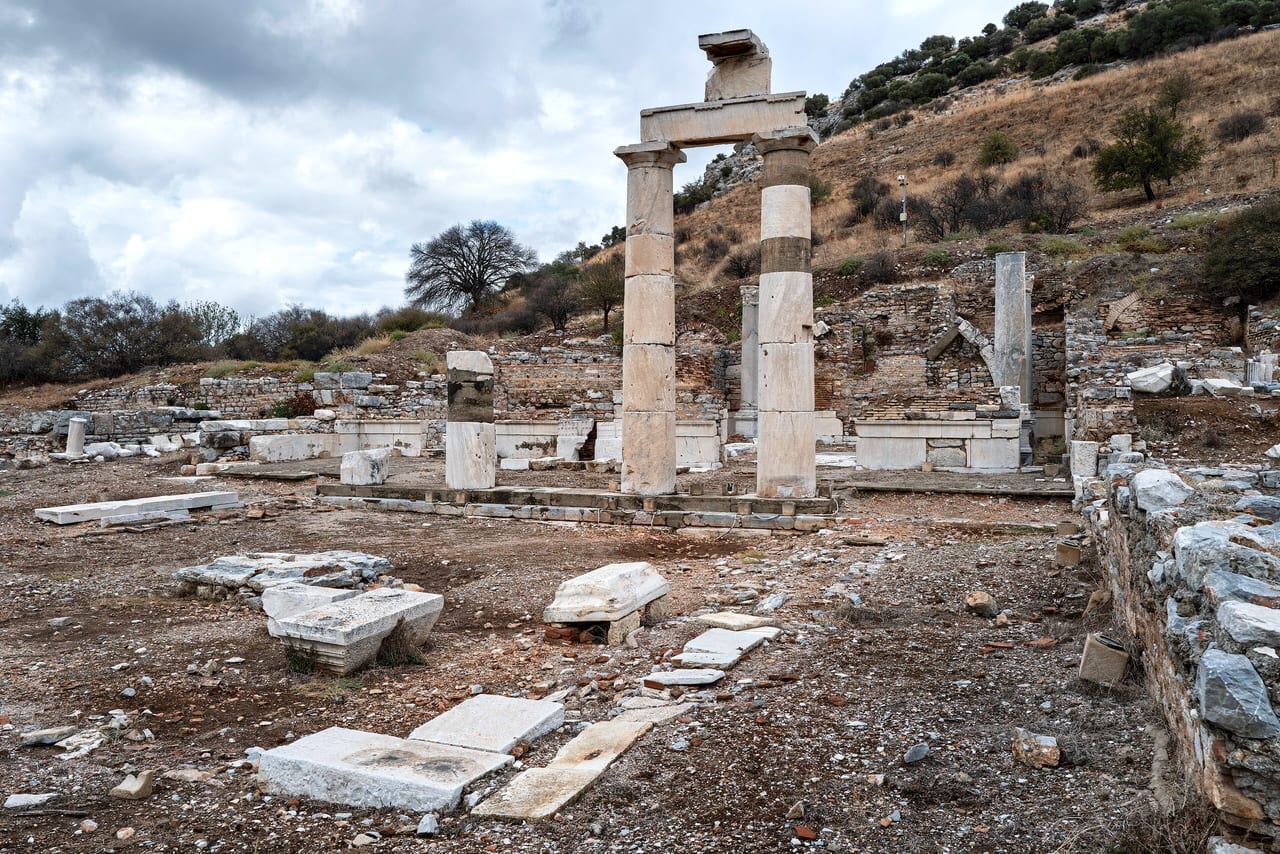
Prytaneion
The administrative and religious heart of Ephesus, where the city's sacred fire burned without ceasing and official guests were entertained.
Imagine you have been invited to dinner. Honored citizens and official guests from distant cities are sitting down at the state's table in this hall.Listen to the rest in the app
The city's hearth
As in every Greek city, the sacred fire that symbolized the independence of Ephesus burned in the Prytaneion, in the name of Hestia, goddess of the hearth. Built under Augustus, this was regarded as the most important of the public buildings; the fire was guarded by officials called prytaneis, who also led the sacrifices made on behalf of the city. In the Hall of Hestia, honored citizens and official guests dined at public expense, at a common table that stood for every household in the city.
Buried goddesses
The prytaneis were assisted at sacrifices by the Curetes, young men from the city's leading families who served for 4 years. Over time other cults found a place here, and from the early 2nd century AD Demeter and her daughter Kore were also honored. Among the most famous finds from Ephesus, three Roman statues of Artemis of Ephesus, known as the "Great", "Beautiful" and "Small" Artemis, came to light in the excavation of the Prytaneion. They had probably been buried beneath the building by early Christians wary of the goddess. The sacred fire was most likely put out under Theodosius I, who banned pagan rites in AD 391/392.
Practical information
Same as Ephesus Ancient City.
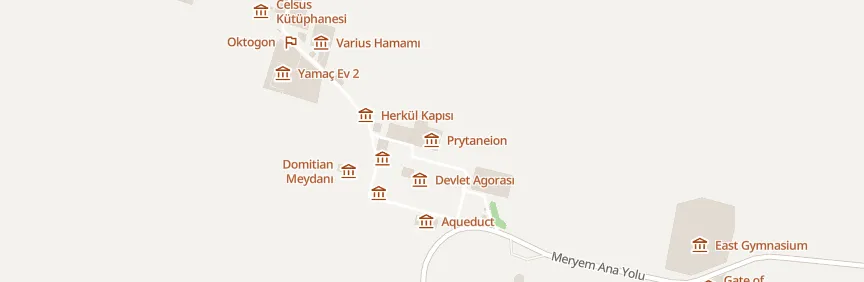
Where
Nearby places
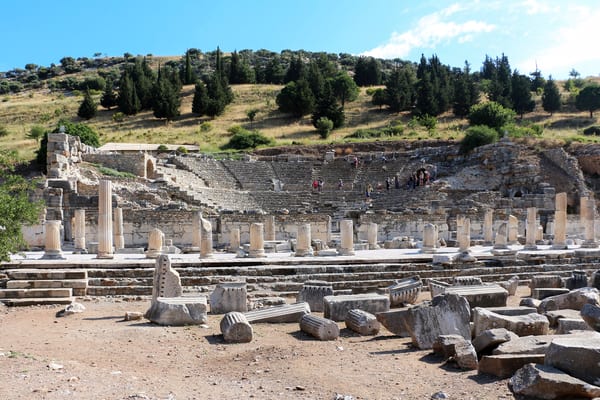 Odeon
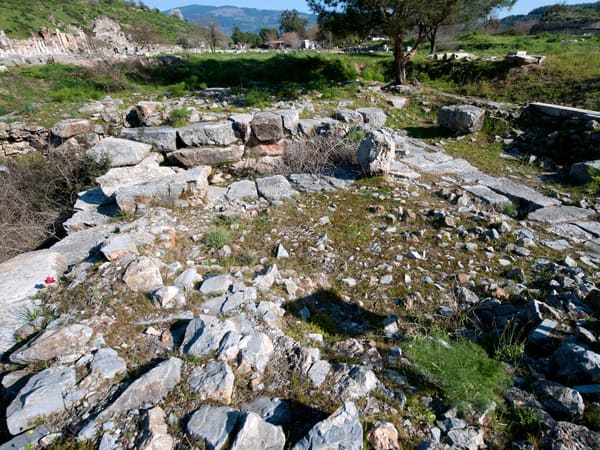 Temple on the State Agora
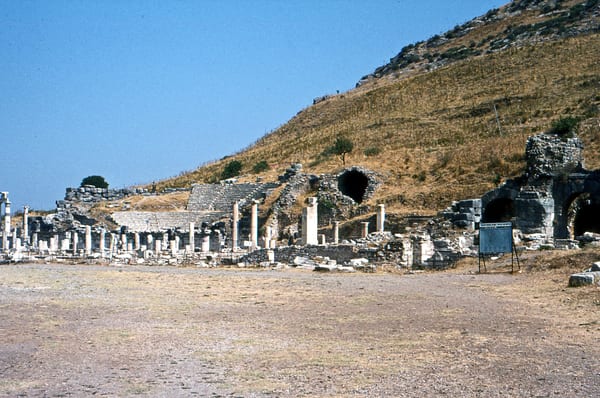 State Agora
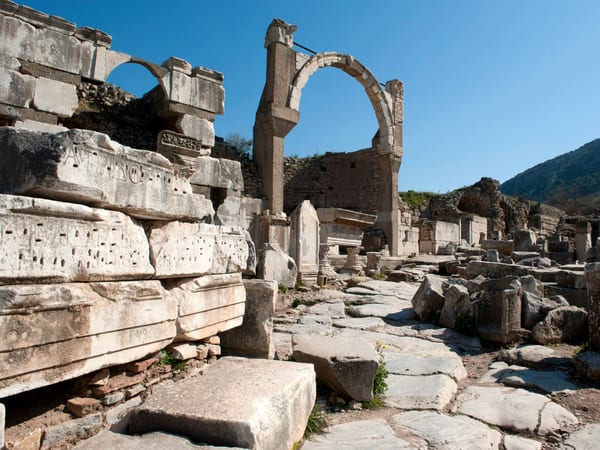 Fountain of Pollio

Routes that include this place
Listen as you walk
Guide & Travel starts the story by itself when you reach the place, and it works offline too.
Photos (5)
- Odeon — Photo: Bernard Gagnon · CC BY-SA 3.0 · Wikimedia Commons (colour corrected)
- Temple on the State Agora — Photo: Dosseman · CC BY-SA 4.0 · Wikimedia Commons (cropped)
- State Agora — Photo: Daniel VILLAFRUELA . · CC BY-SA 3.0 · Wikimedia Commons (colour corrected)
- Fountain of Pollio — Photo: Dosseman · CC BY-SA 4.0 · Wikimedia Commons (cropped)
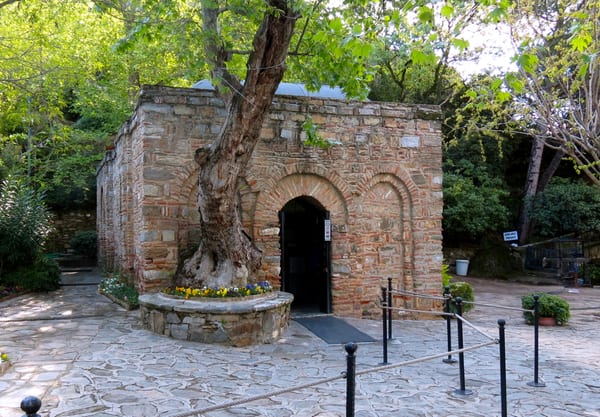
- House of the Virgin Mary — Photo: Erik Cleves Kristensen · CC BY 2.0 · Wikimedia Commons (edited)


