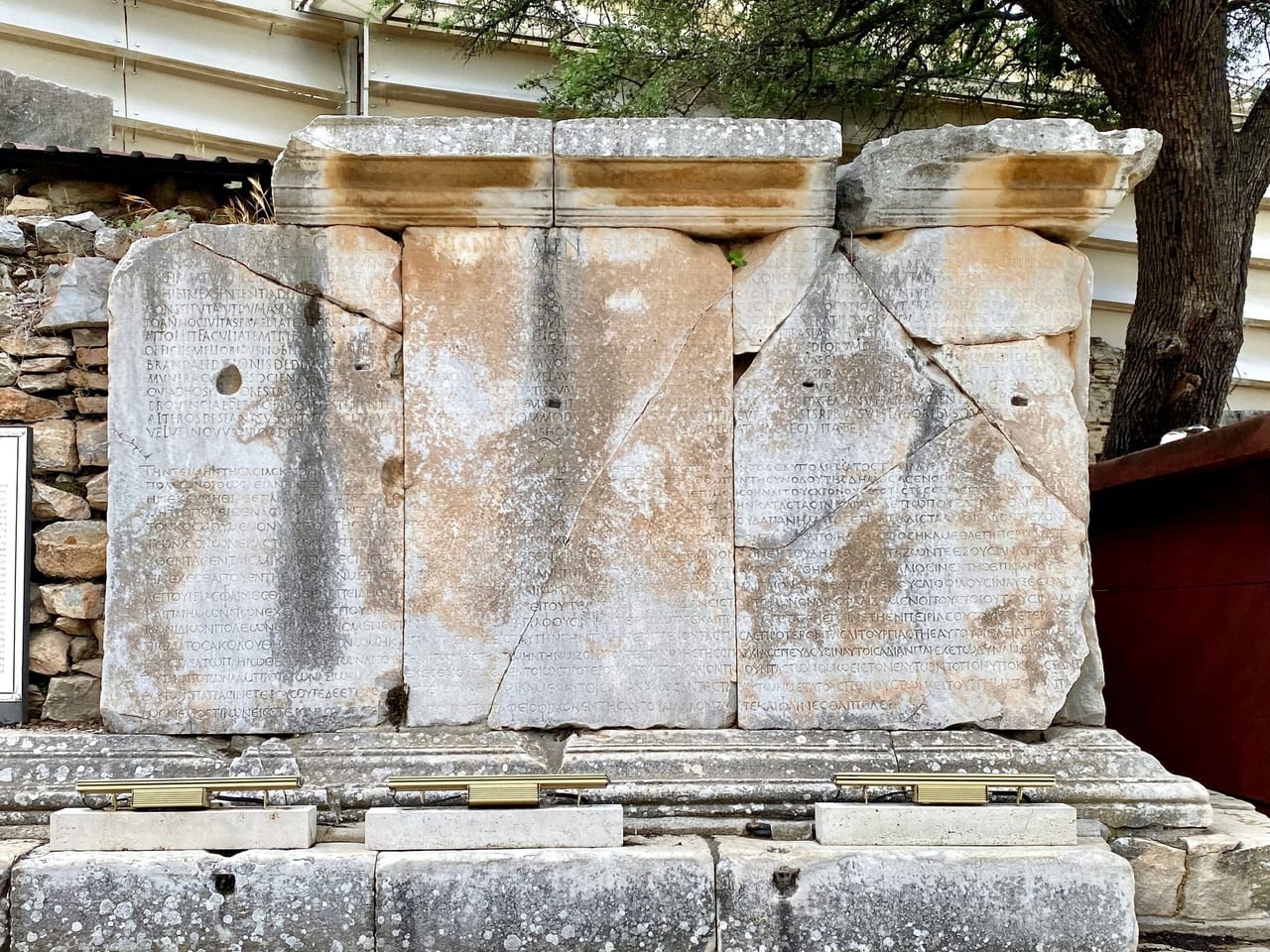
Octagon
An eight-sided monument thought to be the tomb of Arsinoe IV, Cleopatra's sister, who was killed in Ephesus.
In 41 BC, Queen Cleopatra of Egypt came to Ephesus with the Roman commander Mark Antony. Her sister Arsinoe was at that time a princess in exile at the Temple of Artemis, and she was killed during this visit.Listen to the rest in the app
An eight-sided tomb
The building standing on the south side of Curetes Street, in front of the terrace houses, is called the Octagon because of its eight-sided plan. It is one of the buildings along the street that commemorated the city's notable people. On a square base 9 × 9 meters wide and 3.40 meters high rises an octagonal chamber surrounded by eight columns, crowned by a stepped, pyramid-shaped roof. Its architectural decoration dates to 50–20 BC. On the blocks of the base facing the street, two letters written by the emperors to the Ephesians in AD 371 and 372 can be read.
A princess's tomb?
In 1929, the skeleton of a girl aged 15 or 16 was found in a plain sarcophagus in the vaulted chamber inside the base. The tomb is thought to belong to Arsinoe IV, the youngest sister of the Egyptian queen Cleopatra VII. Arsinoe had been exiled to the Temple of Artemis and was killed in 41 BC, when Cleopatra came to Ephesus with Mark Antony. Who built the monument is unknown.
Practical information
Same as Ephesus Ancient City (no separate ticket).
Where
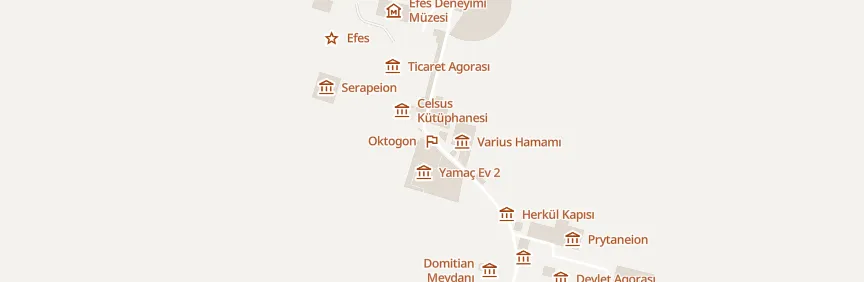
Nearby places
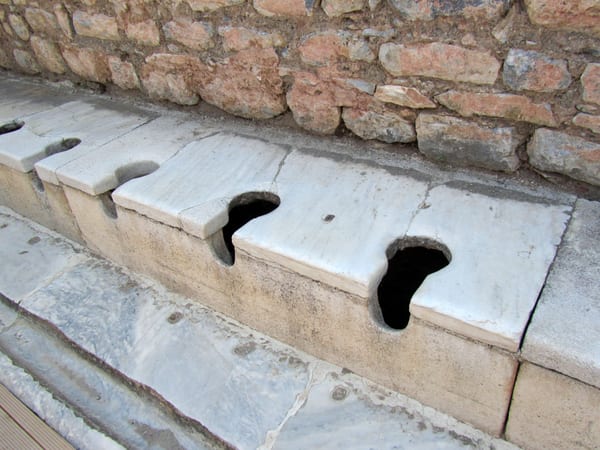 Latrine
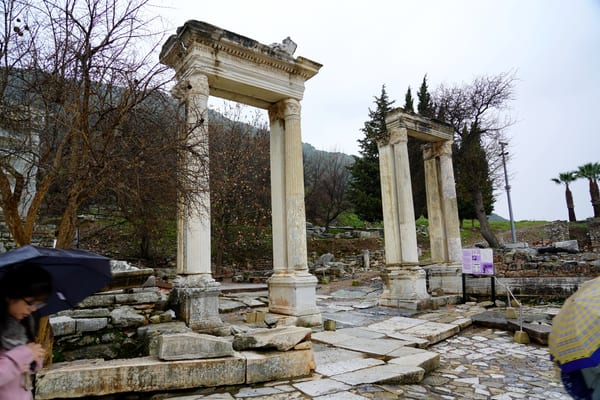 Gate of Hadrian
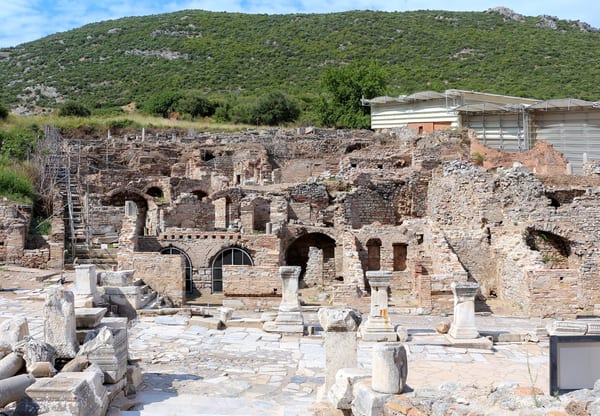 Terrace House 2
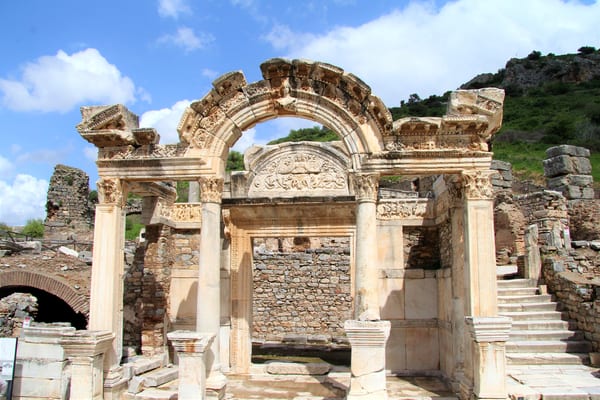 Temple of Hadrian

Routes that include this place
Listen as you walk
Guide & Travel starts the story by itself when you reach the place, and it works offline too.
Photos (5)
- Latrine — Photo: Vadim Indeikin · CC BY-SA 3.0 · Wikimedia Commons (colour corrected)
- Gate of Hadrian — Photo: Ray Swi-hymn from Sijhih-Taipei, Taiwan · CC BY-SA 2.0 · Wikimedia Commons (colour corrected)
- Terrace House 2 — Photo: Bernard Gagnon · CC BY-SA 3.0 · Wikimedia Commons (edited)
- Temple of Hadrian — Photo: Rabe! · CC BY-SA 4.0 · Wikimedia Commons (colour corrected)
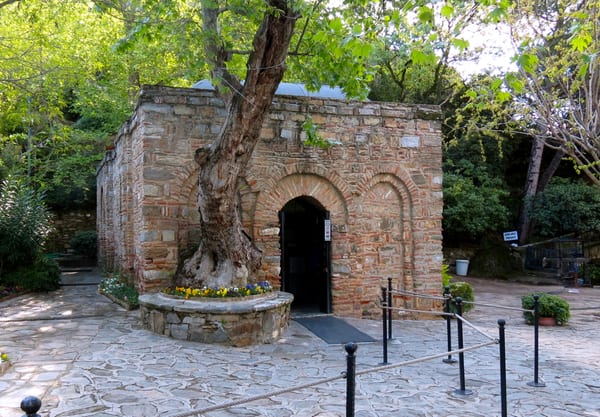
- House of the Virgin Mary — Photo: Erik Cleves Kristensen · CC BY 2.0 · Wikimedia Commons (edited)


