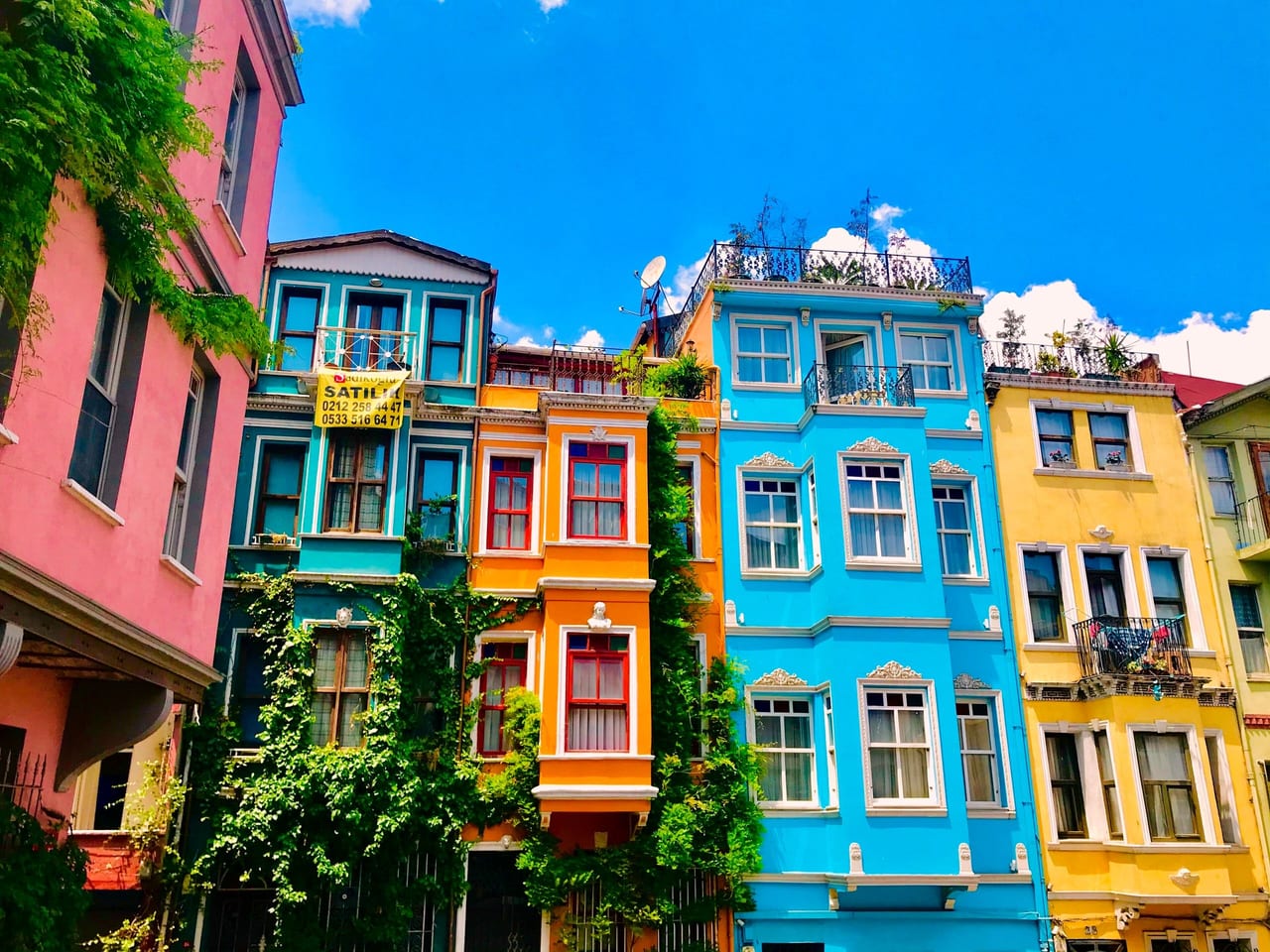
Fener and Balat
Two historic neighborhoods on the Golden Horn: Fener, with the Greek Orthodox Patriarchate, Demir Kilise (the Iron Church), and the Greek school, and Balat, with its synagogues.
Picture a sailor on a dark night, nearing the rocky banks of the Golden Horn. He cannot see the coast, but beside a gate in the sea walls, a lantern swings from the top of a tower, and he steers by its light.Listen to the rest in the app
Two neighborhoods from Byzantium
Fener and Balat are two neighborhoods lying next to each other on the Golden Horn shore of the Historic Peninsula. Fener was, in Byzantine times, a dense, walled settlement known as Petrion; the Petri, Fener, and Balat gates of the Golden Horn walls stood in this stretch. The name Fener is said to come from a lantern that hung from the tower by the gate in Byzantine times and guided sailors. Balat's Byzantine name was Palation, Greek for palace.
Greek and Jewish neighborhoods
Eremya Çelebi, a contemporary of Evliya Çelebi, recorded Fener as a neighborhood where many Greeks lived and Balat as one where many Jews lived. After the Orthodox Patriarchate settled in Fener in 1602, the neighborhood grew in importance for the city's Greeks. Greek notables known as the "Phanariot lords" built stone houses and mansions with richly decorated interiors, especially along the shore. The Orthodox took to Fener so fully that the guesthouse of St. Catherine's Monastery at Sinai, with its small church, was also set up on the Golden Horn shore. Balat's Jewish community began with about 100 families brought from Macedonia after the conquest; Jews arriving from Europe in the 15th century also settled here because of the synagogues already standing in the neighborhood. Jews from Ohrid founded the Ahrida Synagogue, whose main building was rebuilt in the 18th century. In Fener, the 13th-century Church of Panagia Mouchliotissa, dedicated to the Virgin, remained a church after the conquest.
The fabric today
The street pattern and buildings of both neighborhoods largely took shape in the 19th century, after fires; the earthquake of 1894 also caused heavy damage here. From the middle of the 20th century the population changed greatly. Timber-framed and masonry houses, together with the monumental buildings on the Golden Horn shore, make up much of the fabric of the two neighborhoods.
Practical information
- Getting there: The Fener and Balat ferry piers on the Golden Horn and bus stops on the shore road (for lines and ferry service, check the transport operators' official websites before you go).
- Suggested time: A 2–3 hour walk.
[bilgi: An open neighborhood; the churches and synagogues are places of worship, so check their official websites for visiting conditions before you go. Please respect residents in front of their homes and in the streets.]
Where
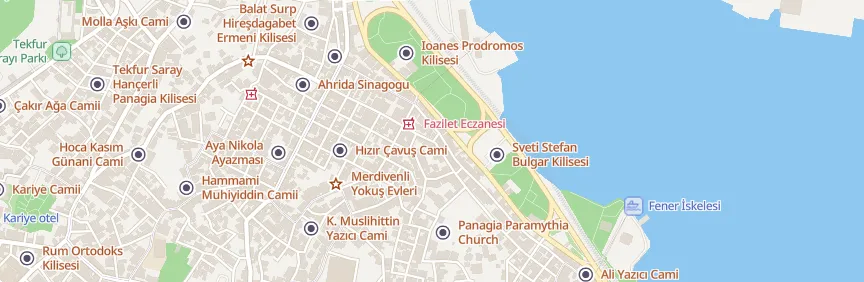
Inside this place
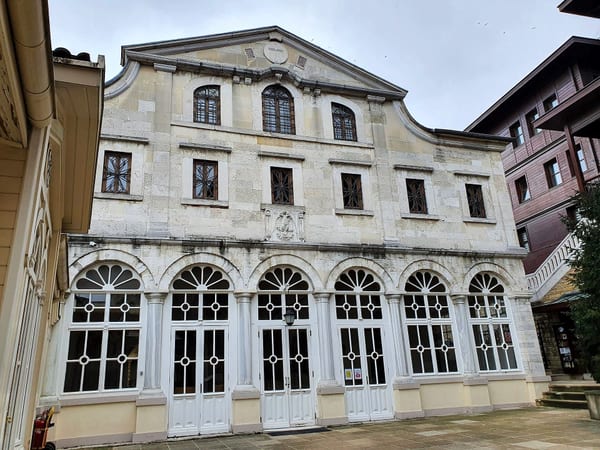 Greek Orthodox Patriarchate
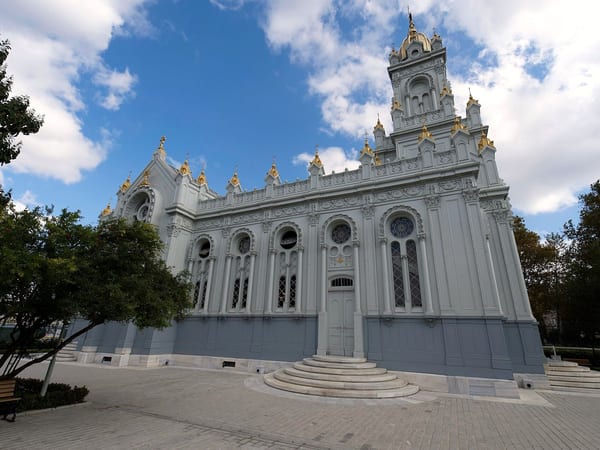 Bulgarian St. Stephen Church
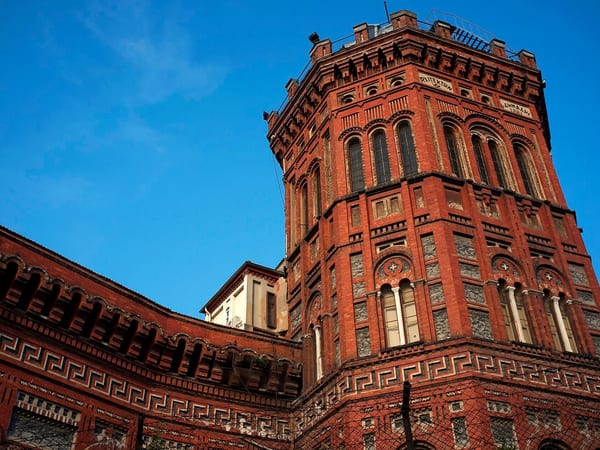 Fener Greek School
Nearby places
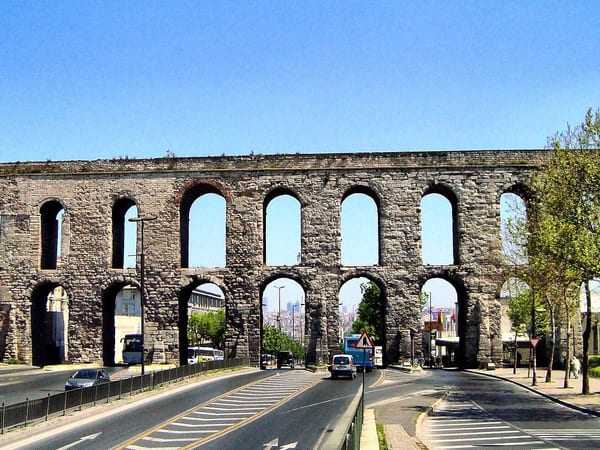 Aqueduct of Valens
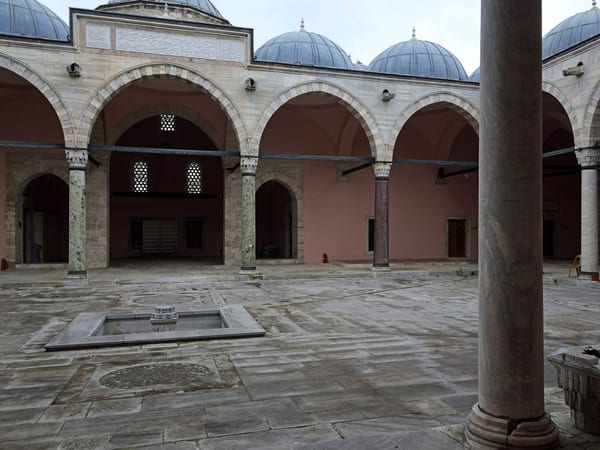 Darüzziyafe (Süleymaniye Soup Kitchen)
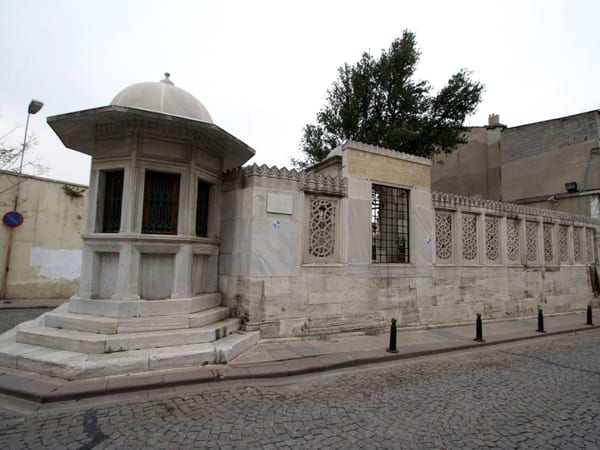 Tomb of Mimar Sinan

Routes that include this place
Listen as you walk
Guide & Travel starts the story by itself when you reach the place, and it works offline too.
Photos (7)
- Greek Orthodox Patriarchate — Photo: Antoloji · CC BY-SA 4.0 · Wikimedia Commons (colour corrected)
- Bulgarian St. Stephen Church — Photo: Dosseman · CC BY-SA 4.0 · Wikimedia Commons (cropped)
- Fener Greek School — Photo: Aleksandr Zykov from Russia · CC BY-SA 2.0 · Wikimedia Commons (cropped)
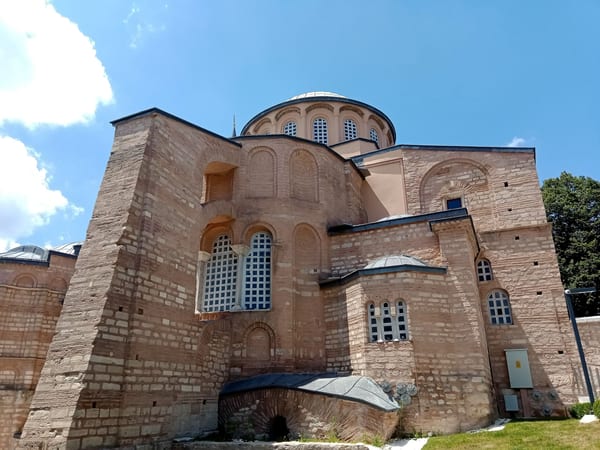
- Chora — Photo: Rémih · CC BY-SA 4.0 · Wikimedia Commons (colour corrected)
- Aqueduct of Valens — Photo: HALUK COMERTEL · CC BY 3.0 · Wikimedia Commons (cropped)
- Darüzziyafe (Süleymaniye Soup Kitchen) — Photo: Dosseman · CC BY-SA 4.0 · Wikimedia Commons (cropped)
- Tomb of Mimar Sinan — Photo: Sitomon · CC BY-SA 2.0 · Wikimedia Commons (cropped)


