Dolmabahçe Palace
Sultan Abdülmecid's palace on the Bosphorus: home of six sultans and the last caliph from 1856 to 1924, and the place where Atatürk spent his last days.
Can a palace take its name from a garden won from the sea? Dolmabahçe's name tells exactly that story.Listen to the rest in the app
A palace on a filled-in cove
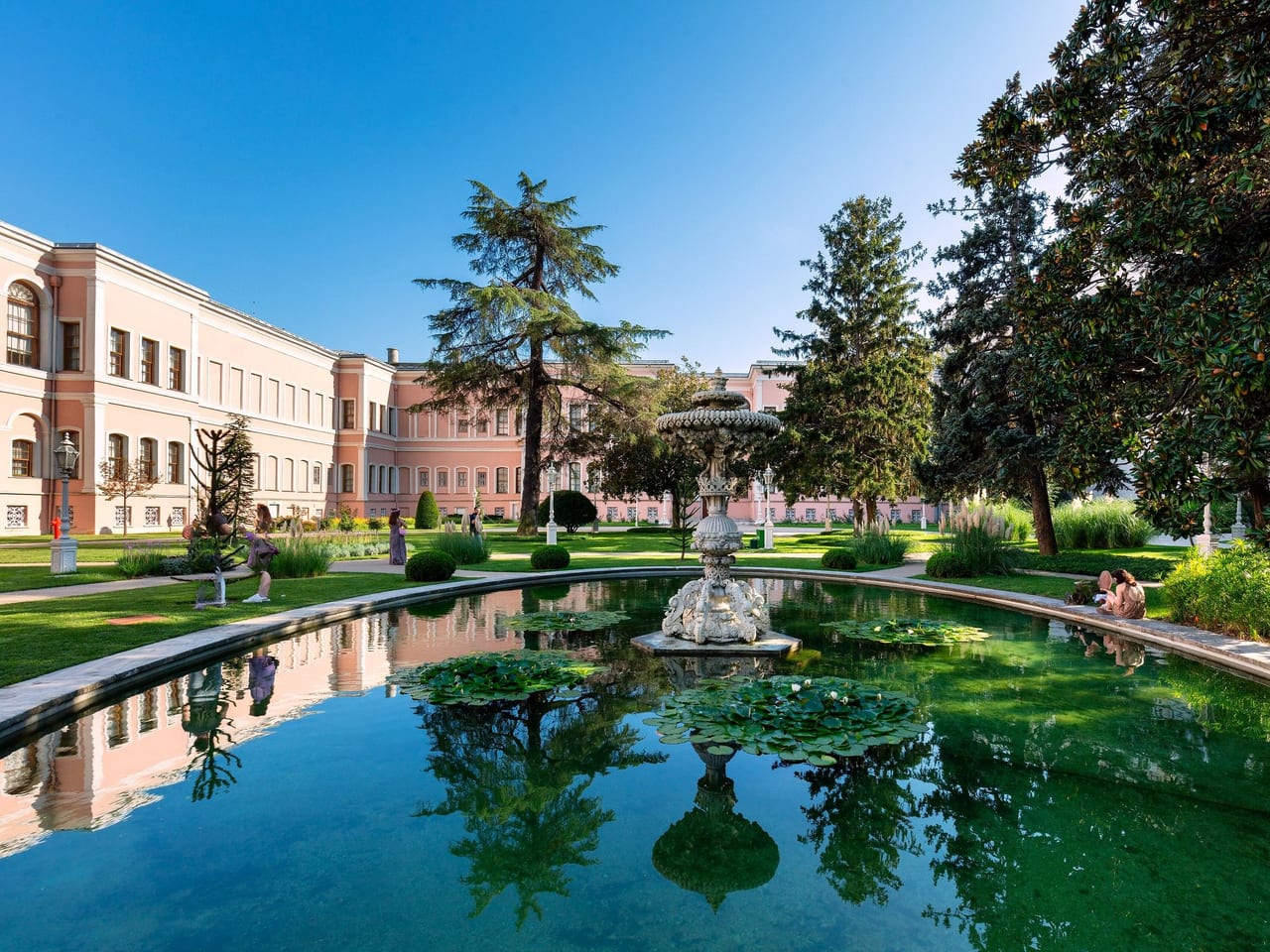
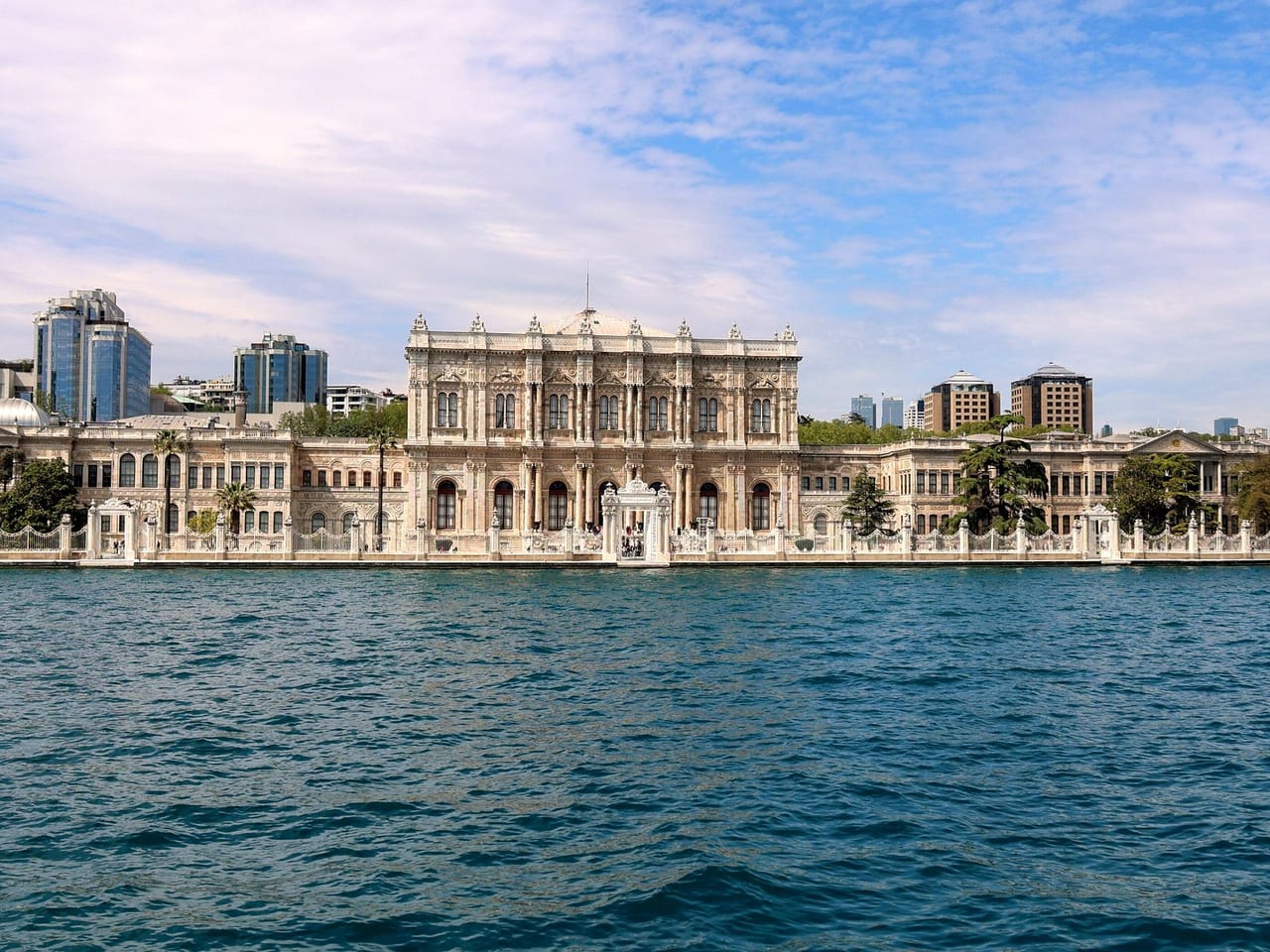
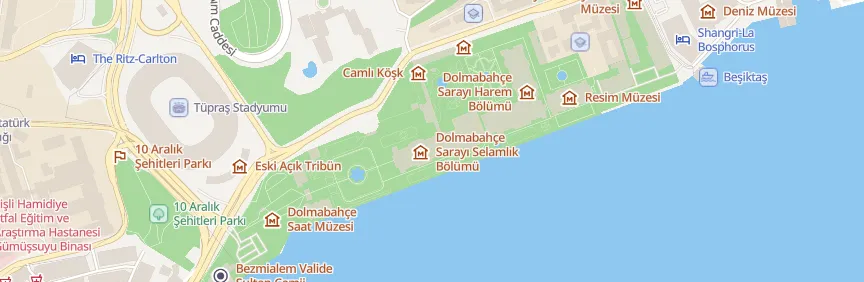
Dolmabahçe Palace stands on the European shore of the Bosphorus, between Beşiktaş and Kabataş. A small cove once lay here; in the 17th century it was filled with stone and laid out as a royal garden, which is why the place came to be called Dolmabahçe, "the filled-in garden." The Beşiktaş Waterfront Palace was later built on the site. Sultan Abdülmecid had the old wooden palace torn down and a masonry palace built in its place. Construction began in the 1840s, and the palace opened on June 7, 1856. Its architects were Garabet and Nikogos Balyan.
Western styles, Ottoman order
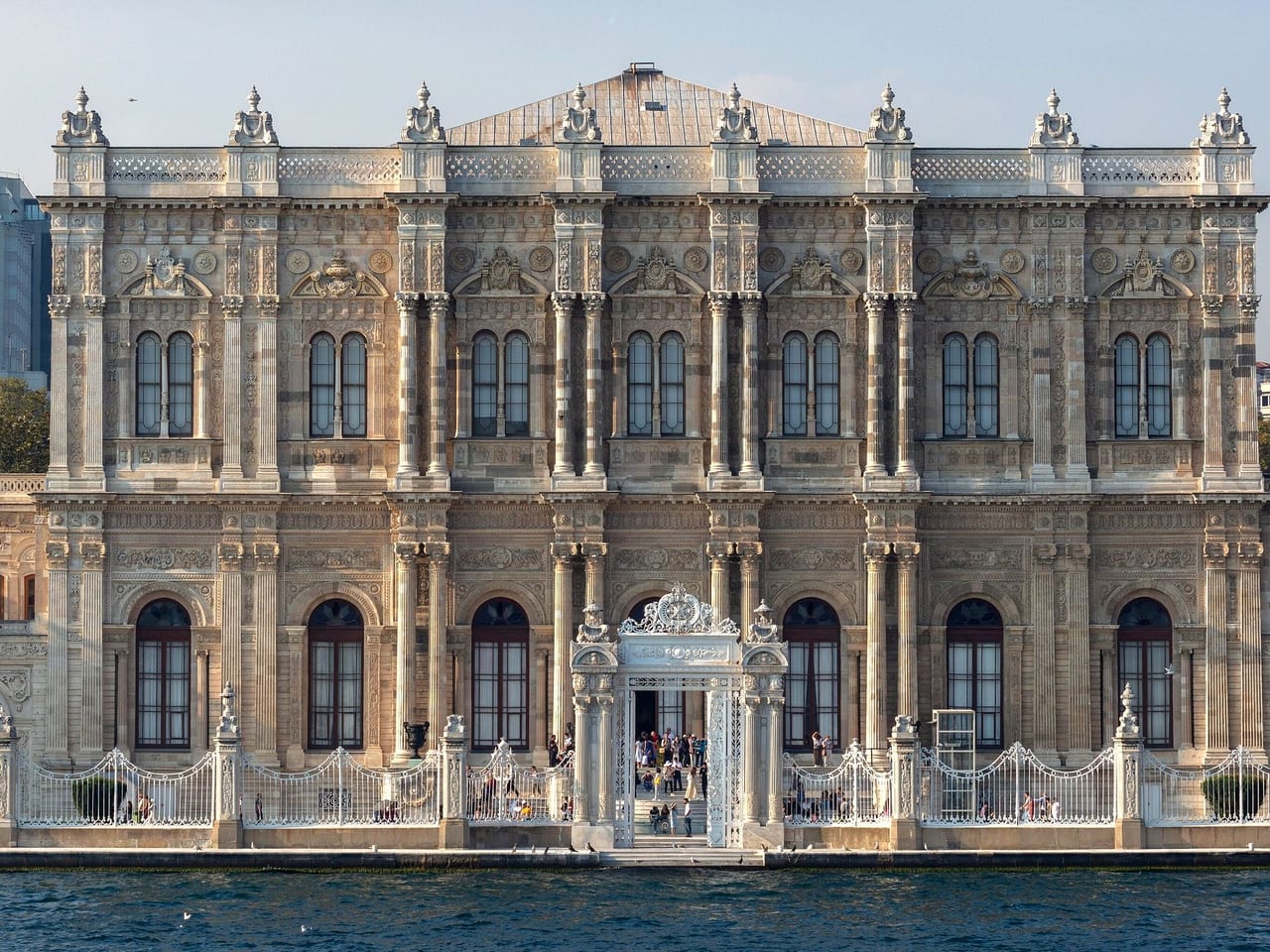
The building blends Baroque, Rococo, and Neoclassical styles with Ottoman decoration, while its plan follows Ottoman palace tradition. With two stories above a basement and attic floors, it has 285 rooms, 44 halls, and 6 baths. Its main parts are the Mabeyn, or Selamlık, for state business; the Harem, home of the sultan's family; and between them the Ceremonial Hall (Muayede Salonu), for holiday greetings. Its dome rises about 36 meters; its chandelier was made to order in England in 1853 and purchased. The Crystal Staircase, with crystal balustrades, leads to the Ambassadors' Hall. Walled on the land side, the palace opens onto the Bosphorus along a long, railed quay.
From sultanate to republic
Six sultans and the last caliph lived here from 1856 until the caliphate was abolished in 1924. The first Ottoman Chamber of Deputies opened in the Ceremonial Hall on March 19, 1877. Under the Republic, the palace was a presidential residence. On his first visit to İstanbul, on July 1, 1927, Atatürk addressed the people in the Ceremonial Hall; in 1928 the first work on the new Turkish alphabet was done here. Atatürk died in the palace on November 10, 1938. Since 1984 it has been open to visitors as a palace museum.
Practical information
- Getting there: To Kabataş by the T1 tram, the F1 funicular, or ferry; from Kabataş, on foot along the waterfront road.
- Visit: A palace museum; tours cover the Selamlık, the Harem, the Glass Pavilion, and the Clock Museum. For visiting hours, closing days, tickets, and rules on photography indoors, check the official website before you go.
- Suggested time: 2–3 hours.
Where
Inside this place
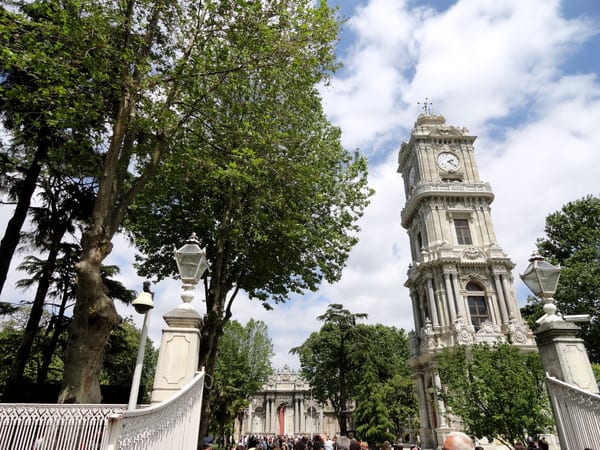 Dolmabahçe Clock TowerHistorical Place
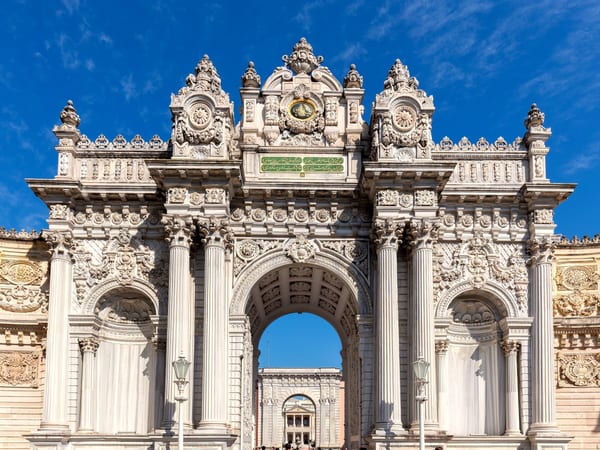 Treasury Gate and Imperial GateHistorical Place
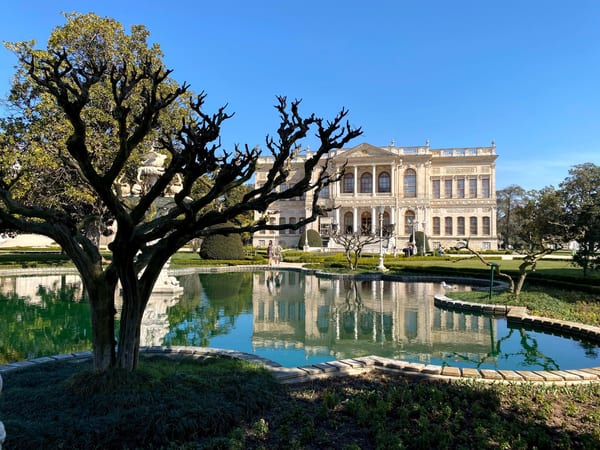 Hasbahçe and the Palace GardensHistorical Place
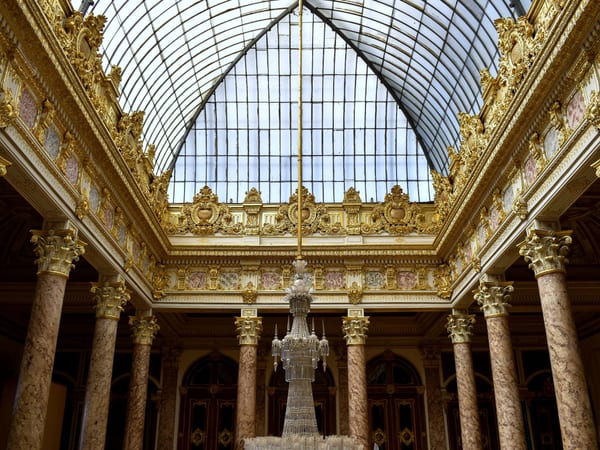 Entrance Hall, Crystal Staircase, and Ambassadors' HallHistorical Place
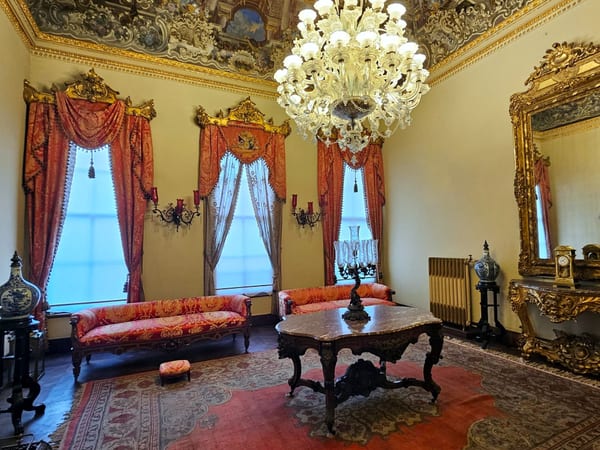 Red Room, Zülvecheyn Hall, and the Sultan's BathHistorical Place
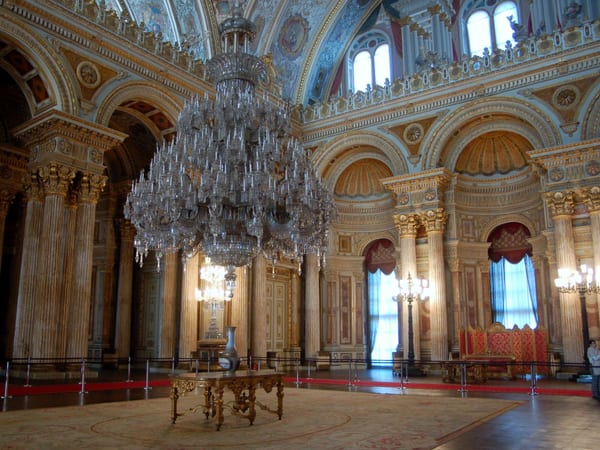 Ceremonial HallHistorical Place
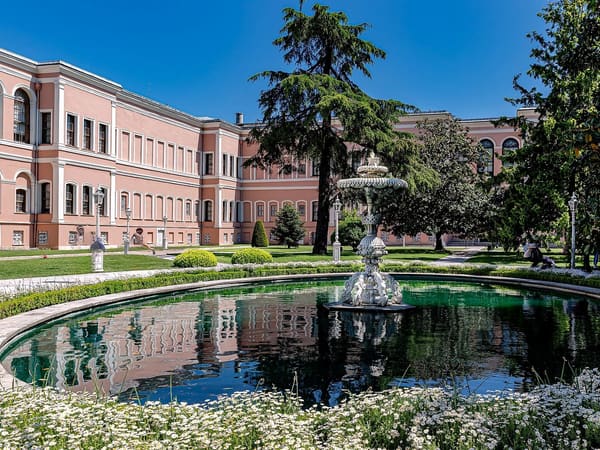 Harem (Blue Hall, Pink Hall, and Atatürk's Room)Historical Place
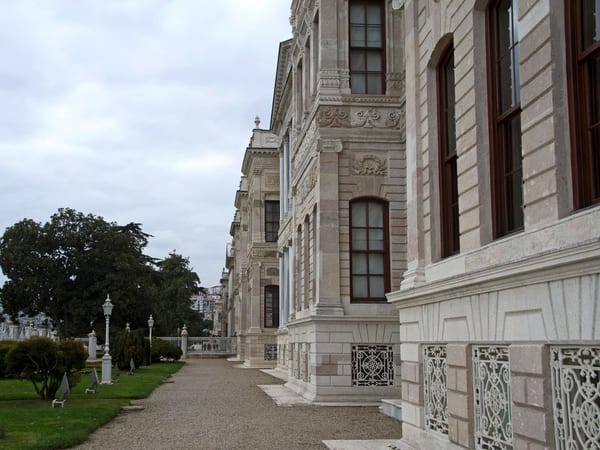 Crown Prince's Suite (Painting Museum)Historical Place
Nearby places
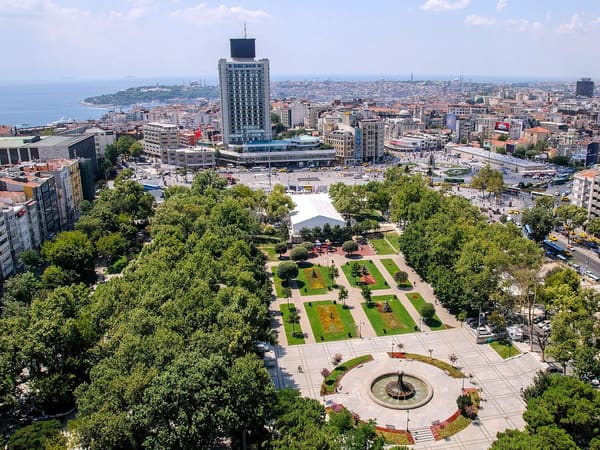 Taksim Square
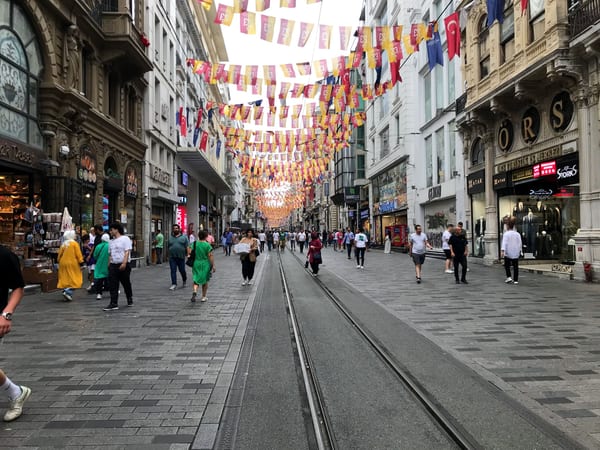 İstiklal Avenue
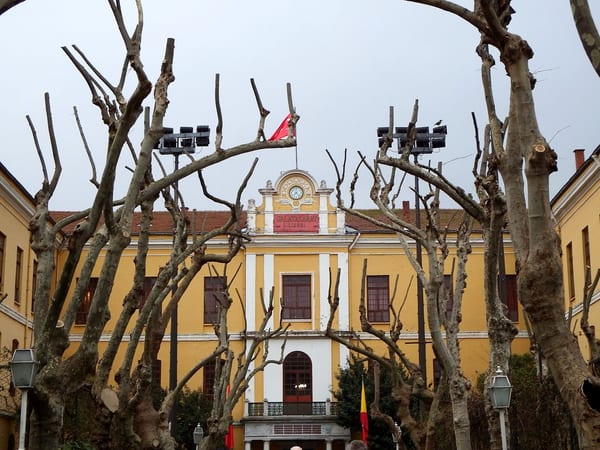 Galatasaray High School

Listen as you walk
Guide & Travel starts the story by itself when you reach the place, and it works offline too.
Photos (12)
- Dolmabahçe Clock Tower — Photo: l0da_ralta · CC BY 2.0 · Wikimedia Commons (edited)
- Treasury Gate and Imperial Gate — Photo: Diego Delso · CC BY-SA 4.0 · Wikimedia Commons (cropped)
- Hasbahçe and the Palace Gardens — Photo: Ahmt.durak · CC BY-SA 4.0 · Wikimedia Commons (edited)
- Entrance Hall, Crystal Staircase, and Ambassadors' Hall — Photo: Julian Lupyan · CC0 · Wikimedia Commons (cropped)
- Red Room, Zülvecheyn Hall, and the Sultan's Bath — Photo: Sergey A. Demidov · CC BY 4.0 · Wikimedia Commons (cropped)
- Ceremonial Hall — Photo: Dan from Brussels, Europe · CC BY-SA 2.0 · Wikimedia Commons (cropped)
- Harem (Blue Hall, Pink Hall, and Atatürk's Room) — Photo: Ninara · CC BY 2.0 · Wikimedia Commons (edited)
- Crown Prince's Suite (Painting Museum) — Photo: Dosseman · CC BY-SA 4.0 · Wikimedia Commons (edited)
- Taksim Square — Photo: Tarikkaanmuslu · CC BY-SA 4.0 · Wikimedia Commons (cropped)
- İstiklal Avenue — Photo: Antimuonium · CC BY-SA 4.0 · Wikimedia Commons (colour corrected)
- Galatasaray High School — Photo: fdecomite · CC BY 2.0 · Wikimedia Commons (cropped)
- Üç Horan Armenian Church — Photo: Antimuonium · CC BY-SA 4.0 · Wikimedia Commons (colour corrected)


