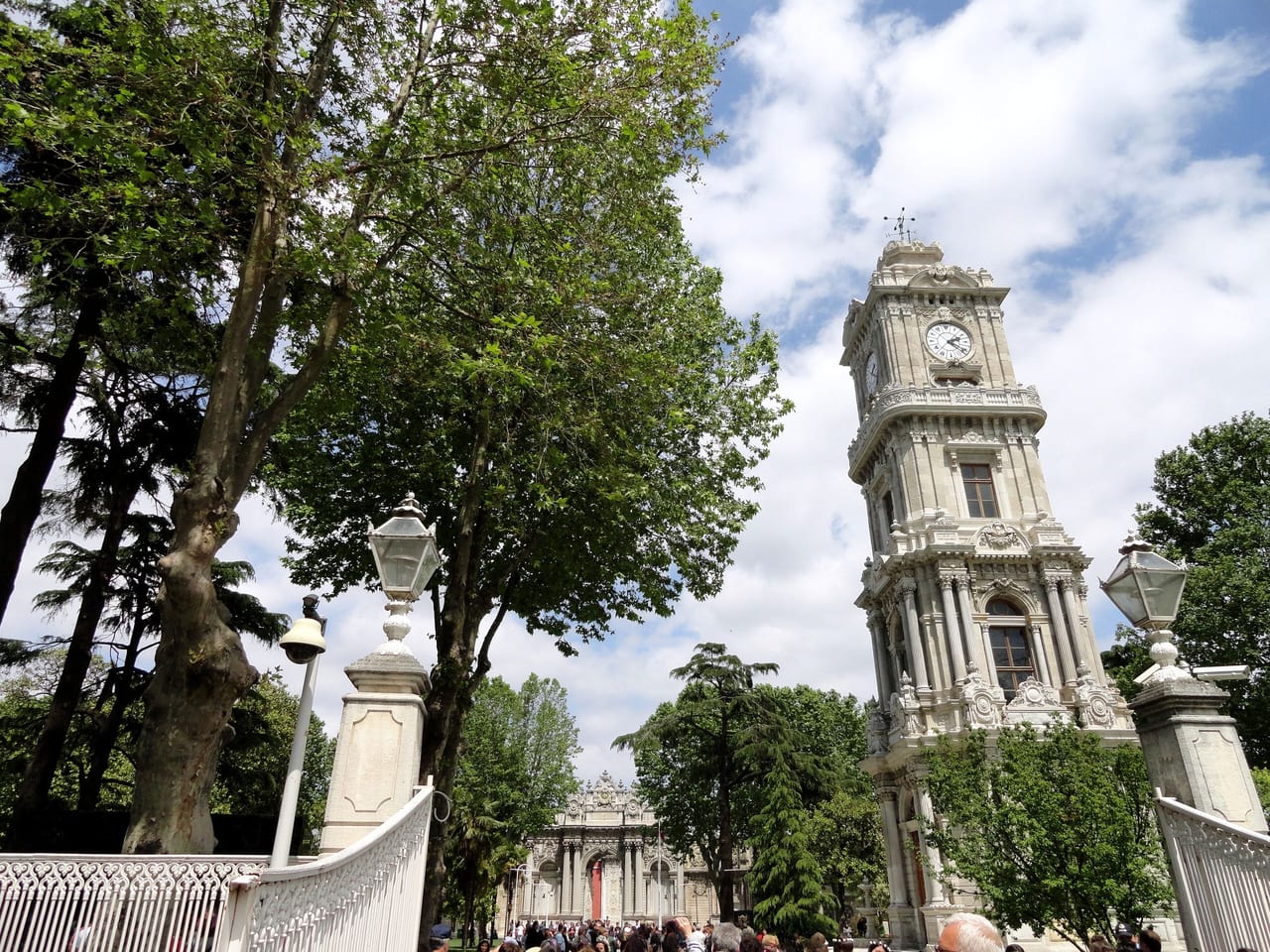
Dolmabahçe Clock Tower
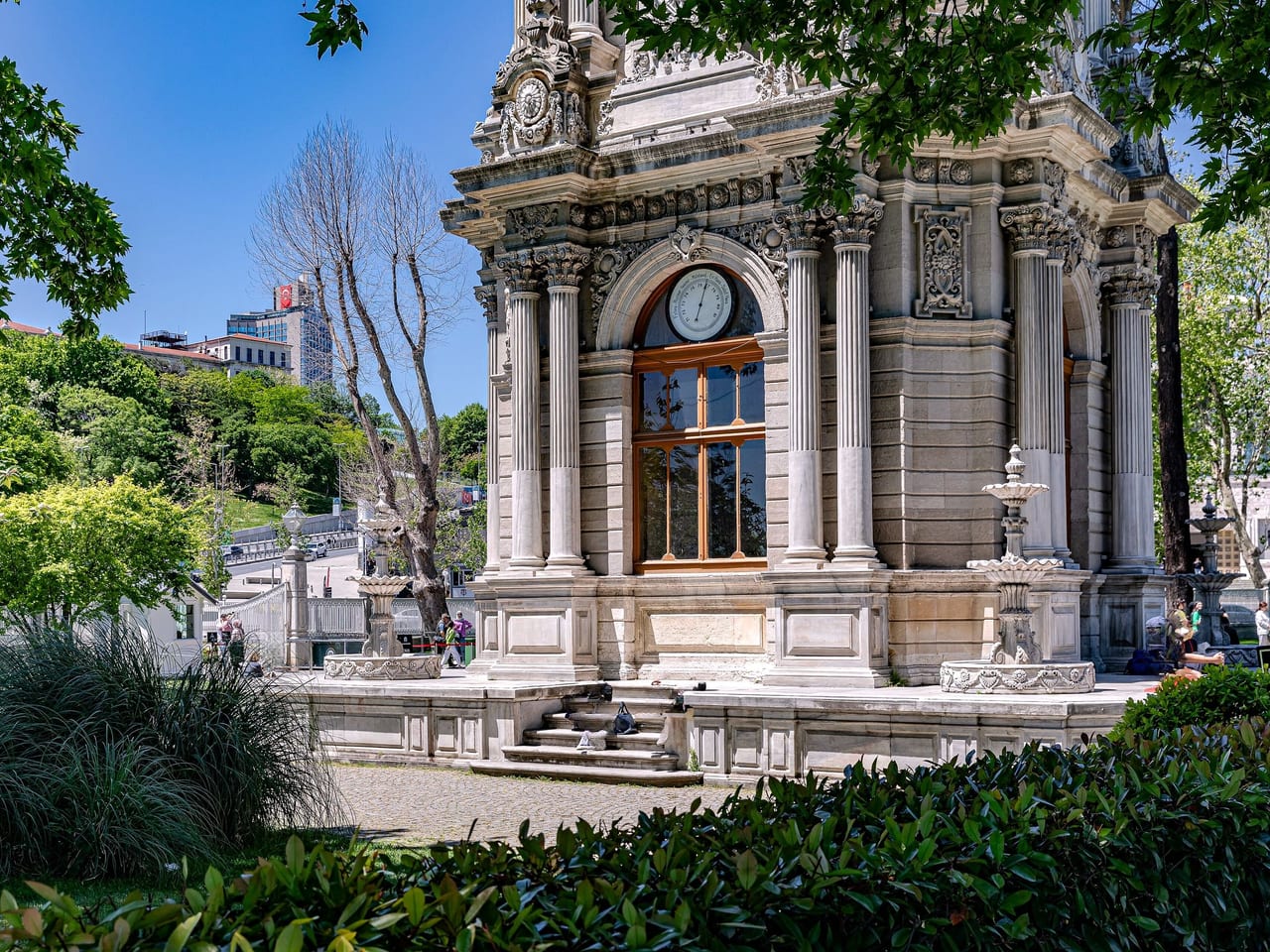
The four-story tower between the Bezm-i Âlem Valide Sultan Mosque and the palace gate: built by Abdülhamid II, with French clocks, barometers, and thermometers.
A tower with a clock on each of its four faces. For more than a hundred and thirty years, these dials have marked the time beside the Bosphorus.Listen to the rest in the app
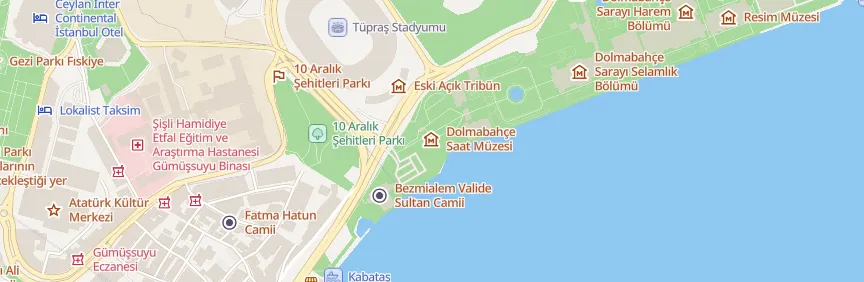
The Dolmabahçe Clock Tower rises in the garden between the Bezm-i Âlem Valide Sultan Mosque and the palace's Treasury Gate. It was built long after the palace, under Sultan Abdülhamid II, between 1890 and 1894, an example of the clock towers going up across the empire in those years and one of the first buildings visitors see in the palace's entrance square. In the arches of its ground floor are barometers and thermometers. Higher up, the Ottoman coat of arms of Abdülhamid II's reign and the sultan's tughra can be seen, and the ornament grows simpler toward the top. Each face of the upper story carries a French-made clock. The clocks are by Paul Garnier and run on two mechanisms: one drives three faces together, and a separate one works the clock on the sea side. The tower's architect was also Sarkis Balyan, and it combines Neo-Baroque and Empire styles.
Practical information
- Visit: The tower stands in the open area before the palace entrance and is seen from outside.
- Suggested time: 5 minutes.
Where
Nearby places
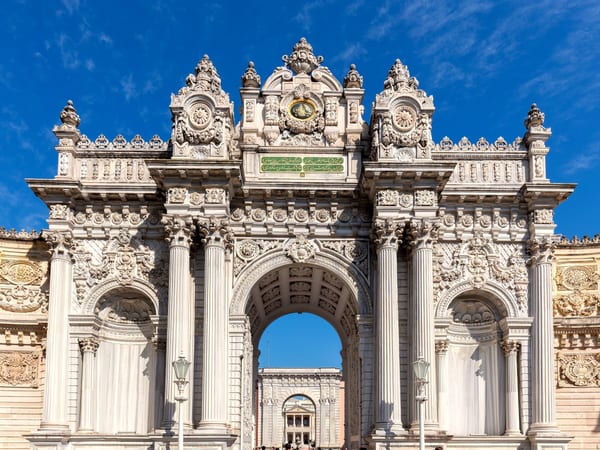 Treasury Gate and Imperial Gate
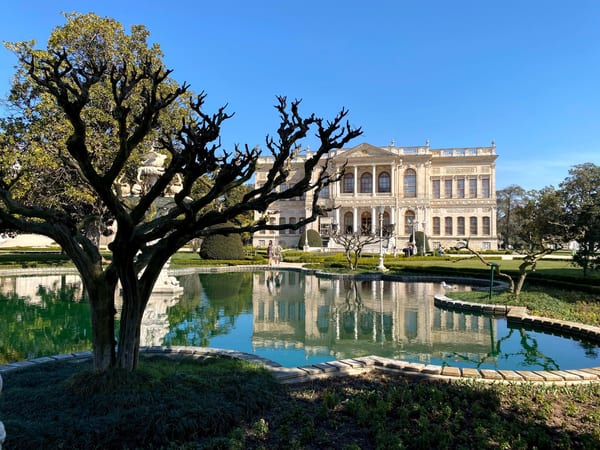 Hasbahçe and the Palace Gardens
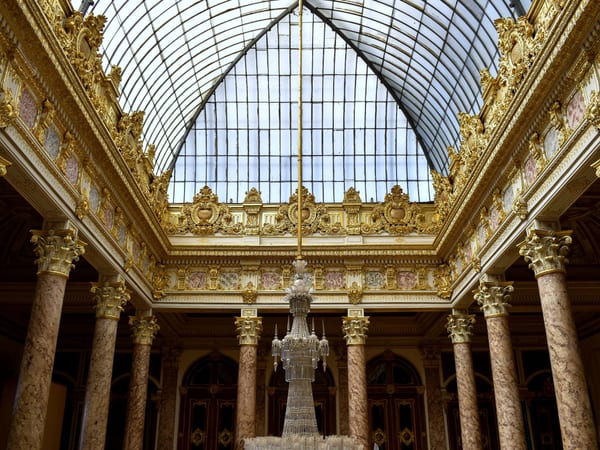 Entrance Hall, Crystal Staircase, and Ambassadors' Hall
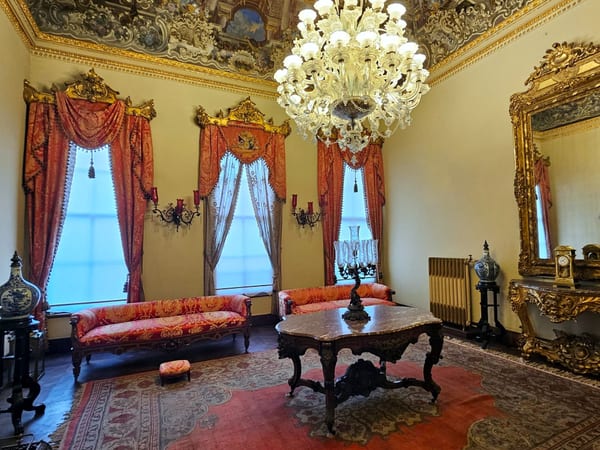 Red Room, Zülvecheyn Hall, and the Sultan's Bath

Listen as you walk
Guide & Travel starts the story by itself when you reach the place, and it works offline too.
Photos (4)
- Treasury Gate and Imperial Gate — Photo: Diego Delso · CC BY-SA 4.0 · Wikimedia Commons (cropped)
- Hasbahçe and the Palace Gardens — Photo: Ahmt.durak · CC BY-SA 4.0 · Wikimedia Commons (edited)
- Entrance Hall, Crystal Staircase, and Ambassadors' Hall — Photo: Julian Lupyan · CC0 · Wikimedia Commons (cropped)
- Red Room, Zülvecheyn Hall, and the Sultan's Bath — Photo: Sergey A. Demidov · CC BY 4.0 · Wikimedia Commons (cropped)


