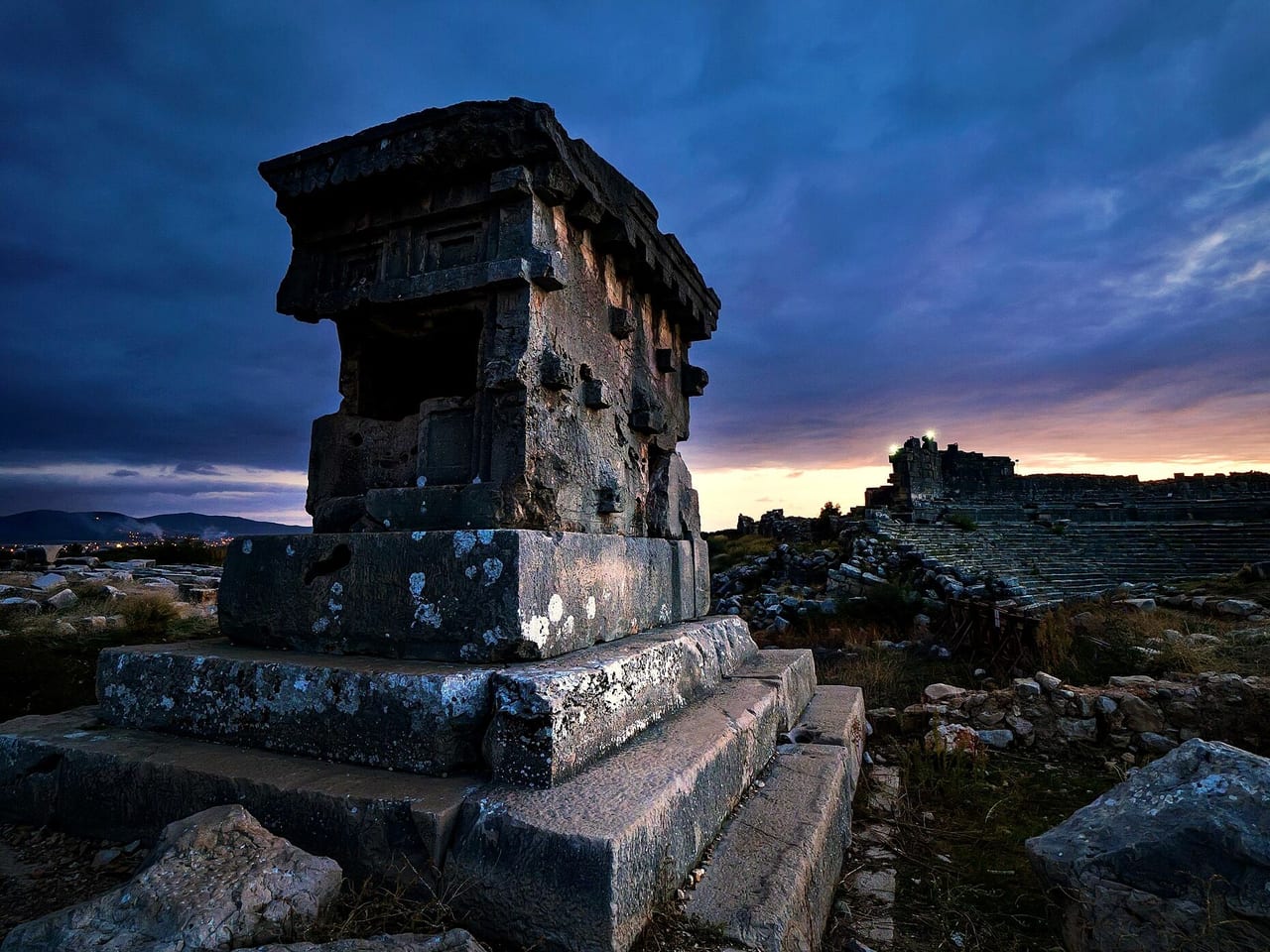
Theater
A well-preserved theater north of the Lycian Acropolis, facing the agora: built in the 2nd century AD, it later gained an arena wall for bull shows and gave its seats to the Byzantine city wall.
The building
The theater north of the Lycian Acropolis faces the agora. The present building dates from the middle of the 2nd century AD; on its site stood an older Hellenistic theater, probably of the 1st century BC, with an orchestra 14.4 m across. The diameter is about 65 m, and the semicircular orchestra measures 27.10 m. Today 16 rows survive in the lower section (there were at least 21), and 4 to 6 rows in the upper section. It held about 2,200 people. Opramoas of Rhodiapolis gave 30,000 denarii toward the theater. The stage building had a two-story colonnaded front and five doors. The east entrance opens onto the orchestra, while the west one is a blind passage, with no way through.
Later uses
An inscription mentions a bull show; later the lower rows were removed and an arena wall of 3.30–3.40 m was built. In late antiquity, the Byzantine city wall cuts across the upper rows and reuses their stones.
Where
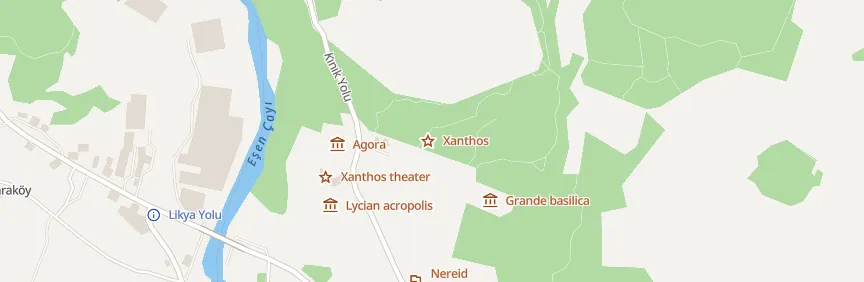
Nearby places
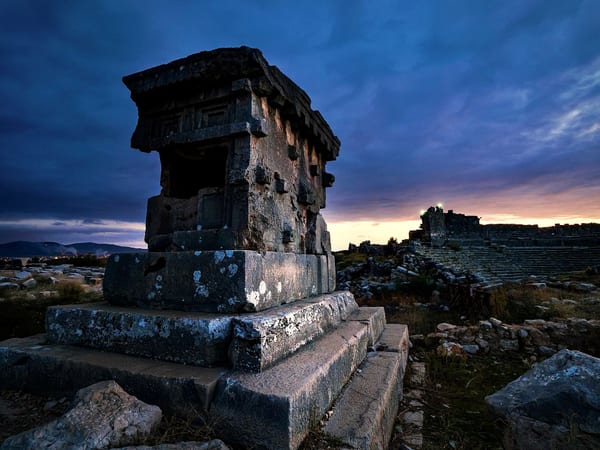 House-Type Tomb (East of the Agora)

Listen as you walk
Guide & Travel starts the story by itself when you reach the place, and it works offline too.
Photos (4)
- House-Type Tomb (East of the Agora) — Photo: Buğra Kaan Ersoy · CC BY-SA 4.0 · Wikimedia Commons (cropped)
- Lycian Acropolis — Photo: Buğra Kaan Ersoy · CC BY-SA 4.0 · Wikimedia Commons (cropped)
- Arch of Vespasian — Photo: Buğra Kaan Ersoy · CC BY-SA 4.0 · Wikimedia Commons (cropped)
- Tower Tomb Above the Theater — Photo: Buğra Kaan Ersoy · CC BY-SA 4.0 · Wikimedia Commons (cropped)