Nereid Monument
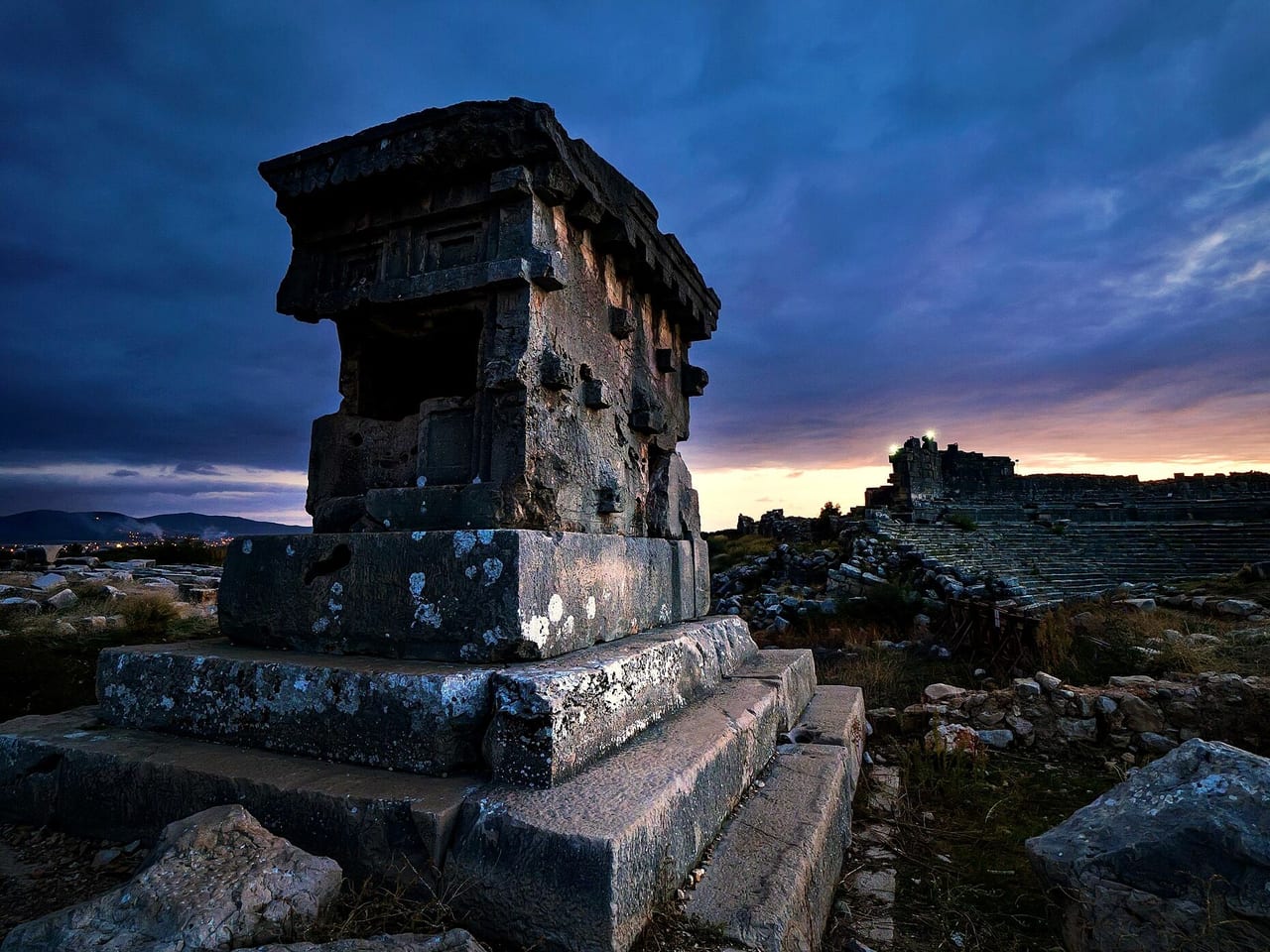
The surviving foundation of a tomb shaped like an Ionic temple on a tall podium: its upper part, with Nereid statues and siege reliefs, was rebuilt in the British Museum.
On the terrace northeast of the South Gate, only the foundation and a few blocks of the Nereid Monument remain; the upper part was rebuilt in the British Museum. The building was a tomb in the form of an Ionic temple on a tall podium, in other words a heroon. Researchers date it between 400 and 380 BC. It is thought to be the tomb of Arbinas, of the local dynasty.
Between the columns stood 12 statues of Nereids with sea creatures at their feet; 11 survive. The Nereids are described as figures who accompany the souls of the dead. The reliefs show scenes of siege and war. Aegean and Anatolian styles appear together, along with Persian influence. The works were moved to England in the years after Charles Fellows studied the site.
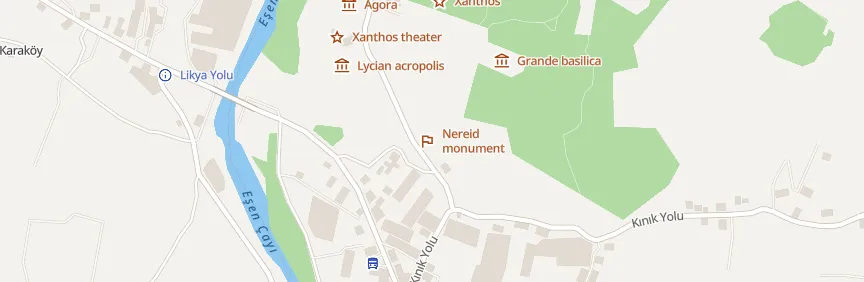
Where
Nearby places
 Dipylon (Double-Passage Arch)

Listen as you walk
Guide & Travel starts the story by itself when you reach the place, and it works offline too.
Photos (4)
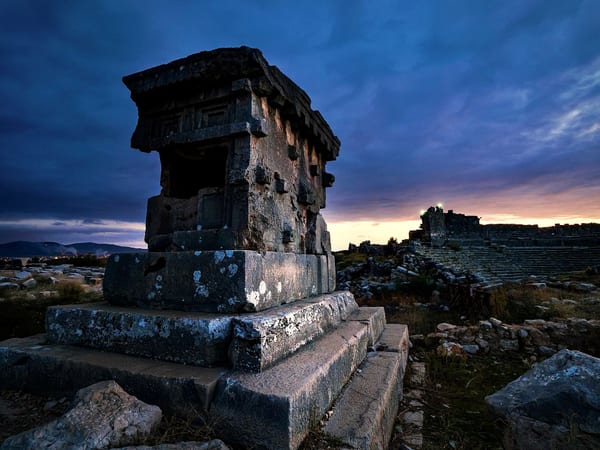
- Dipylon (Double-Passage Arch) — Photo: Buğra Kaan Ersoy · CC BY-SA 4.0 · Wikimedia Commons (cropped)
- Colonnaded Street — Photo: Buğra Kaan Ersoy · CC BY-SA 4.0 · Wikimedia Commons (cropped)
- Roman Tower Tomb — Photo: Buğra Kaan Ersoy · CC BY-SA 4.0 · Wikimedia Commons (cropped)
- Pillar Tomb with Sarcophagus — Photo: Buğra Kaan Ersoy · CC BY-SA 4.0 · Wikimedia Commons (cropped)