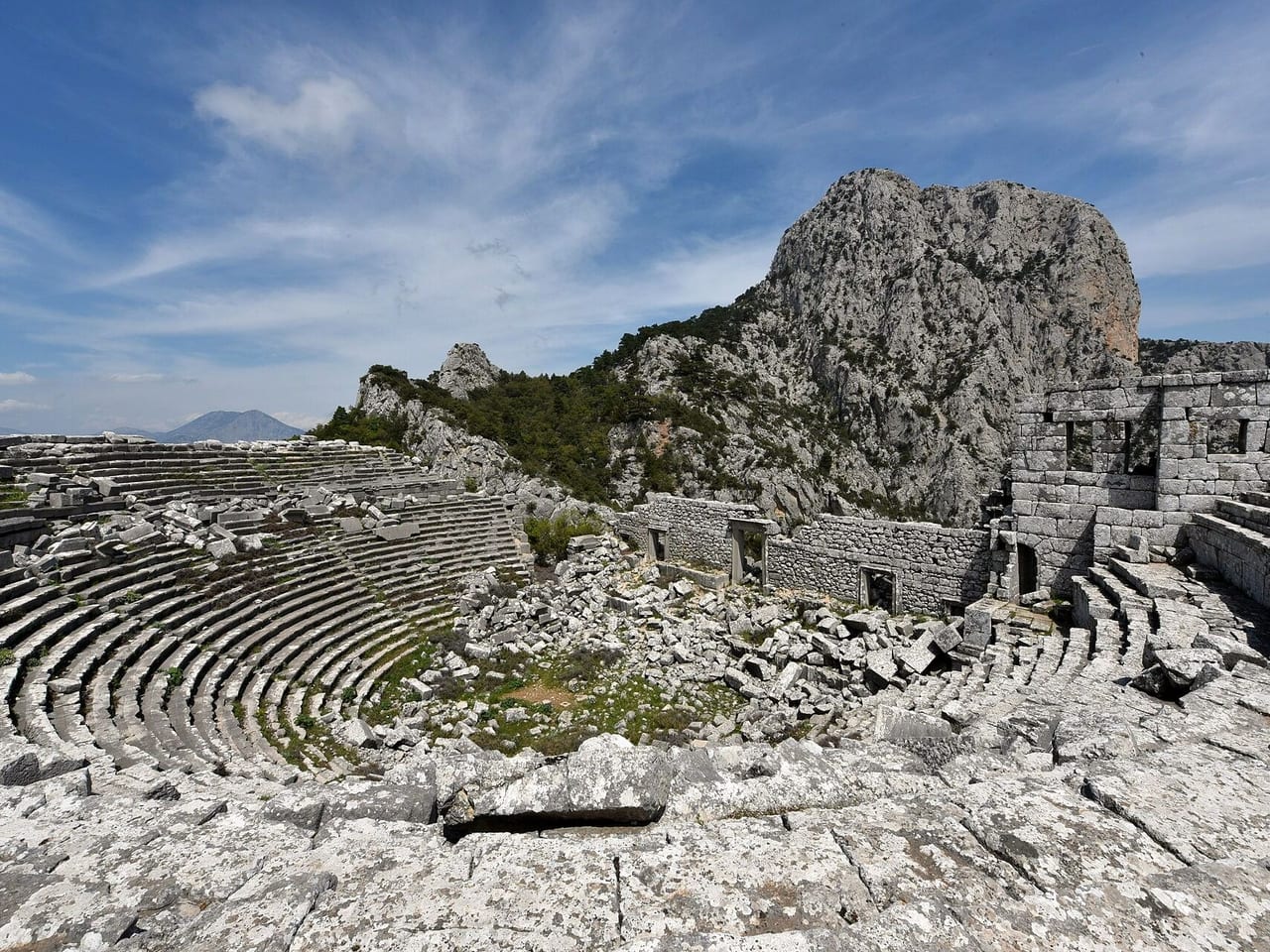
Termessos
The Pisidian city among the peaks of Mount Güllük that never surrendered to Alexander the Great: a mountainside theater, a council house, linked cisterns, and shield-carved sarcophagi.
City of the Solymians
Termessos lies in Milyas, the southwestern part of Pisidia, in a valley between the peaks of Mount Güllük, the ancient Mount Solymos. Its buildings spread between about 900 and 1,250 meters above sea level, some 35 km northwest of Antalya. The city was founded by the Solymians, held to descend from the Luwians, one of Anatolia's ancient peoples; the people of Termessos belonged to the Solymian folk and were known for their warlike character. The "-ss-" suffix in the name may point to the 3rd millennium BC, while the city's identity takes clear shape in the Hellenistic period.
The first author who certainly names Termessos is Arrian, in his account of Alexander's Asian campaign. Alexander besieged the city in 333 BC; its people resisted and did not surrender it. After his death, the city passed to the Ptolemies. In 189 BC the people of Termessos took Isinda and faced punishment from Manlius Vulso. In 71 BC the Roman Senate recognized the city as independent in its internal affairs, and from 36 to 25 BC it was under Amyntas of Galatia. In the Roman Imperial period its coins showed its autonomy; what came later is unknown. Rural settlements such as Kelbessos and Neapolis also belonged to the city.
The city and its setting
The city has three parts: the Lower City, the City Center, and the Colonnaded Street. Reflecting the influence of Pergamon, its public buildings gather in a center shaped by terraces. The chief god was Zeus Solymeus, followed by Artemis; the city has seven temples and a large burial ground. Lanckoronski's team studied the site in 1884–85, and Heberdey in 1899 and 1902. The Dog Sarcophagus, known for the poetic inscription written for Stephanos, the dog of Rhodope, is in the collection of the Antalya Museum. The city lies within Güllük Dağı-Termessos National Park, known for its rich plant life and wildlife, which also takes in the Güver Cliff. In 2000 the park was added to UNESCO's Tentative List of World Heritage for its natural and cultural values.
Practical information
- Getting there: By the park road that leaves the Antalya–Korkuteli highway at km 24. The visit begins on foot from the parking plain.
- Opening hours and admission: These vary by season; check official sources before you go.
- Facilities: Restrooms, parking.
- Suggested time: 2–3 hours (uphill walking).
- Status: Open.
Where
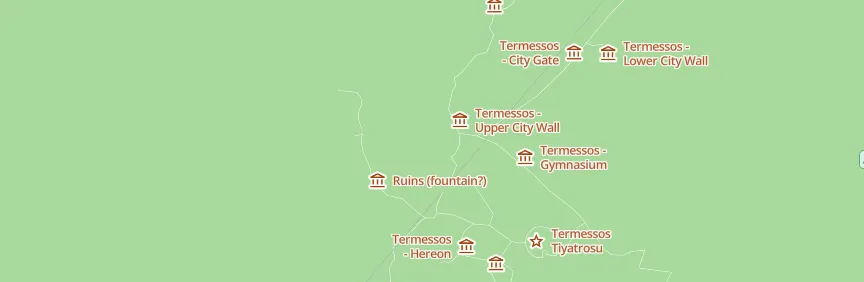
Inside this place
 King's RoadHistorical PlacePropylon of HadrianHistorical PlaceTemple of Artemis (N7)Historical PlaceLower City WallsHistorical PlaceGymnasium and BathHistorical PlaceColonnaded StreetHistorical PlaceAgoraHistorical PlaceStoa of AttalusHistorical PlaceStoa of OsbarasHistorical PlaceAgora CisternsHistorical PlaceTheaterHistorical PlaceCouncil HouseHistorical PlaceCorinthian Temple (N1 Building)Historical PlaceSmall Temple of Artemis (N4)Historical PlaceTemple of Zeus Solymeus or Artemis (N5)Historical PlaceHouse of the FounderHistorical PlaceSouthwest NecropolisHistorical Place
Nearby places
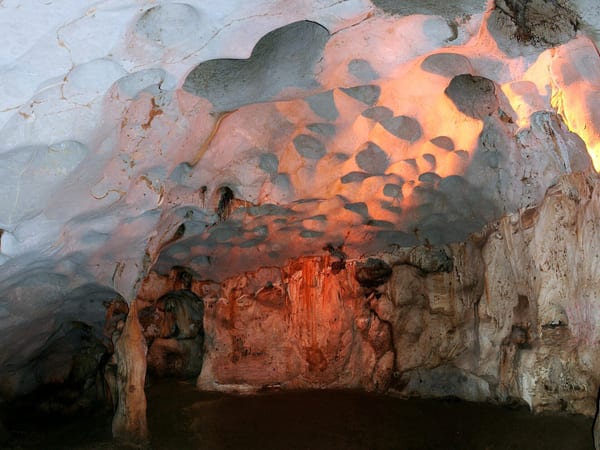 Karain Cave
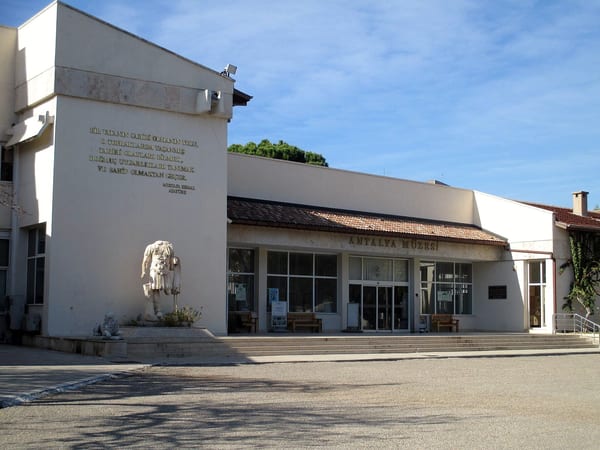 Antalya Museum
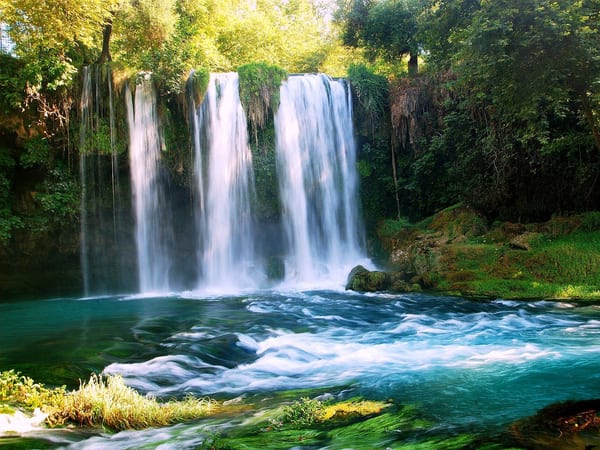 Upper Düden Waterfall
 Ancient Harbor (Yacht Harbor)

Listen as you walk
Guide & Travel starts the story by itself when you reach the place, and it works offline too.
Photos (21)
- King's Road — Photo: 7oanna · CC BY-SA 4.0 · Wikimedia Commons (cropped)
- Propylon of Hadrian — Photo: 7oanna · CC BY-SA 4.0 · Wikimedia Commons (cropped)
- Temple of Artemis (N7) — Photo: 7oanna · CC BY-SA 4.0 · Wikimedia Commons (cropped)
- Lower City Walls — Photo: 7oanna · CC BY-SA 4.0 · Wikimedia Commons (cropped)
- Gymnasium and Bath — Photo: 7oanna · CC BY-SA 4.0 · Wikimedia Commons (cropped)
- Colonnaded Street — Photo: 7oanna · CC BY-SA 4.0 · Wikimedia Commons (cropped)
- Agora — Photo: 7oanna · CC BY-SA 4.0 · Wikimedia Commons (cropped)
- Stoa of Attalus — Photo: 7oanna · CC BY-SA 4.0 · Wikimedia Commons (cropped)
- Stoa of Osbaras — Photo: 7oanna · CC BY-SA 4.0 · Wikimedia Commons (cropped)
- Agora Cisterns — Photo: 7oanna · CC BY-SA 4.0 · Wikimedia Commons (cropped)
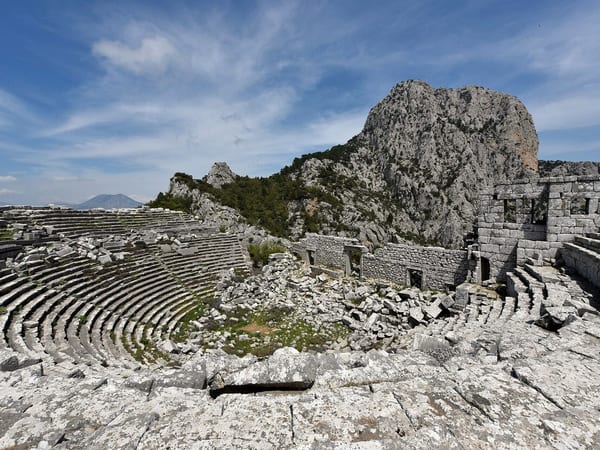
- Theater — Photo: 7oanna · CC BY-SA 4.0 · Wikimedia Commons (cropped)
- Council House — Photo: 7oanna · CC BY-SA 4.0 · Wikimedia Commons (cropped)
- Corinthian Temple (N1 Building) — Photo: 7oanna · CC BY-SA 4.0 · Wikimedia Commons (cropped)
- Small Temple of Artemis (N4) — Photo: 7oanna · CC BY-SA 4.0 · Wikimedia Commons (cropped)
- Temple of Zeus Solymeus or Artemis (N5) — Photo: 7oanna · CC BY-SA 4.0 · Wikimedia Commons (cropped)
- House of the Founder — Photo: 7oanna · CC BY-SA 4.0 · Wikimedia Commons (cropped)
- Southwest Necropolis — Photo: 7oanna · CC BY-SA 4.0 · Wikimedia Commons (cropped)
- Karain Cave — Photo: Ingo Mehling · CC BY-SA 3.0 · Wikimedia Commons (cropped)
- Antalya Museum — Photo: Dat doris · CC BY-SA 4.0 · Wikimedia Commons (edited)
- Upper Düden Waterfall — Photo: zolakoma · CC BY 2.0 · Wikimedia Commons (cropped)
- Ancient Harbor (Yacht Harbor) — Photo: Intermerker · CC BY-SA 4.0 · Wikimedia Commons (cropped)


