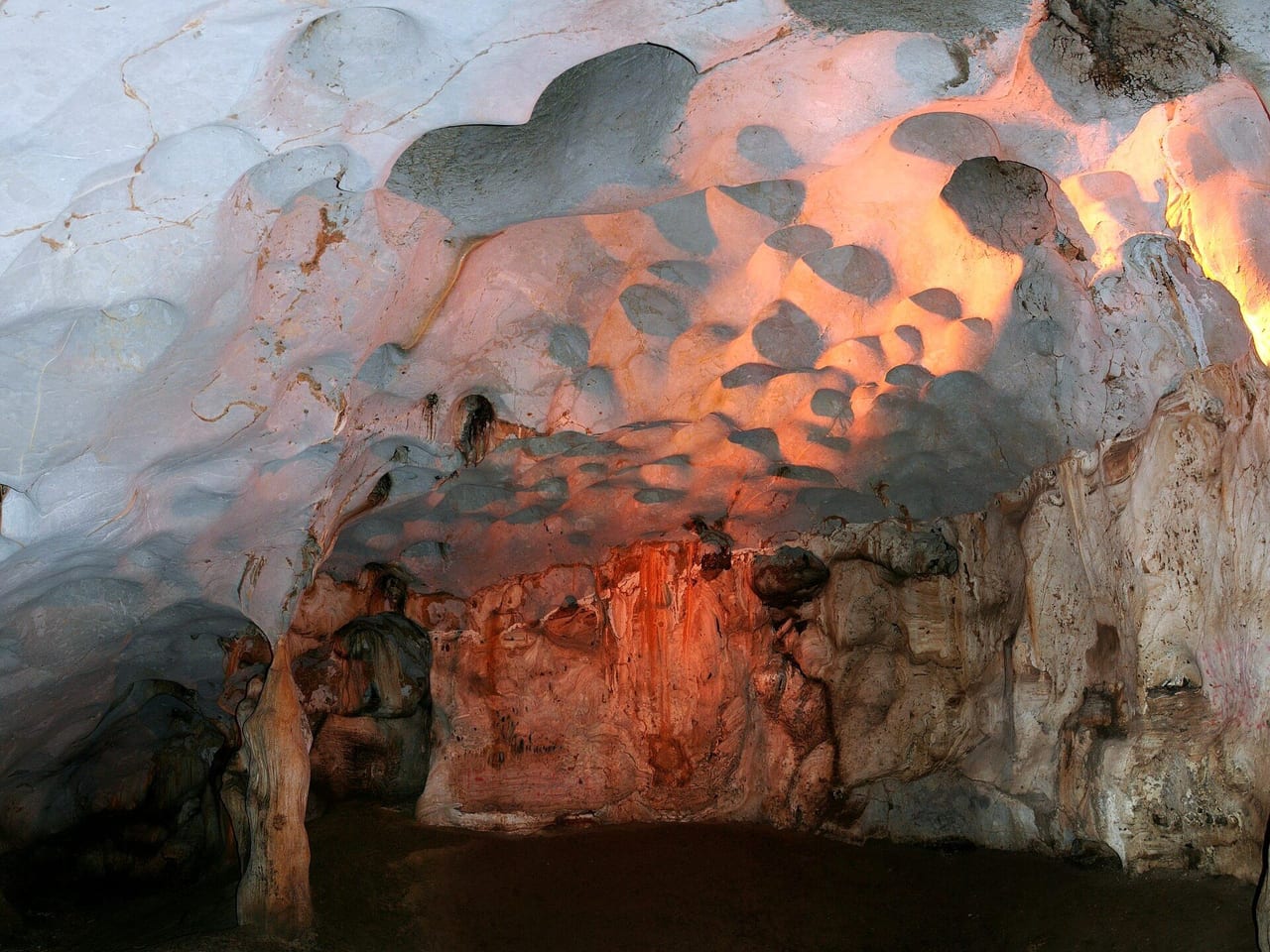
Karain Cave
A cave northwest of Antalya used from the Lower Paleolithic to the Roman period: prehistoric excavations, an on-site museum, and Greek inscriptions carved into the rock.
From the Paleolithic to the Classical age
Karain Cave is in the Yağca neighborhood of the Döşemealtı district, about 30 km northwest of Antalya; it sits 150 meters above the travertine plain in front of it and 430–450 meters above sea level. A stairway of 470 steps leads up to the entrance. The cave was used without interruption from the Lower Paleolithic through the Middle and Upper Paleolithic, Neolithic, Chalcolithic, Early Bronze, and Classical ages; the longest and most important occupation was in the Paleolithic. It holds a cultural deposit about 11 meters thick.
Excavations and finds
The cave entered the scientific record in 1946 through the research of Kılıç Kökten; excavations found the remains of animals such as rhinoceros, elephant, and hippopotamus. In the Classical period it served as a votive cave, and Greek inscriptions and niches mark its brow and outer walls. Part of the finds is shown in the Karain Museum near the cave; others, such as Neanderthal bone fragments, belong to the Antalya Museum's collection. Karain Cave was added to UNESCO's Tentative List of World Heritage in 1994.
Practical information
- Getting there: 5–6 km from the old Antalya–Burdur highway; Yağca neighborhood, Döşemealtı.
- Opening hours and admission: Check official sources before you go.
- Suggested time: 1 hour (including the stairs).
Where

Nearby places
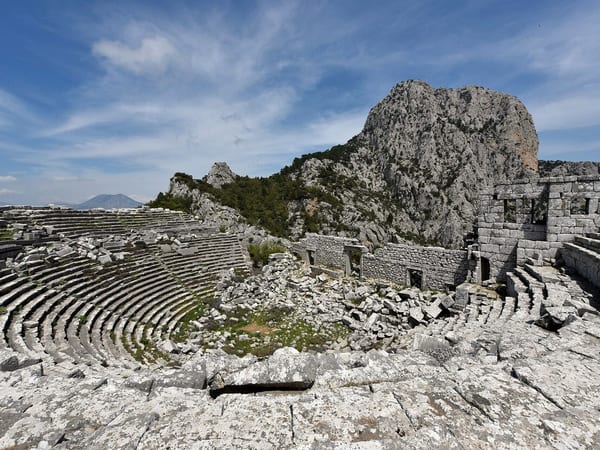 Stoa of Osbaras

Listen as you walk
Guide & Travel starts the story by itself when you reach the place, and it works offline too.
Photos (4)
- Stoa of Osbaras — Photo: 7oanna · CC BY-SA 4.0 · Wikimedia Commons (cropped)
- Theater — Photo: 7oanna · CC BY-SA 4.0 · Wikimedia Commons (cropped)
- Council House — Photo: 7oanna · CC BY-SA 4.0 · Wikimedia Commons (cropped)
- Propylon of Hadrian — Photo: 7oanna · CC BY-SA 4.0 · Wikimedia Commons (cropped)
