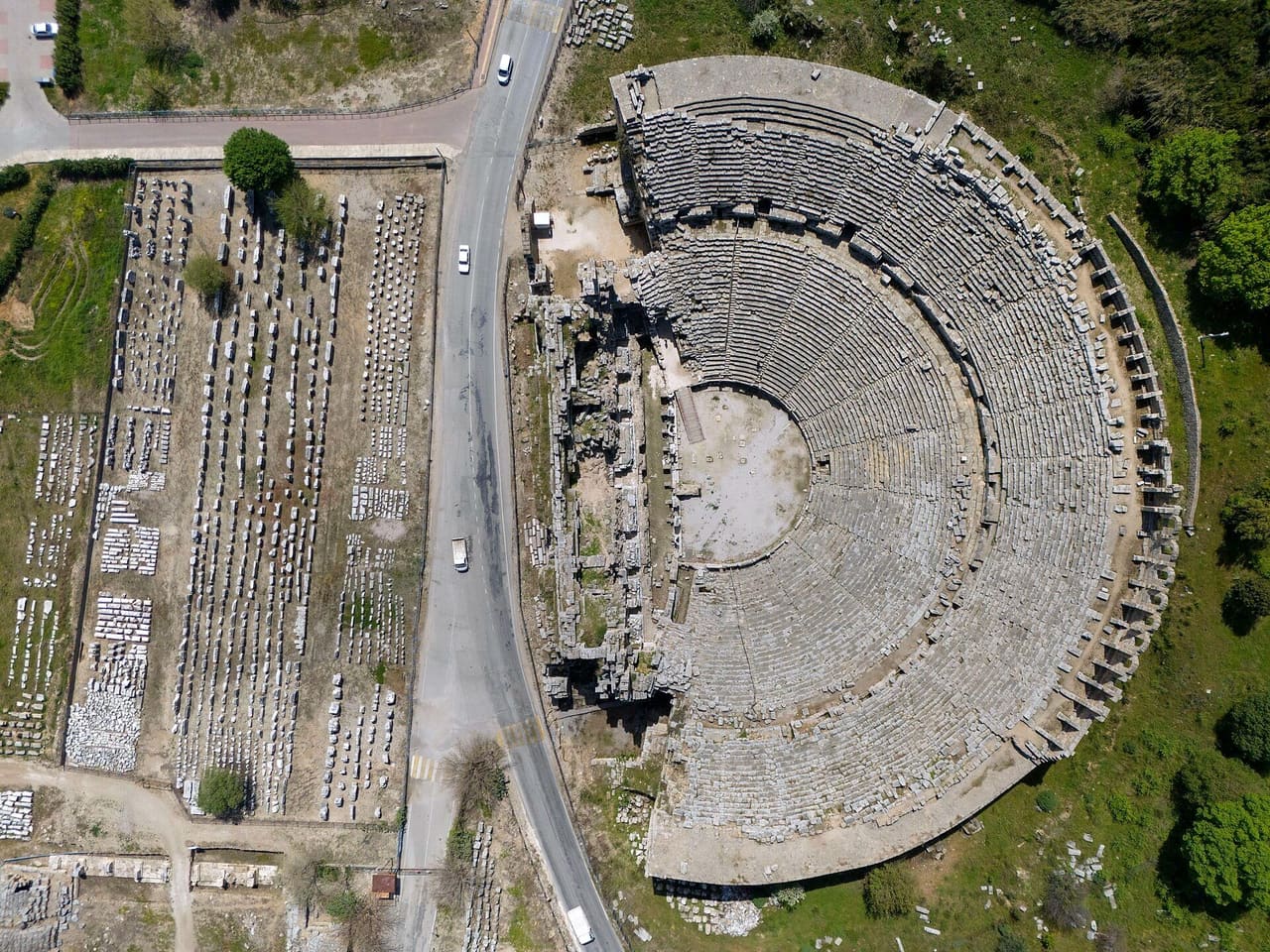
Perge
A Pamphylian city linked to the Parha of Hittite texts: a Hellenistic gate with round towers, Plancia Magna's courtyard of statues, a colonnaded street with a water channel down its middle, and a stadium.
From Parha to Perge
Perge lies in the Aksu district, about 17–18 km east of the center of Antalya. Its name is linked to "Parha," a place mentioned in Hittite texts. The city was first founded on the acropolis hill to the north. Some researchers date the start of settlement there to the Chalcolithic period, others to the end of the Neolithic; Bronze Age finds also come from the hill. In the Hellenistic period the plain was opened to settlement, and the lower city visited today grew up within its walls, an expansion some researchers date to the second half of the 3rd century BC and others to the middle of the Hellenistic period. Perge lies between the Düden River (the ancient Katarraktes) to the west and the Aksu River (the ancient Kestros) to the east, and it is thought to have reached the sea through a harbor on the Kestros.
Rome's city of marble
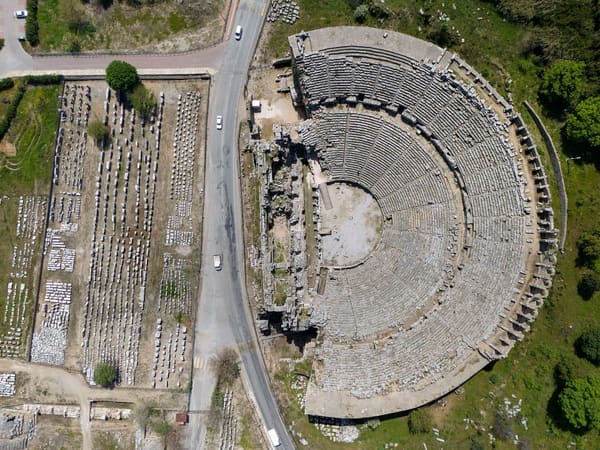
Perge saw its most brilliant period under the Roman Empire, in the 2nd and 3rd centuries AD. The two colonnaded streets that divide the city into four quarters, four monumental fountains, and two large baths are works of this age. Many were gifts of wealthy families, the best known being Plancia Magna, who remodeled the city's gate courtyard. Outside the walls, to the southwest of the city, stand a theater and a stadium. Under the emperor Tacitus (AD 275–276), Perge became an important military base and received the title "metropolis." Saint Paul came to Perge on one of his missionary journeys; in the 5th and 6th centuries AD basilicas were built in the city, and Perge became the metropolitan see of a bishopric. Excavations began in 1946, and most of the statues found here were moved to the Antalya Museum. In 2009 Perge was added to UNESCO's World Heritage Tentative List.
Practical information
- Getting there: by tram or by Aksu minibuses (dolmuş) from the center of Antalya.
- Hours and fees: for current hours and fees, check the official website before you go.
- Suggested time: 2 hours.
- Status: open; the ancient theater is temporarily closed to visitors for restoration.
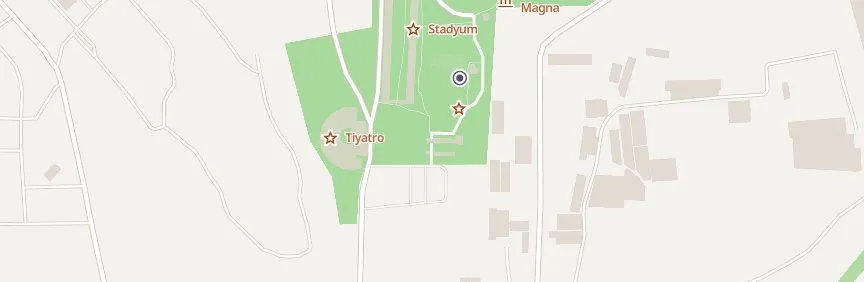
Where
Inside this place
 StadiumHistorical PlaceTomb of Plancia MagnaHistorical PlaceCity WallsHistorical PlaceRoman GateHistorical PlaceSouth BasilicaHistorical PlaceF4 FountainHistorical PlaceFountain of Septimius SeverusHistorical PlaceSouth BathsHistorical PlaceAgoraHistorical PlaceHellenistic Gate and TowersHistorical PlaceArch of HadrianHistorical PlaceMain Colonnaded StreetHistorical PlaceSmall ChurchHistorical PlaceArch of Demetrius and ApolloniusHistorical PlaceKestros FountainHistorical PlaceWest Colonnaded StreetHistorical PlaceNorth Gymnasium PalaestraHistorical PlaceNorth BathsHistorical PlaceCaracalla FountainHistorical PlaceWest GateHistorical PlaceWest NecropolisHistorical Place
Nearby places
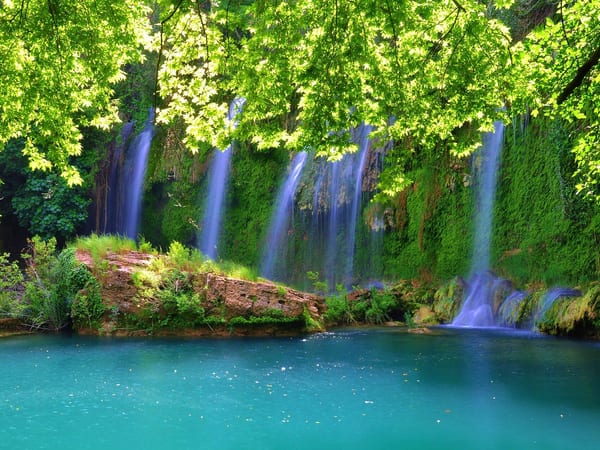 Kurşunlu Waterfall
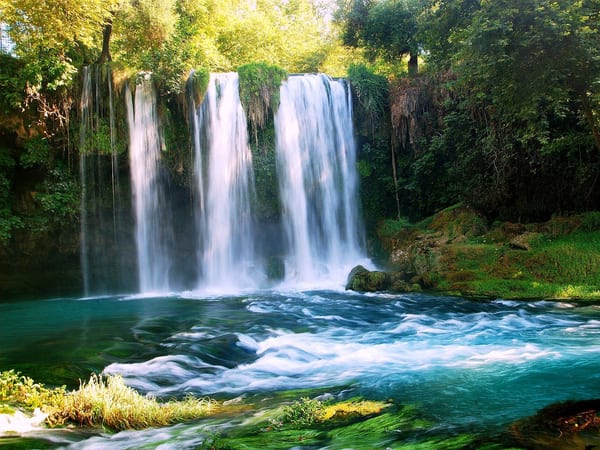 Upper Düden Waterfall
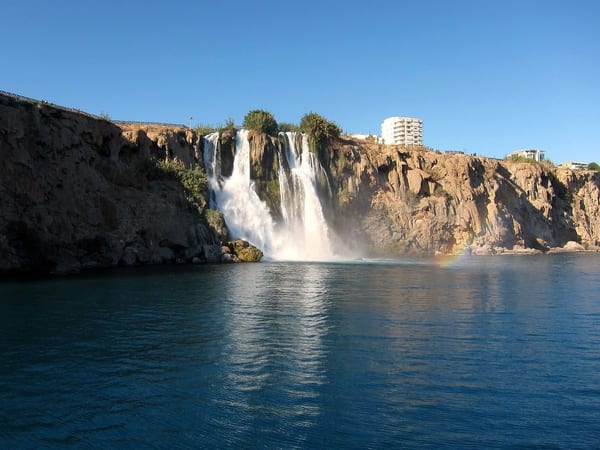 Lower Düden Waterfall
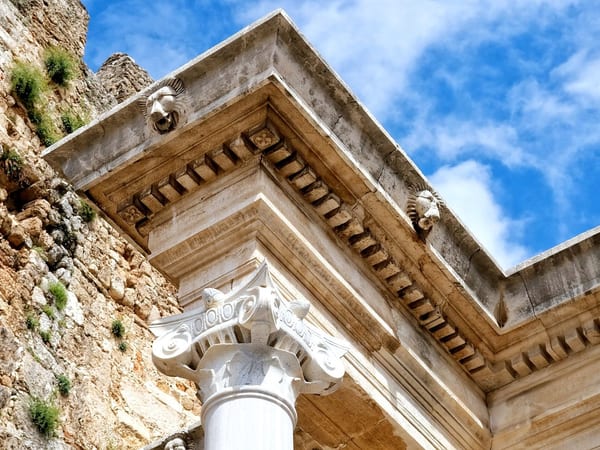 Kaleiçi Houses

Routes that include this place
Listen as you walk
Guide & Travel starts the story by itself when you reach the place, and it works offline too.
Photos (26)
- Stadium — Photo: Mehmety11maz · CC BY-SA 4.0 · Wikimedia Commons (colour corrected)
- Tomb of Plancia Magna — Photo: Mehmety11maz · CC BY-SA 4.0 · Wikimedia Commons (colour corrected)
- City Walls — Photo: Mehmety11maz · CC BY-SA 4.0 · Wikimedia Commons (colour corrected)
- Roman Gate — Photo: Mehmety11maz · CC BY-SA 4.0 · Wikimedia Commons (colour corrected)
- South Basilica — Photo: Mehmety11maz · CC BY-SA 4.0 · Wikimedia Commons (colour corrected)
- F4 Fountain — Photo: Mehmety11maz · CC BY-SA 4.0 · Wikimedia Commons (colour corrected)
- Fountain of Septimius Severus — Photo: Mehmety11maz · CC BY-SA 4.0 · Wikimedia Commons (colour corrected)
- South Baths — Photo: Mehmety11maz · CC BY-SA 4.0 · Wikimedia Commons (colour corrected)
- Agora — Photo: Mehmety11maz · CC BY-SA 4.0 · Wikimedia Commons (colour corrected)
- Hellenistic Gate and Towers — Photo: Mehmety11maz · CC BY-SA 4.0 · Wikimedia Commons (colour corrected)
- Arch of Hadrian — Photo: Mehmety11maz · CC BY-SA 4.0 · Wikimedia Commons (colour corrected)
- Main Colonnaded Street — Photo: Mehmety11maz · CC BY-SA 4.0 · Wikimedia Commons (colour corrected)
- Small Church — Photo: Mehmety11maz · CC BY-SA 4.0 · Wikimedia Commons (colour corrected)
- Arch of Demetrius and Apollonius — Photo: Mehmety11maz · CC BY-SA 4.0 · Wikimedia Commons (colour corrected)
- Kestros Fountain — Photo: Mehmety11maz · CC BY-SA 4.0 · Wikimedia Commons (colour corrected)
- West Colonnaded Street — Photo: Mehmety11maz · CC BY-SA 4.0 · Wikimedia Commons (colour corrected)
- North Gymnasium Palaestra — Photo: Mehmety11maz · CC BY-SA 4.0 · Wikimedia Commons (colour corrected)
- North Baths — Photo: Mehmety11maz · CC BY-SA 4.0 · Wikimedia Commons (colour corrected)
- Caracalla Fountain — Photo: Mehmety11maz · CC BY-SA 4.0 · Wikimedia Commons (colour corrected)
- West Gate — Photo: Mehmety11maz · CC BY-SA 4.0 · Wikimedia Commons (colour corrected)
- West Necropolis — Photo: Mehmety11maz · CC BY-SA 4.0 · Wikimedia Commons (colour corrected)
- Kurşunlu Waterfall — Photo: Burak Küçükarslan · CC BY-SA 4.0 · Wikimedia Commons (cropped)
- Upper Düden Waterfall — Photo: zolakoma · CC BY 2.0 · Wikimedia Commons (cropped)
- Lower Düden Waterfall — Photo: Kurt Basis · CC BY 3.0 · Wikimedia Commons (cropped)
- Kaleiçi Houses — Photo: Intermerker · CC BY-SA 4.0 · Wikimedia Commons (cropped)
- Perge — Photo: Mehmety11maz · CC BY-SA 4.0 · Wikimedia Commons (colour corrected)


