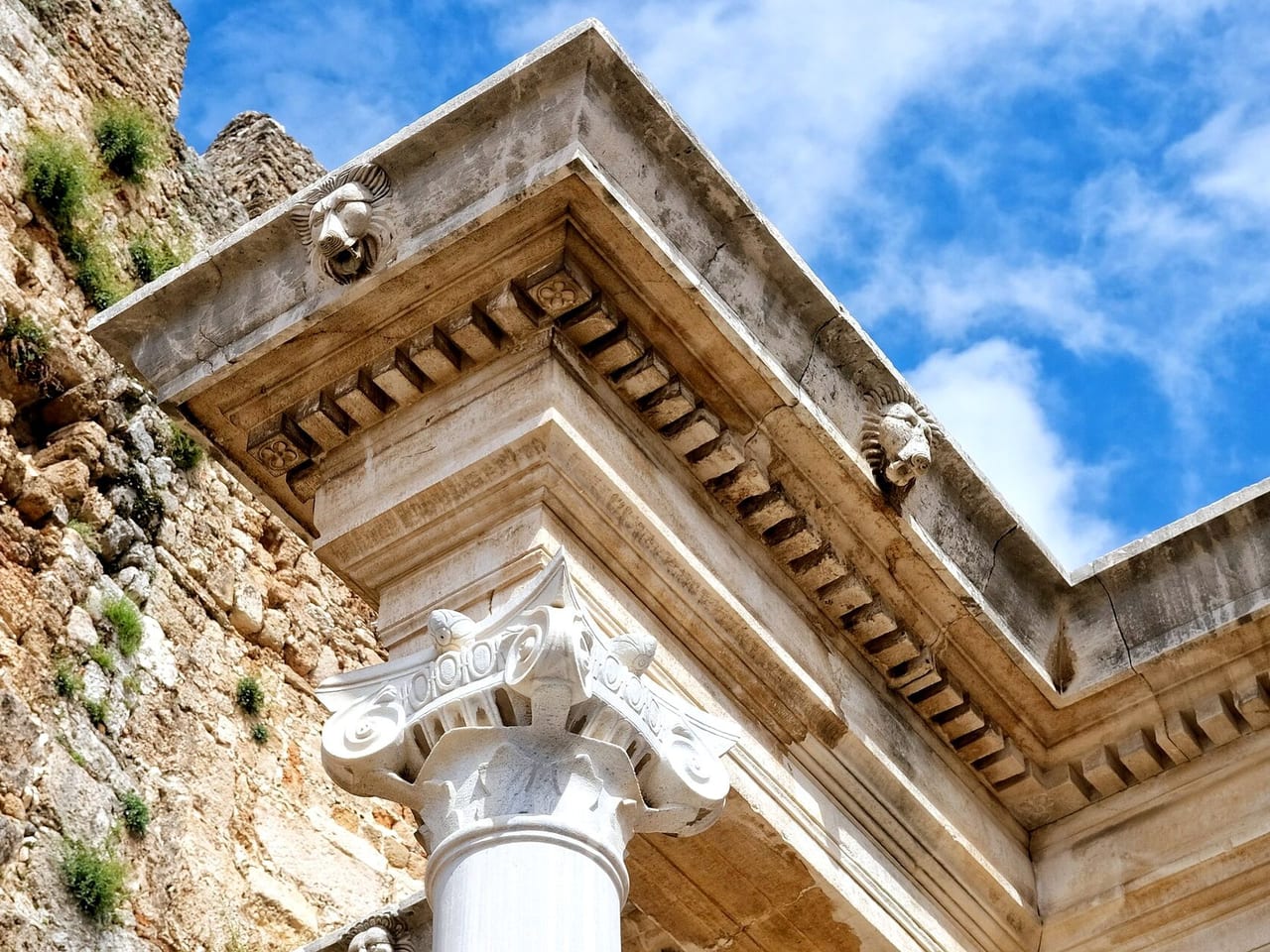
City Walls
A double line of walls curving in a horseshoe to take in the harbor, repaired for centuries from the Hellenistic age to the Ottomans; its towers carry Seljuk inscriptions.
A horseshoe of walls
The walls around Kaleiçi run in a horseshoe on two lines, an inner and an outer. Because the harbor was the reason the city was founded, the walls were laid out to take the harbor in as well. They are the shared work of the Hellenistic, Roman, Byzantine, Seljuk, and Ottoman periods. In one researcher's view, some carefully built stretches of masonry may date from the time of the city's founder, Attalos II.
From Byzantium to the Seljuks
In the Byzantine period, an outer curtain wall and a ditch were added in front of the walls against Arab raids; an inscription records repairs to the walls early in the 10th century, under Leo VI and Constantine VII. The Seljuks, who took the city early in the 13th century, repaired the walls and built inner walls; inscriptions of 1225 on the towers bear the name of Alaeddin Keykubad. The number of towers is debated: some researchers count about 45 towers and 13 gates, while others count more than 60 towers. Most of the walls have been pulled down; today only some stretches still stand, one on either flank of Hadrian's Gate.
Where
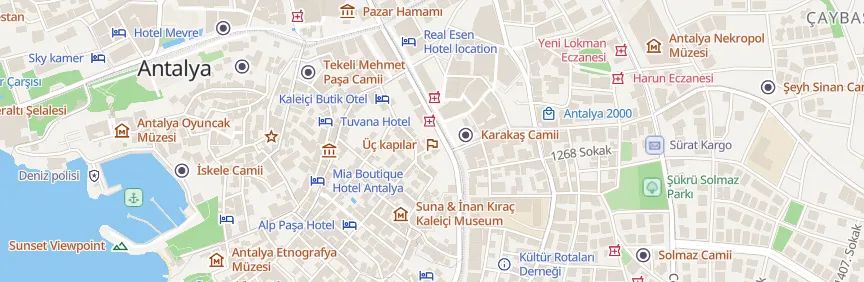
Nearby places
 Kaleiçi Houses

Routes that include this place
Listen as you walk
Guide & Travel starts the story by itself when you reach the place, and it works offline too.
Photos (5)
- Kaleiçi Houses — Photo: Intermerker · CC BY-SA 4.0 · Wikimedia Commons (cropped)
- Hadrian's Gate — Photo: Intermerker · CC BY-SA 4.0 · Wikimedia Commons (cropped)
- Inner Wall and Conquest Inscriptions — Photo: Intermerker · CC BY-SA 4.0 · Wikimedia Commons (cropped)
- Zincirkıran Tomb — Photo: Intermerker · CC BY-SA 4.0 · Wikimedia Commons (cropped)
- Upper Düden Waterfall — Photo: zolakoma · CC BY 2.0 · Wikimedia Commons (cropped)
