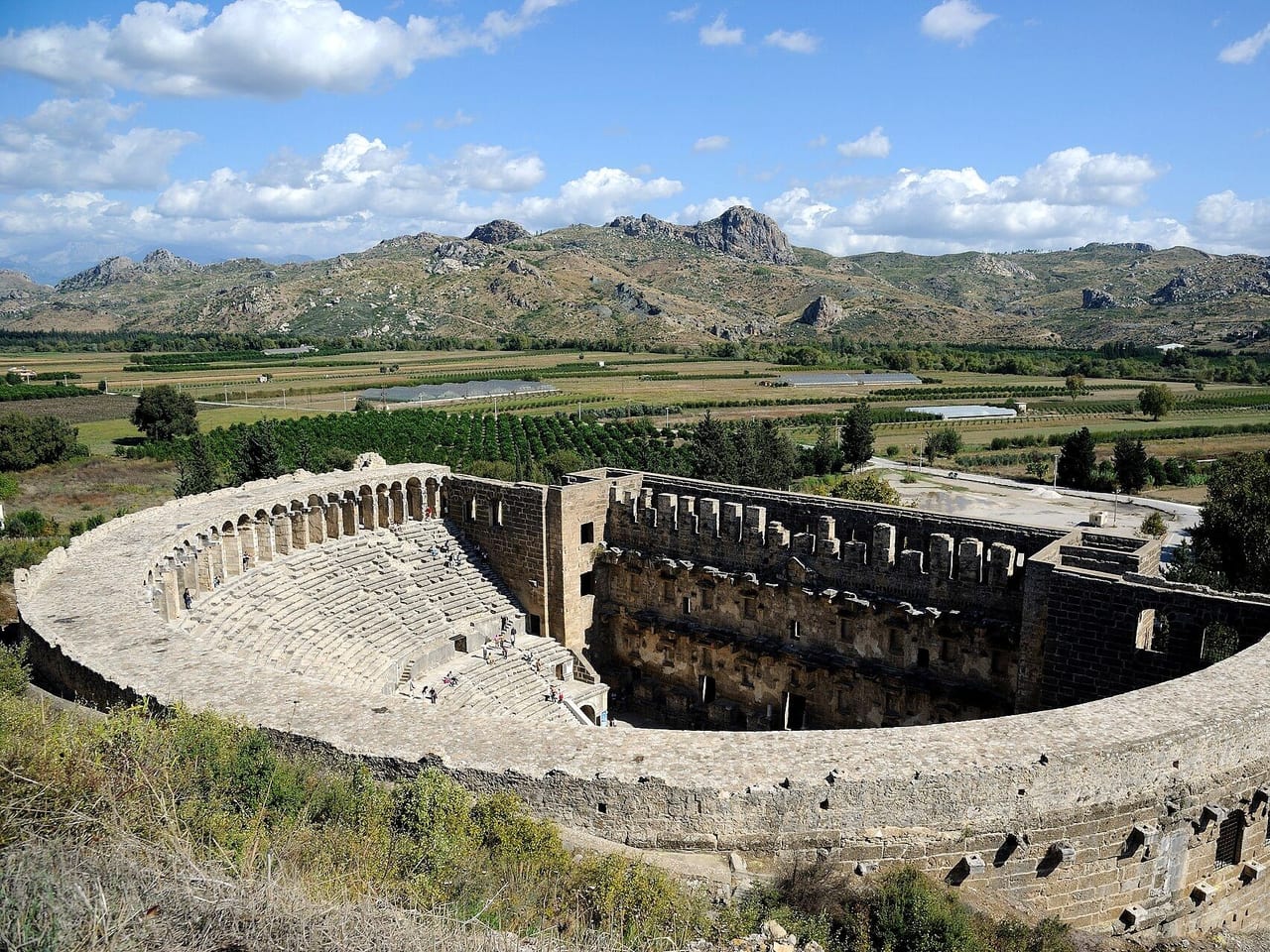
Theater
A Roman theater built in the 2nd century AD by the architect Zenon, still standing with its two-story stage building; under the Seljuks it was repaired and used as a palace.
Zenon's theater
The theater rests against the acropolis hill in the lower city. It dates from the 2nd century AD: some researchers place it under Antoninus Pius, others under Marcus Aurelius. Its architect was Zenon, son of Theodoros of Aspendos. Carrying out the will of Aulus Curtius Crispinus, the brothers Curtius Crispinus and Curtius Auspicatus built it for the city's gods and the imperial family; Latin and Greek inscriptions over the side entrances name them and their architect. Some researchers put its capacity at 15,000–20,000, while others put it at 7,000–8,000; the 1884 expedition, allowing half a meter per person, counted 7,000 places on the rows and about 500 in the orchestra.
From palace to festival
The Seljuks repaired the stage building and used it as a palace: some researchers date this to Alaeddin Keykubad I, while others date it to Gıyaseddin Keyhüsrev II. Some think it was also a caravanserai. The central outer entrance, the brick arches over the side entrances, and the painted plaster are Seljuk work; the palace tiles are now in a museum in Antalya. Mustafa Kemal Atatürk visited on March 9, 1930, and asked for the theater to be restored to use. Türkiye's first theater festival was held here in 1959.
Where
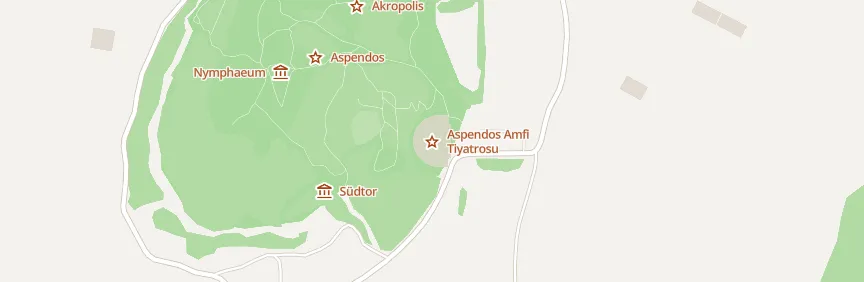
Nearby places
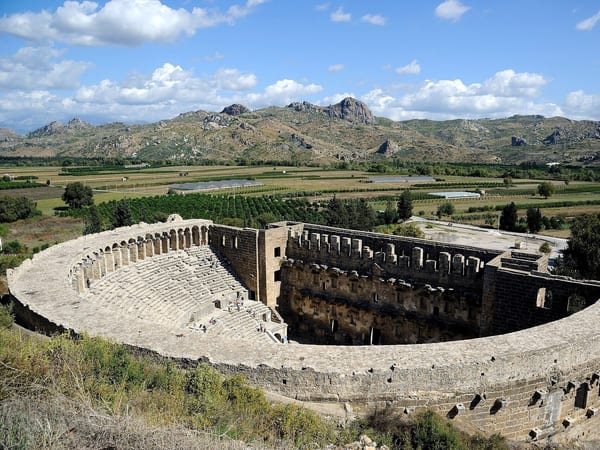 Temple

Routes that include this place
Listen as you walk
Guide & Travel starts the story by itself when you reach the place, and it works offline too.
Photos (5)
- Temple — Photo: Saffron Blaze · CC BY-SA 3.0 · Wikimedia Commons (cropped)
- Monumental Gate — Photo: Saffron Blaze · CC BY-SA 3.0 · Wikimedia Commons (cropped)
- South Terrace Houses — Photo: Saffron Blaze · CC BY-SA 3.0 · Wikimedia Commons (cropped)
- Forum — Photo: Saffron Blaze · CC BY-SA 3.0 · Wikimedia Commons (cropped)
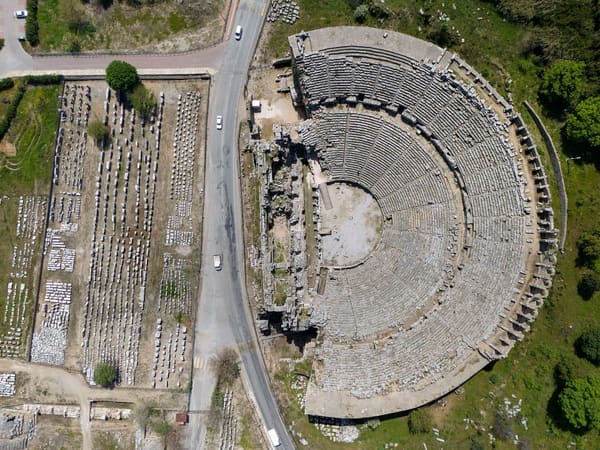
- Perge — Photo: Mehmety11maz · CC BY-SA 4.0 · Wikimedia Commons (colour corrected)
