Alanya Castle
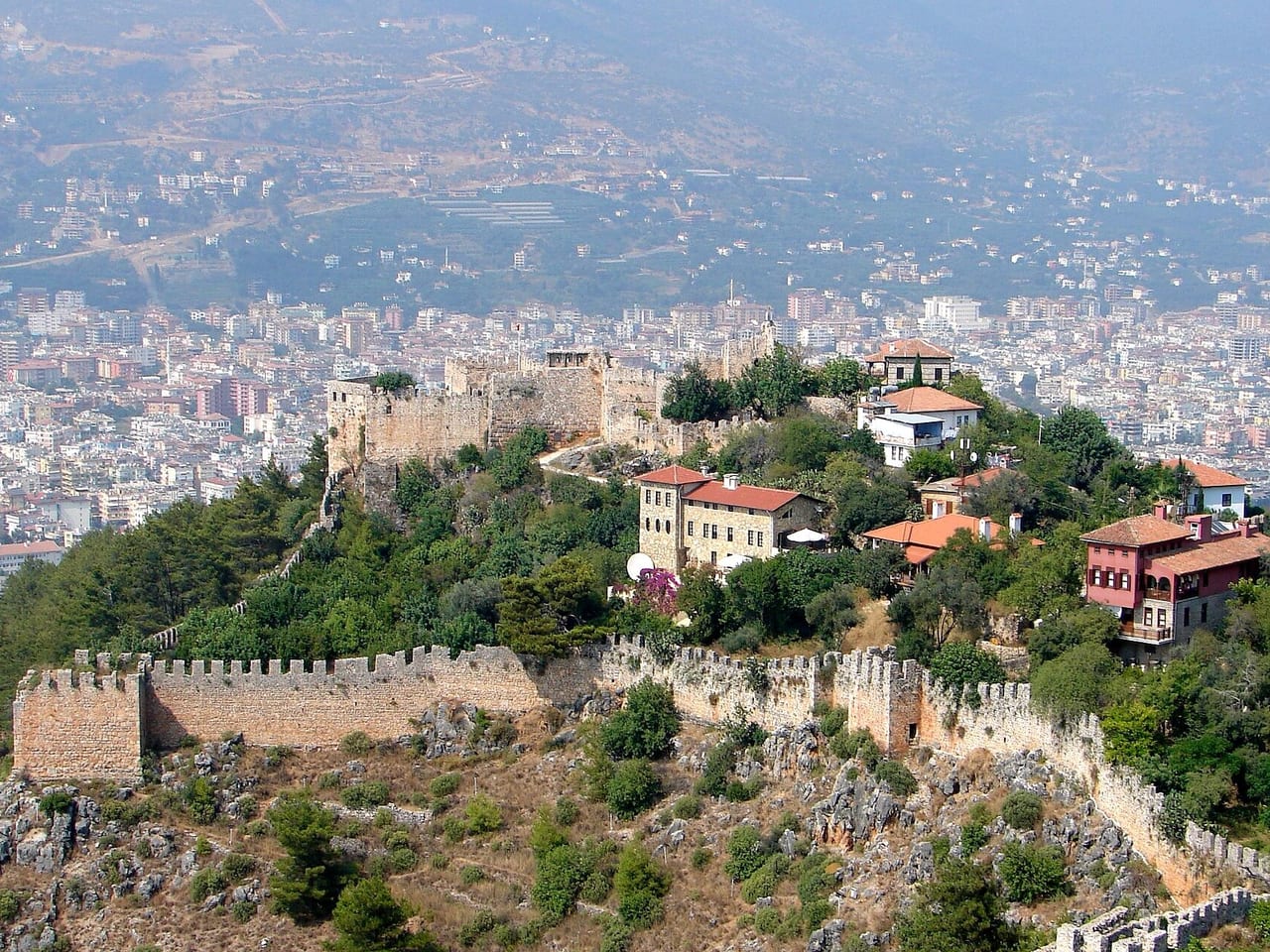
A Seljuk fortress wrapped around a peninsula rising about 250 meters from the sea: 6.5 km of walls, the Inner Castle, Ehmedek, cisterns, and old Alanya houses.
From Korakesion to Alaiye
Alanya Castle stands on a rocky peninsula reaching into the sea; its highest point rises about 250 meters above the water. Hard to approach by sea or by land, this sheltered site allowed long, unbroken settlement. The first settlement dates to the Hellenistic period: to the 4th century BC according to some researchers, to the 3rd century BC according to others. Known in antiquity as Korakesion, the city was for a time a refuge for pirates; Diodotos Tryphon built walls here in the 2nd century BC, and Pompey later had them torn down. Under Byzantium it was called Kalonoros.
In 1221 the Anatolian Seljuk sultan Alaeddin Kaykubad I took the castle, and the city was renamed Alaiye. The castle gained its monumental form in this period; its oldest inscriptions date from 1226, and the building work lasted from 1226 to 1231. The Seljuk sultans spent their winters here. The city passed to the Karamanid Mecdüddin Mahmud in 1293 and was attacked by the king of Cyprus in 1366; in 1471 Gedik Ahmed Pasha took it peacefully from Kılıç Arslan, the last lord of Alaiye. In 1530 the records listed 310 Muslim and 10 Christian houses in the castle. The British naval officer Francis Beaufort was refused entry and gathered his information from outside.
Walls and quarters
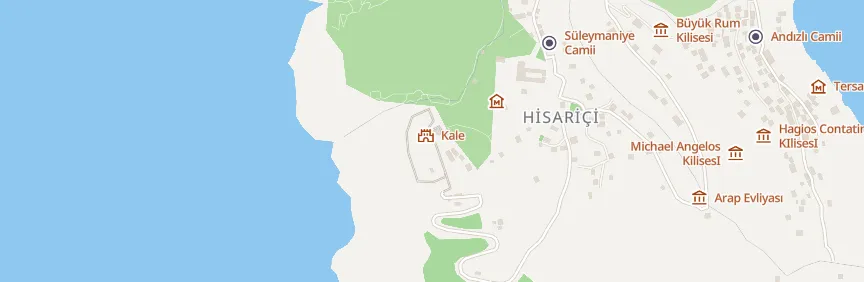
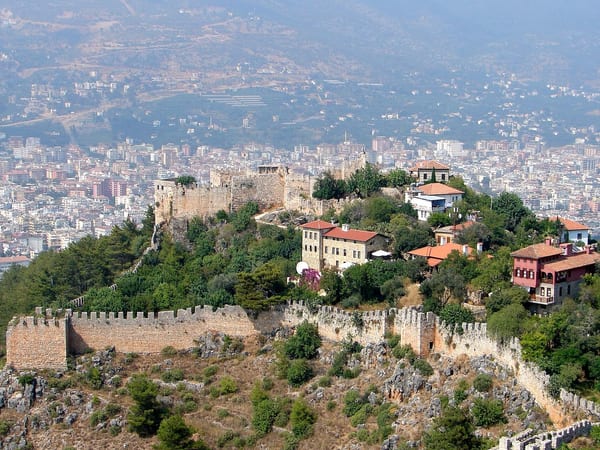
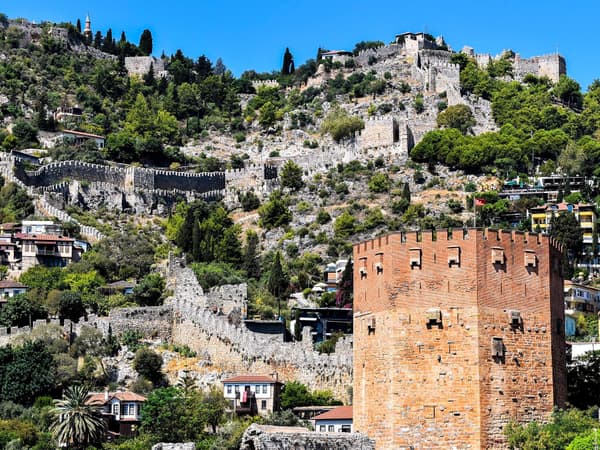
The walls, about 6.5 km long, ring the peninsula with 140 bastions. They begin at the Red Tower on the shore, run past Ehmedek, the Inner Castle, Adam Atacağı, Cilvarda, Arap Evliyası, and Esat Tower, pass the armory (Tophane) and the Shipyard, and end again at the Red Tower. Inner walls divide the castle into nested quarters: Ehmedek, also called the Middle Castle, on the northern hill; the Upper Castle around the Süleymaniye Mosque; and the Inner Castle on the highest ground at the western corner. There are about 400 cisterns inside the walls. The houses of the Hisariçi and Tophane neighborhoods spread across the slopes and cluster around the Süleymaniye Mosque, the Arasta, and the Bedesten. Alanya Castle was added to UNESCO's Tentative List of World Heritage in 2000.
Practical information
- Getting there: By minibus (dolmuş) from the town center or on foot in about an hour; a cable car from the station next to Cleopatra Beach climbs to the top of the peninsula.
- Opening hours and admission: These vary by season; check official sources before you go.
- Suggested time: 2–3 hours.
- Status: Open. The Inner Castle and Ehmedek are laid out as an open-air museum.
Where
Inside this place
 EhmedekHistorical PlaceSüleymaniye MosqueHistorical PlaceBedestenHistorical PlaceArastaHistorical PlaceAkşebe Sultan Masjid and TombHistorical PlaceMecdüddin Cistern and Castle CisternsHistorical PlaceInner CastleHistorical PlaceSeljuk PalaceHistorical PlaceInner Castle ChurchHistorical PlaceAdam AtacağıHistorical PlaceAndızlı MosqueHistorical Place
Nearby places
 Shipyard
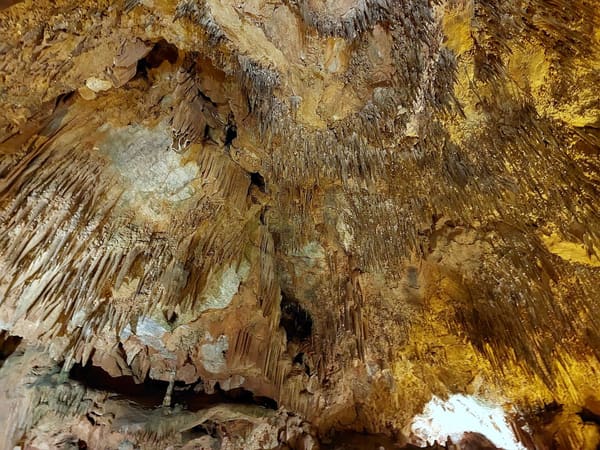 Damlataş Cave
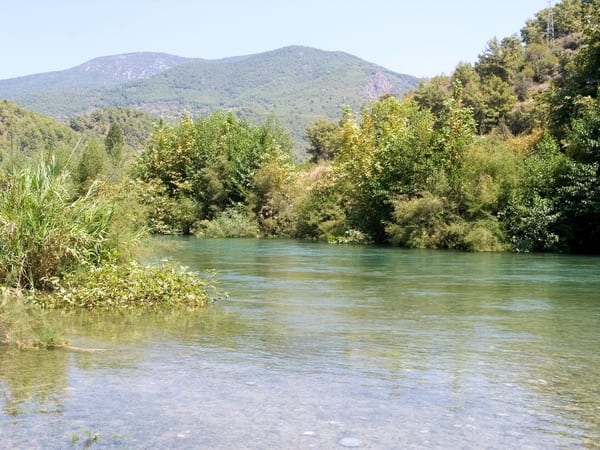 Dim River

Listen as you walk
Guide & Travel starts the story by itself when you reach the place, and it works offline too.
Photos (15)
- Ehmedek — Photo: Luke_33 · CC BY 2.5 pl · Wikimedia Commons (cropped)
- Süleymaniye Mosque — Photo: Luke_33 · CC BY 2.5 pl · Wikimedia Commons (cropped)
- Bedesten — Photo: Luke_33 · CC BY 2.5 pl · Wikimedia Commons (cropped)
- Arasta — Photo: Luke_33 · CC BY 2.5 pl · Wikimedia Commons (cropped)
- Akşebe Sultan Masjid and Tomb — Photo: Luke_33 · CC BY 2.5 pl · Wikimedia Commons (cropped)
- Mecdüddin Cistern and Castle Cisterns — Photo: Luke_33 · CC BY 2.5 pl · Wikimedia Commons (cropped)
- Inner Castle — Photo: Luke_33 · CC BY 2.5 pl · Wikimedia Commons (cropped)
- Seljuk Palace — Photo: Luke_33 · CC BY 2.5 pl · Wikimedia Commons (cropped)
- Inner Castle Church — Photo: Luke_33 · CC BY 2.5 pl · Wikimedia Commons (cropped)
- Adam Atacağı — Photo: Luke_33 · CC BY 2.5 pl · Wikimedia Commons (cropped)
- Andızlı Mosque — Photo: Luke_33 · CC BY 2.5 pl · Wikimedia Commons (cropped)
- Shipyard — Photo: Julian Lupyan · CC0 · Wikimedia Commons (cropped)
- Red Tower — Photo: Julian Lupyan · CC0 · Wikimedia Commons (cropped)
- Damlataş Cave — Photo: Jaba1977 · CC BY-SA 4.0 · Wikimedia Commons (colour corrected)
- Dim River — Photo: Островский Александр, Киев · CC BY-SA 3.0 · Wikimedia Commons (colour corrected)


