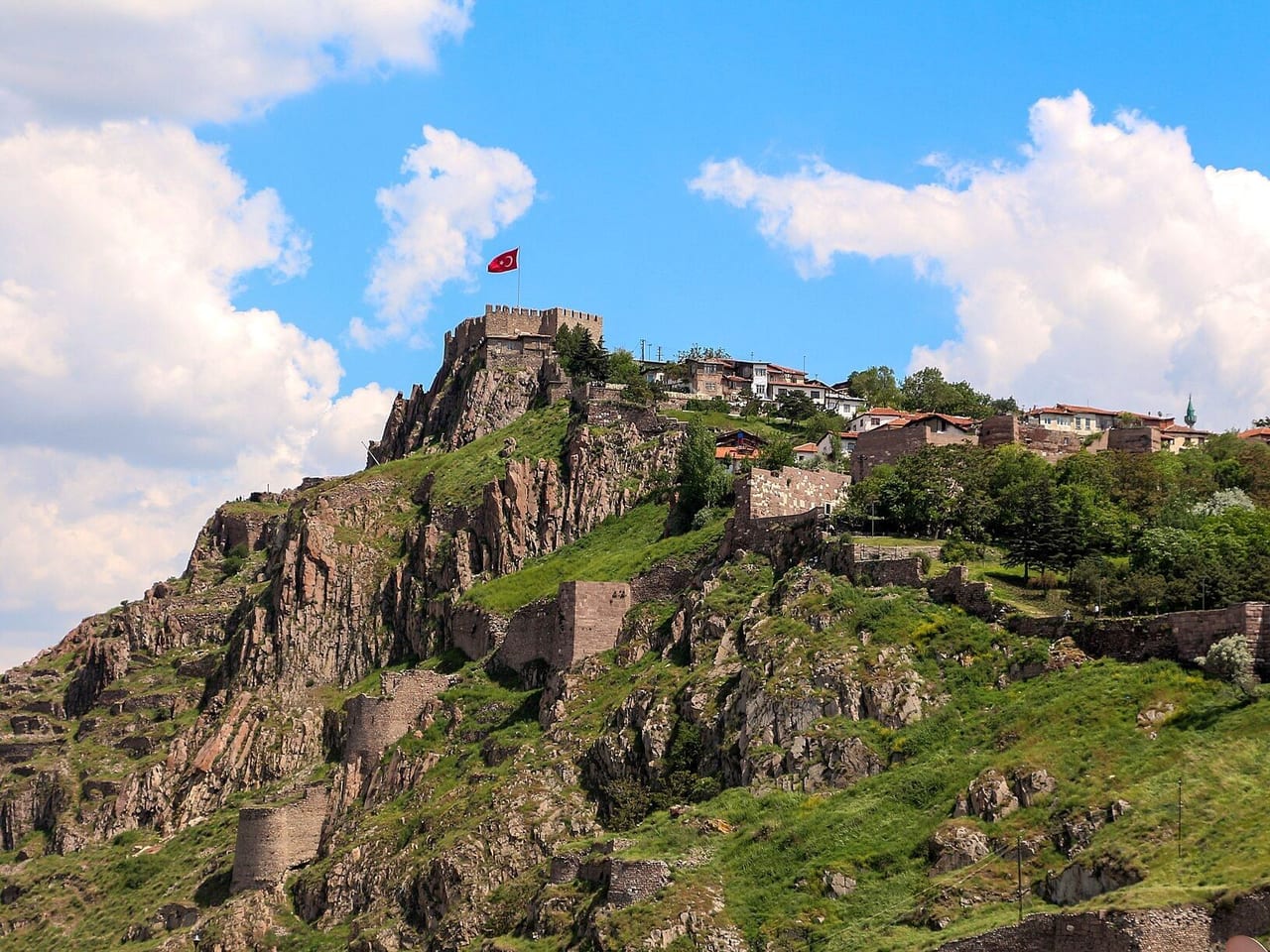
Ankara Castle
The inner and outer castle rising above Ulus, with layered walls reaching from the Galatians to the Seljuks; its 42 pentagonal towers, Akkale, and the old Ankara houses within.
From the Galatians to the Seljuks
Built on a hill commanding Ulus, the castle that became the symbol of the city has no known date of first construction. It had already stood by the 2nd century BC, under the Galatians, and to have been repaired under the Romans. The inner walls were most probably built by the Byzantines in the 7th century. Badly damaged in the Arab raids, the castle was rebuilt in the 9th century; in 859, under Emperor Michael III. It fell to the Seljuks in 1073 and to the Crusaders in 1101, returned to the Seljuks in 1227, was repaired in the Seljuk and Ottoman periods, and has been strengthened by restoration in recent years. According to Byzantine history, in 1073 Alexios Komnenos, the future emperor, met his brother Isaac here, who had taken refuge in the castle. A Seljuk-period inscription survives on the northwest part of the inner walls.
Inner castle and outer castle
Two rings form the castle. Little remains today of the 20 rectangular towers of the outer castle; of its two gates, the Outer Castle Gate lies to the west and Hisar Kapısı (the Citadel Gate) to the south. Above Hisar Kapısı is a Persian inscription of the Ilkhanids, dated 1330. The nearly rectangular inner castle is built partly of Ankara stone and partly of mixed material, and has 42 pentagonal towers between 14 and 16 m high. When the outer walls were added is not known for certain. The highest point of the castle is Akkale, to the north, 978 m above sea level; this tower is described as a Seljuk-period structure, and in 1921 it housed Ankara's first museum. Ankara houses that have stood since the 17th century and the Alaeddin Mosque, dated 1197, survive within the castle.
Practical information
- Getting there: up the castle slope from Ulus. For public transport, check the official websites of the transport authorities.
- Admission: free (open area; the castle is a living neighborhood).
- Suggested time: 1 hour.
- Status: open; the walls and the castle quarter can be seen at any time.
Where
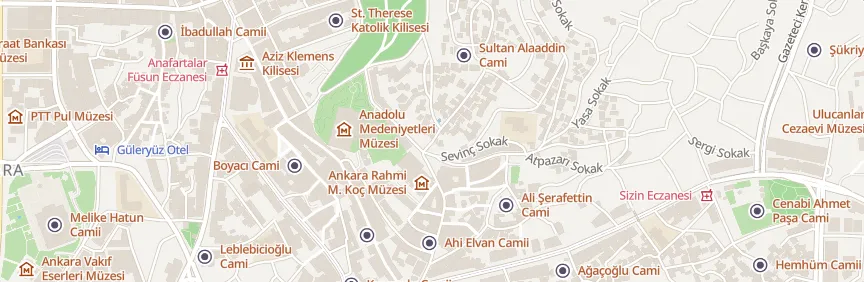
Nearby places
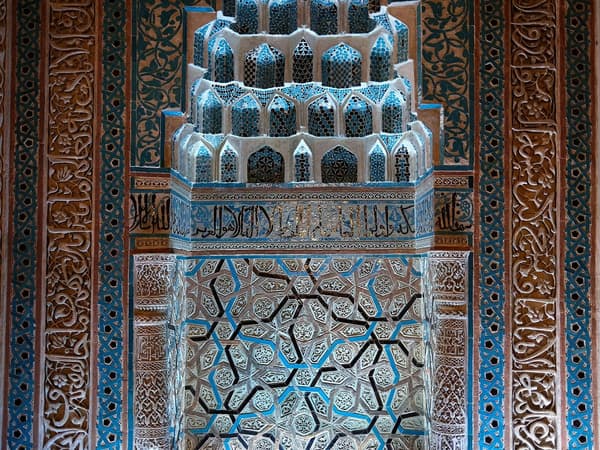 Aslanhane Mosque
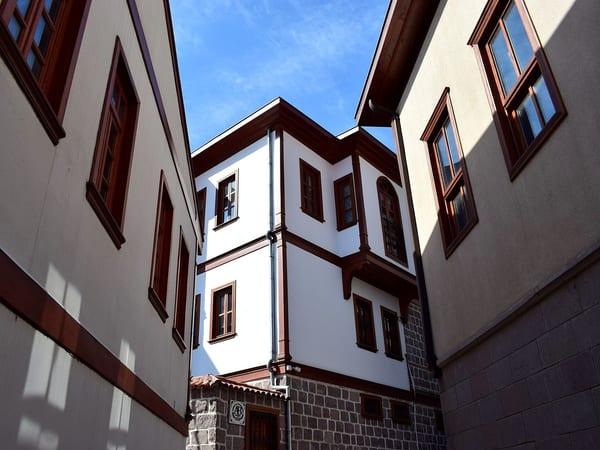 Hamamönü

Routes that include this place
Listen as you walk
Guide & Travel starts the story by itself when you reach the place, and it works offline too.
Photos (5)
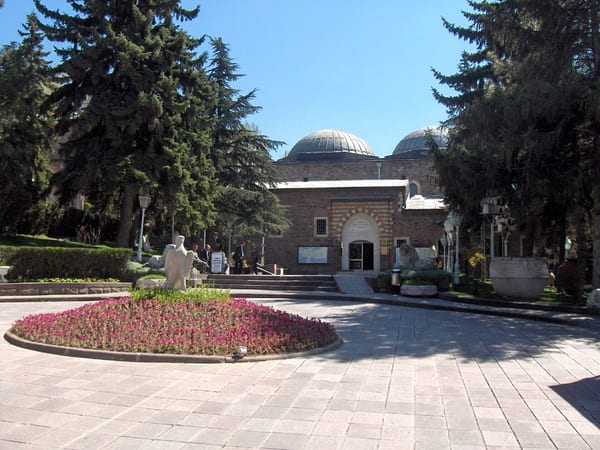
- Museum of Anatolian Civilizations — Photo: Georges Jansoone (JoJan) · CC BY-SA 3.0 · Wikimedia Commons (edited)
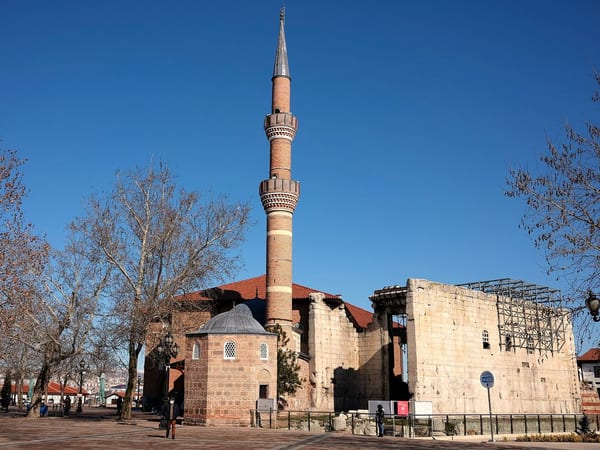
- Aslanhane Mosque — Photo: Dursun Sülük · CC BY-SA 4.0 · Wikimedia Commons (cropped)
- Hamamönü — Photo: BIG-K006 · CC BY-SA 4.0 · Wikimedia Commons (cropped)
- Taceddin Lodge and Mehmet Akif Ersoy Museum House — Photo: BIG-K006 · CC BY-SA 4.0 · Wikimedia Commons (cropped)
- Hacı Bayram Mosque — Photo: Dursun Sülük · CC BY-SA 4.0 · Wikimedia Commons (cropped)


