Haji Bektash Veli Complex
A complex that grew over the centuries around the lodge Haji Bektash Veli founded in the 13th century: three courtyards, fountains, a soup kitchen, and tombs.
From a lodge to a complex
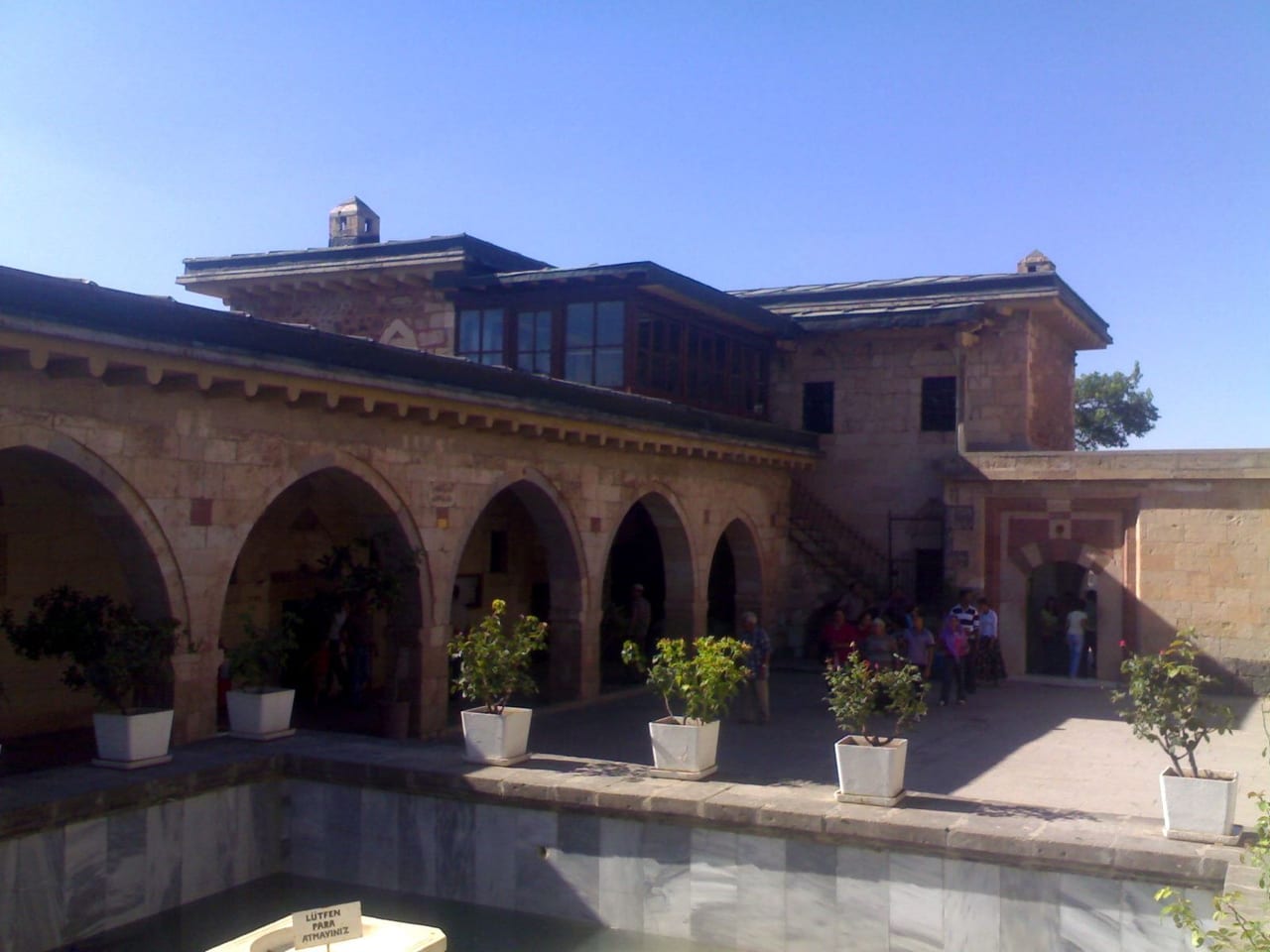
The Haji Bektash Veli Complex stands in the center of the town of Hacıbektaş. Haji Bektash Veli, who came to Anatolia from Khorasan in the 13th century, founded a lodge, or zaviye, in this settlement, once known as Sulucakarahöyük. With buildings added and repaired over the centuries, the complex kept growing until the early 20th century. The Bektashi tradition takes its name from Haji Bektash Veli, and the complex is known as its center. The district is named after him too.
Three courtyards
The complex is made up of three courtyards, one after another. The first, entered through the Çatal Gate, is the Nadar Courtyard, with the Üçler Fountain (1902, according to its inscription) and service buildings such as the laundry. Beyond the Üçler Gate, the Dergâh Courtyard holds the soup kitchen, guesthouse, meydan house, and pantry of the lodge's daily life, with the Meydan Pool on one side. The lion statue in the niche of this courtyard's Lion Fountain is said to have been brought from Egypt.
The Pir Evi and the tombs
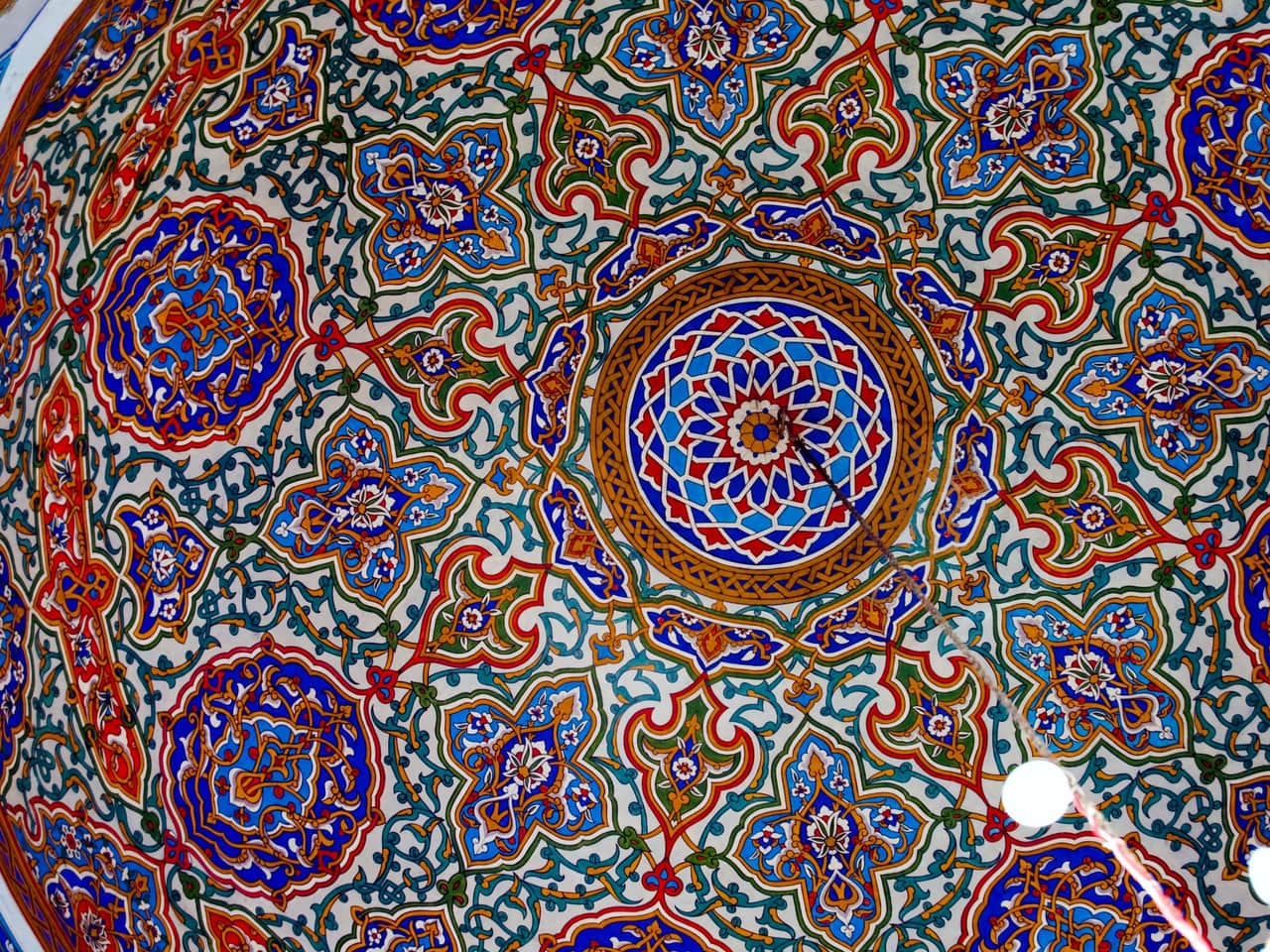
The core of the complex lies in the third courtyard. Here the Pir Evi holds the tomb of Haji Bektash Veli, as well as the Kırklar Meydanı and the tomb of Güvenç Abdal. The Kızılca Halvet, a retreat Haji Bektash Veli is said to have used, is considered the only part left from the original lodge. The Pir Evi took shape in stages between the 13th and 16th centuries. The courtyard also holds the tomb of Balım Sultan and graves of dervishes and babas of the lodge.
From lodge to museum
When dervish lodges were closed in 1925, this lodge closed too. Its buildings went through a major restoration that began in the late 1950s. Furnished with its original objects, the complex opened to visitors as a museum on August 16, 1964.
Practical information
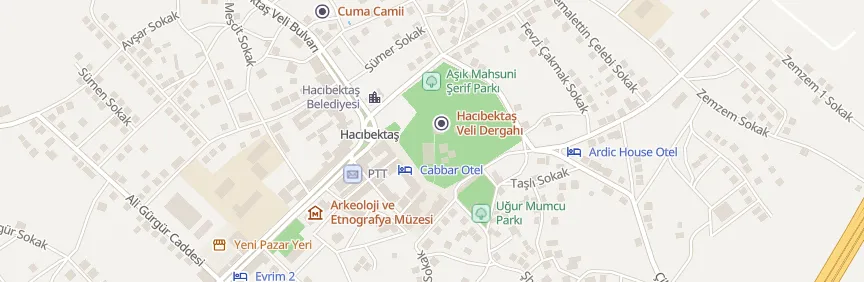
- Getting there: In the center of Hacıbektaş; about 45 km from Nevşehir on the Nevşehir–Kırşehir road.
- Opening hours: daily 8:00 a.m.–10:00 p.m.; ticket office closes at 9:15 p.m. Hours may vary by season; check the official website for current times.
- Admission: Check the official website for current prices and Museum Pass validity.
- Suggested time: 1 hour.
- Status: open.
[bilgi: The tombs are places of faith for many visitors; please be quiet and respectful inside.]
Where
Nearby places
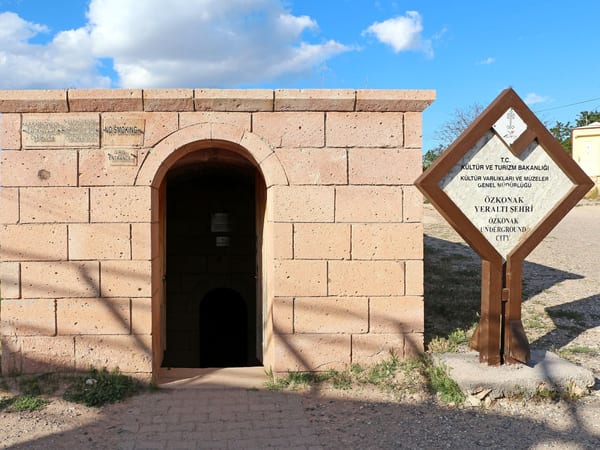 Özkonak Underground City
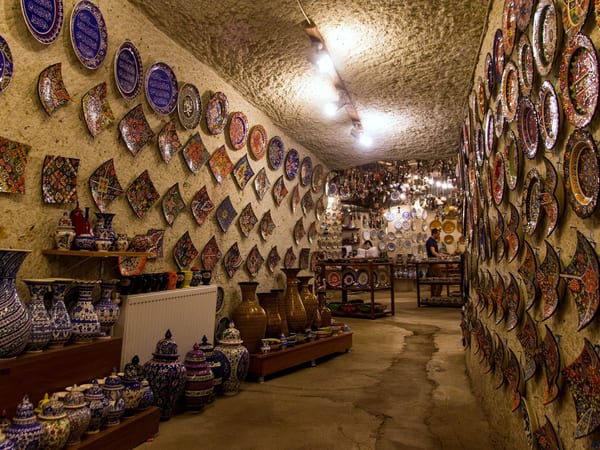 Avanos Pottery
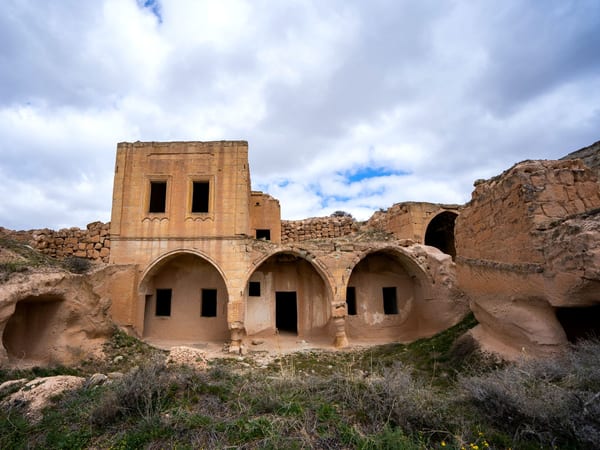 Çavuşin
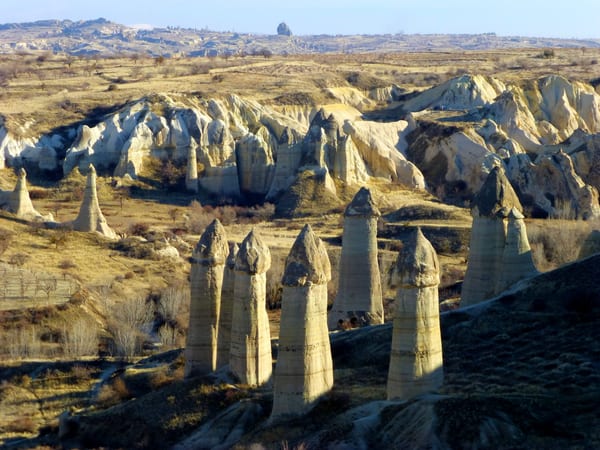 Love Valley

Listen as you walk
Guide & Travel starts the story by itself when you reach the place, and it works offline too.
Photos (4)
- Özkonak Underground City — Photo: Bernard Gagnon · CC BY-SA 3.0 · Wikimedia Commons (cropped)
- Avanos Pottery — Photo: Alexey Komarov · CC BY-SA 4.0 · Wikimedia Commons (cropped)
- Çavuşin — Photo: Cnskartal · CC BY-SA 4.0 · Wikimedia Commons (cropped)
- Love Valley — Photo: Nevit Dilmen ( talk ) · CC BY-SA 3.0 · Wikimedia Commons (cropped)


