Letoon
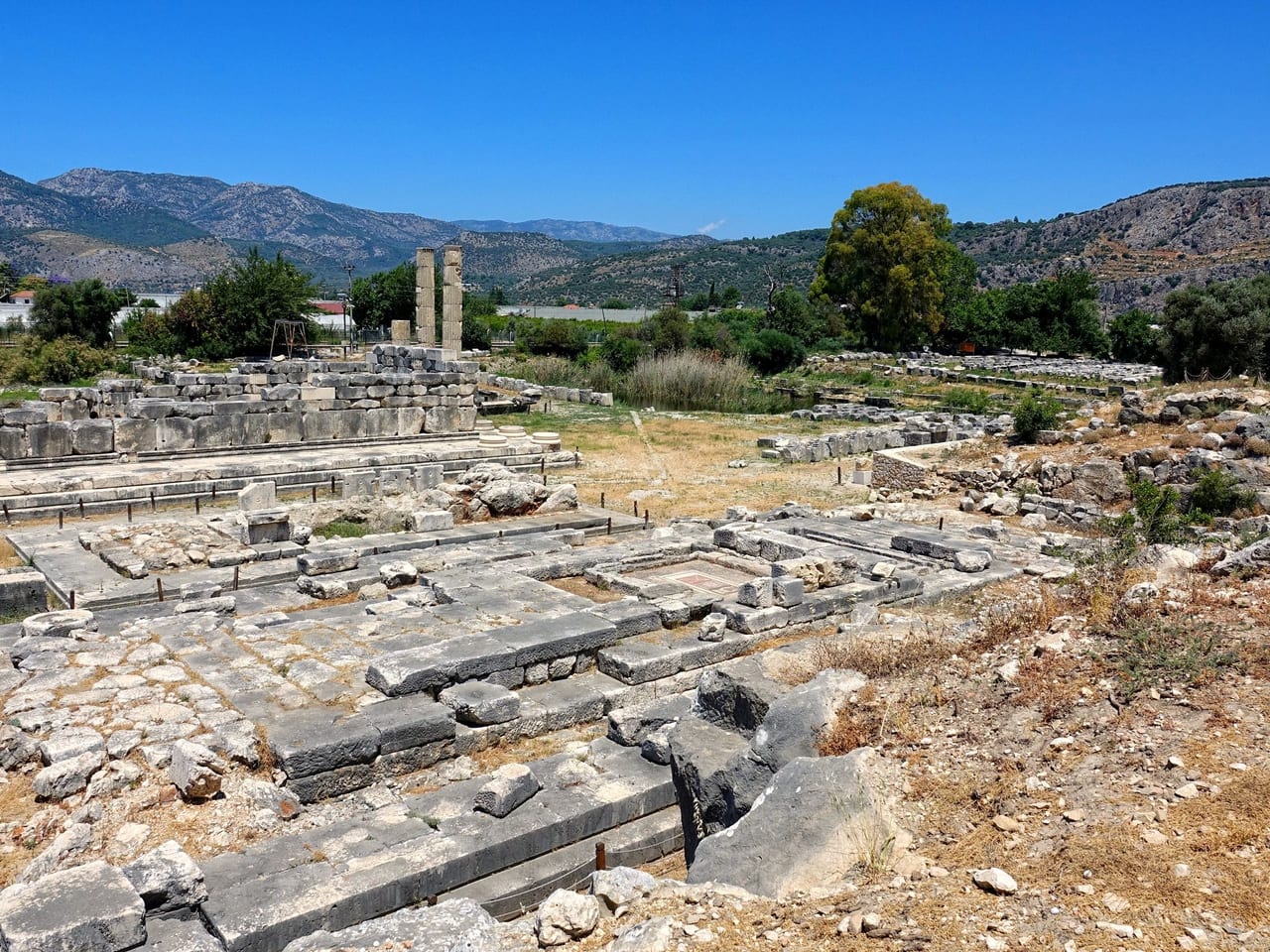
Three temples side by side for Leto and her twins Artemis and Apollo, a sacred spring, and a theater cut into the rock: Letoon, the shared place of worship of the Lycian cities.
Letoon is a sanctuary in the Kumluova neighborhood of Seydikemer, set on the plain southwest of Xanthos. It takes its name from the goddess Leto, who was worshipped here together with her twins, Artemis and Apollo. The site's history reaches as far back as the 7th century BC. The sanctuary was the shared place of worship of the Lycian cities.
Temples and stoa
Three temples stand in a row at the center of the sanctuary. The westernmost and largest is the Temple of Leto, built in the Ionic order and surrounded by columns on all four sides. The small temple in the middle was dedicated to Artemis, and the Doric temple at the eastern end to Apollo. Traces of older wooden temples are thought to lie beneath the stone ones, and there are different views on when they were built. The mosaic panel from the center of the Temple of Apollo was moved to the Fethiye Museum.
A Doric stoa once enclosed the buildings of the sanctuary on the west and the north. Offerings were kept in this colonnaded building, and it also gave shelter to visitors. Columns thought to belong to the stoa are found in this part of the site.
Spring, theater, and church
Southwest of the temples, at the head of the sacred spring, stands a fountain building dedicated to the water nymphs. This monumental fountain was built in the Roman period, and its semicircular colonnade stood at the edge of a pool. North of the sanctuary is a theater from the Hellenistic period. The sarcophagi near the theater suggest that this area served as a road in antiquity. The church east of the fountain went up during the 6th century AD. The sanctuary is thought to have been abandoned after the Arab raids.
The inscription and the excavations
The trilingual inscription found in 1973 was moved to the Fethiye Museum. Scientific excavations at the sanctuary began in 1962. In 1988, UNESCO recognized Letoon as a World Heritage site together with Xanthos.
Practical information
- Getting there: a road turning south off the Fethiye–Kaş highway leads to Kumluova and on to the entrance of the site.
- Opening hours: check the official website for current times.
- Admission: check the official website for current admission and Museum Pass validity.
- Status: open.
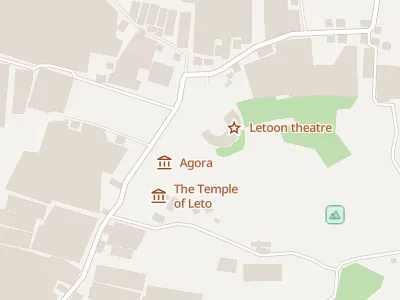
Where
Nearby places
 Sidyma
 Pinara
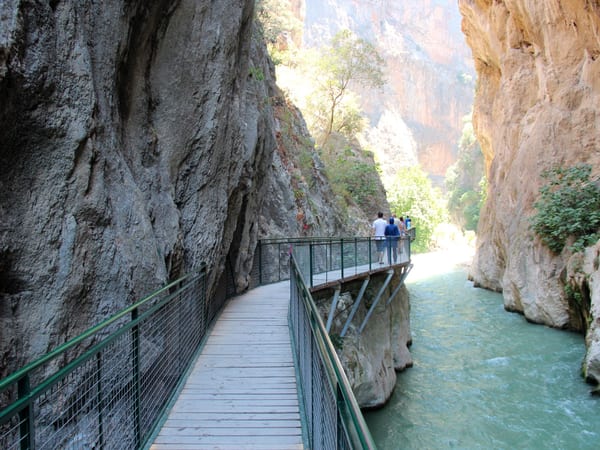 Saklıkent Canyon
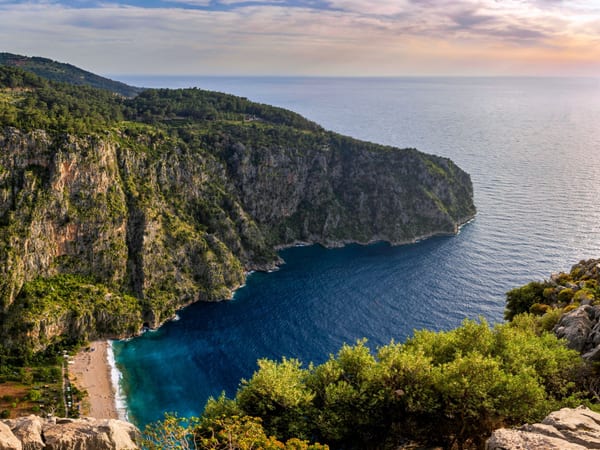 Butterfly Valley

Listen as you walk
Guide & Travel starts the story by itself when you reach the place, and it works offline too.
Photos (4)
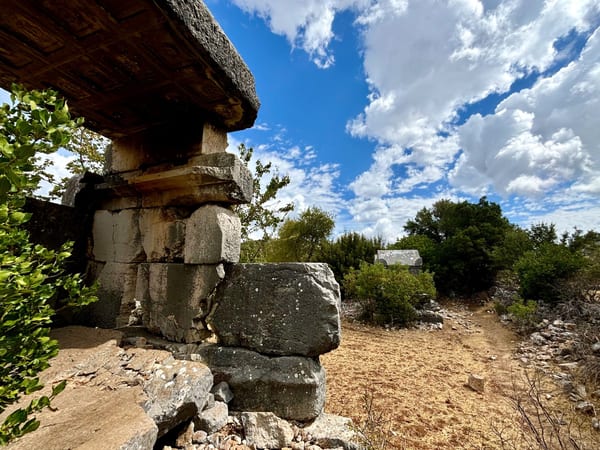
- Sidyma — Photo: Hiking102 · CC BY 4.0 · Wikimedia Commons (cropped)
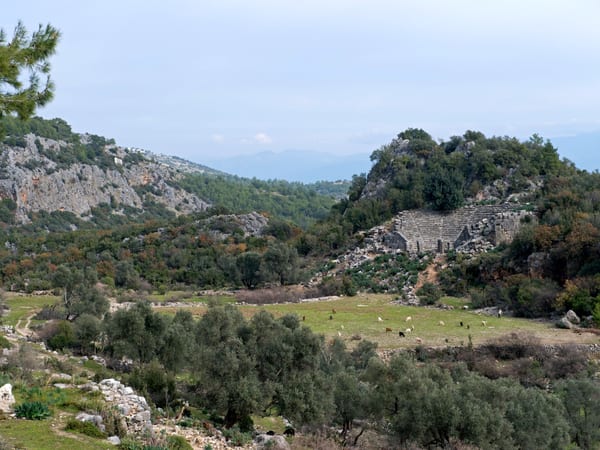
- Pinara — Photo: Dosseman · CC BY-SA 4.0 · Wikimedia Commons (cropped)
- Saklıkent Canyon — Photo: Buda2000 · CC BY-SA 4.0 · Wikimedia Commons (edited)
- Butterfly Valley — Photo: faktor1komma5 /by Claus P. Heibel · CC BY 2.0 · Wikimedia Commons (cropped)


