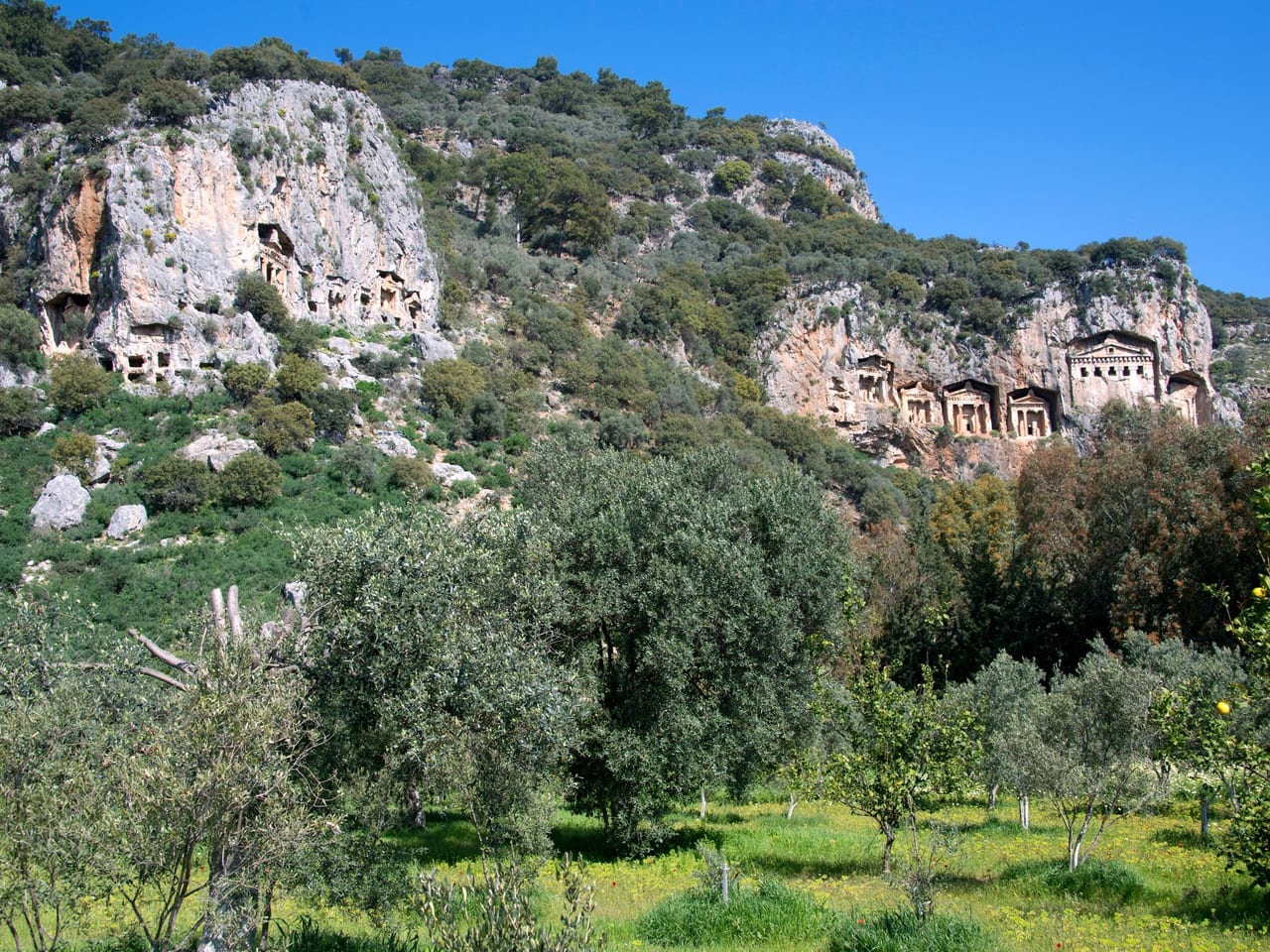
Ancient City of Kaunos
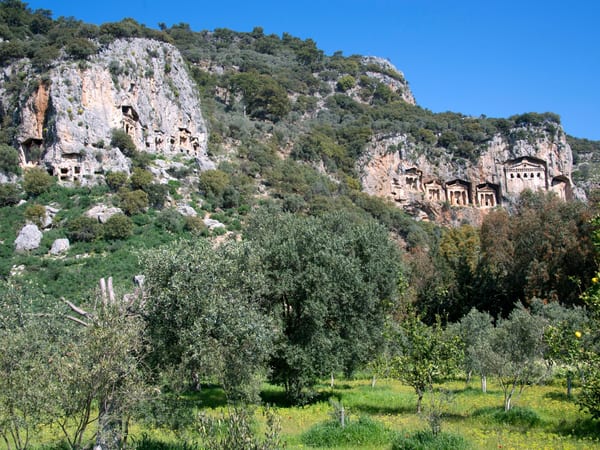
A Carian harbor city on the west bank of the Dalyan River, reaching toward the water between two rocky hills: Kaunos, with its theater, baths, agora, and rock tombs facing the river.
Kaunos is a Carian city founded on the west bank of the Dalyan River, the channel that joins Lake Köyceğiz with the sea, directly across from Dalyan. The site lies in Çandır, in the district of Köyceğiz. The city spreads over a peninsula that stretches toward the water between the high acropolis to the north and the smaller acropolis to the south. In antiquity it was a busy port on the border between Caria and Lycia; as the Dalyan Delta grew, the shore moved away, and today the city lies well inland from the sea.
From Kbid to Kaunos
The city's local name was Kbid, a name that appears in the Lycian text of the trilingual inscription found at the Letoon. The Kaunians used their local name until the late 4th century BC. Herodotus considered them a native people, while the Kaunians themselves claimed Cretan origins. In legend, the city was founded by Kaunos, the son of Miletus. Kaunos was ruled in turn by the Persians, the Hecatomnids, Alexander and his successors, Rhodes, and Rome, and it flourished most under the family of Mausolus in the 4th century BC.
When the harbor silted up
Byzantine Kaunos, also called Hagia, was the seat of a bishop. It declined with the Arab raids of the 7th century, which left their mark in the defensive walls on the acropolis. Settlement ended in the 15th century, under the Menteşe dynasty. The Turks founded Dalyan on the opposite bank of the river.
A city found again
The location of Kaunos was identified in 1840 through an inscription found by the British captain Hoskyn. Excavations began in 1966 under Baki Öğün of Ankara University, who led them without a break until his death. In 2014, Kaunos was added to the UNESCO World Heritage Tentative List.
Practical information
- Getting there: boats from Dalyan cross to the landing on the opposite bank, and a short walk leads up to the ruins. The site can also be reached by road from the direction of Köyceğiz.
- Opening hours: check the official website for current times.
- Admission: check the official website for current admission and Museum Pass validity.
- Status: open.
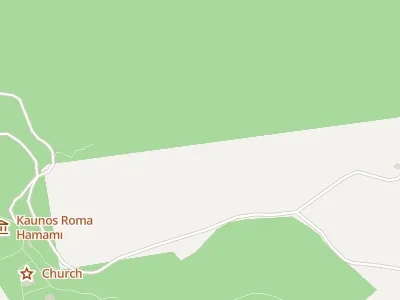
Where
Inside this place
 Roman Baths
 Domed Church
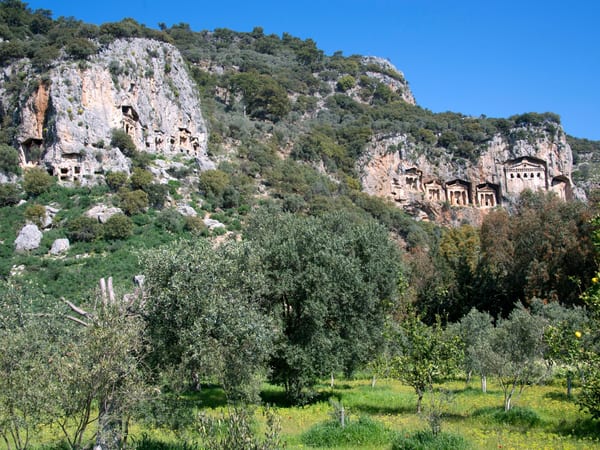 Acropolis and Medieval Walls
Nearby places
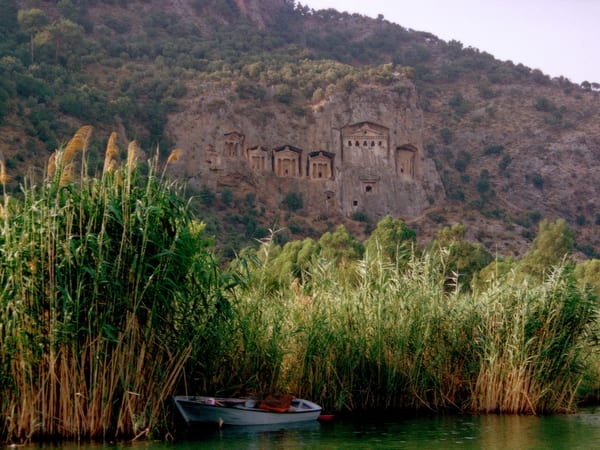 Dalyan River Cruise and the Kaunos Rock Tombs
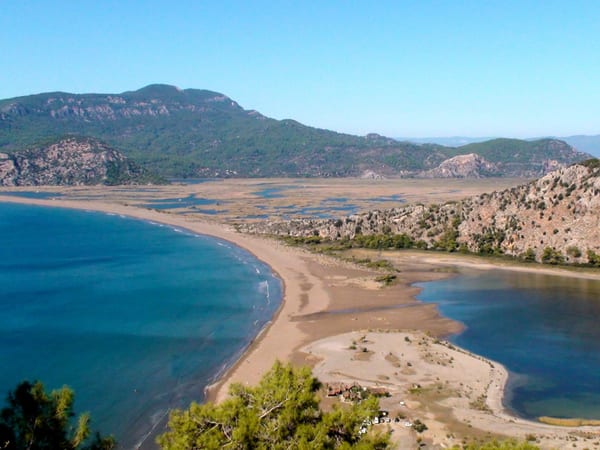 İztuzu Beach
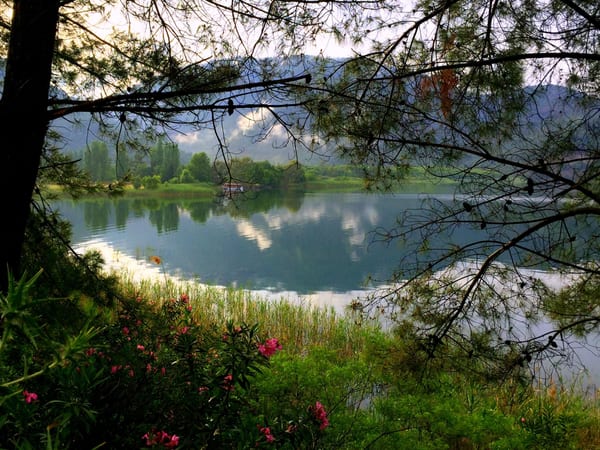 Sultaniye Hot Springs
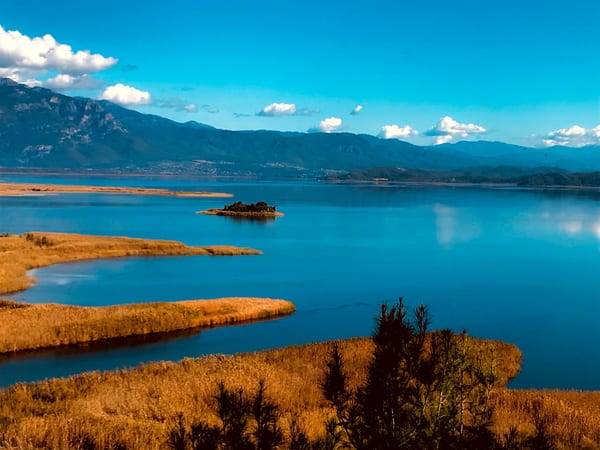 Lake Köyceğiz

Routes that include this place
Listen as you walk
Guide & Travel starts the story by itself when you reach the place, and it works offline too.
Photos (8)
- Roman Baths — Photo: Dosseman · CC BY-SA 4.0 · Wikimedia Commons (cropped)
- Domed Church — Photo: Dosseman · CC BY-SA 4.0 · Wikimedia Commons (cropped)
- Acropolis and Medieval Walls — Photo: Dosseman · CC BY-SA 4.0 · Wikimedia Commons (cropped)
- Dalyan River Cruise and the Kaunos Rock Tombs — Photo: Carl Campbell from Santiago de Querétaro, México · CC BY 2.0 · Wikimedia Commons (edited)
- İztuzu Beach — Photo: Maria Jonker · CC BY-SA 3.0 · Wikimedia Commons (cropped)
- Sultaniye Hot Springs — Photo: Arıktekin · CC BY-SA 4.0 · Wikimedia Commons (cropped)
- Lake Köyceğiz — Photo: PinarKarayilan · CC BY-SA 4.0 · Wikimedia Commons (colour corrected)
- Ancient City of Kaunos — Photo: Dosseman · CC BY-SA 4.0 · Wikimedia Commons (cropped)


