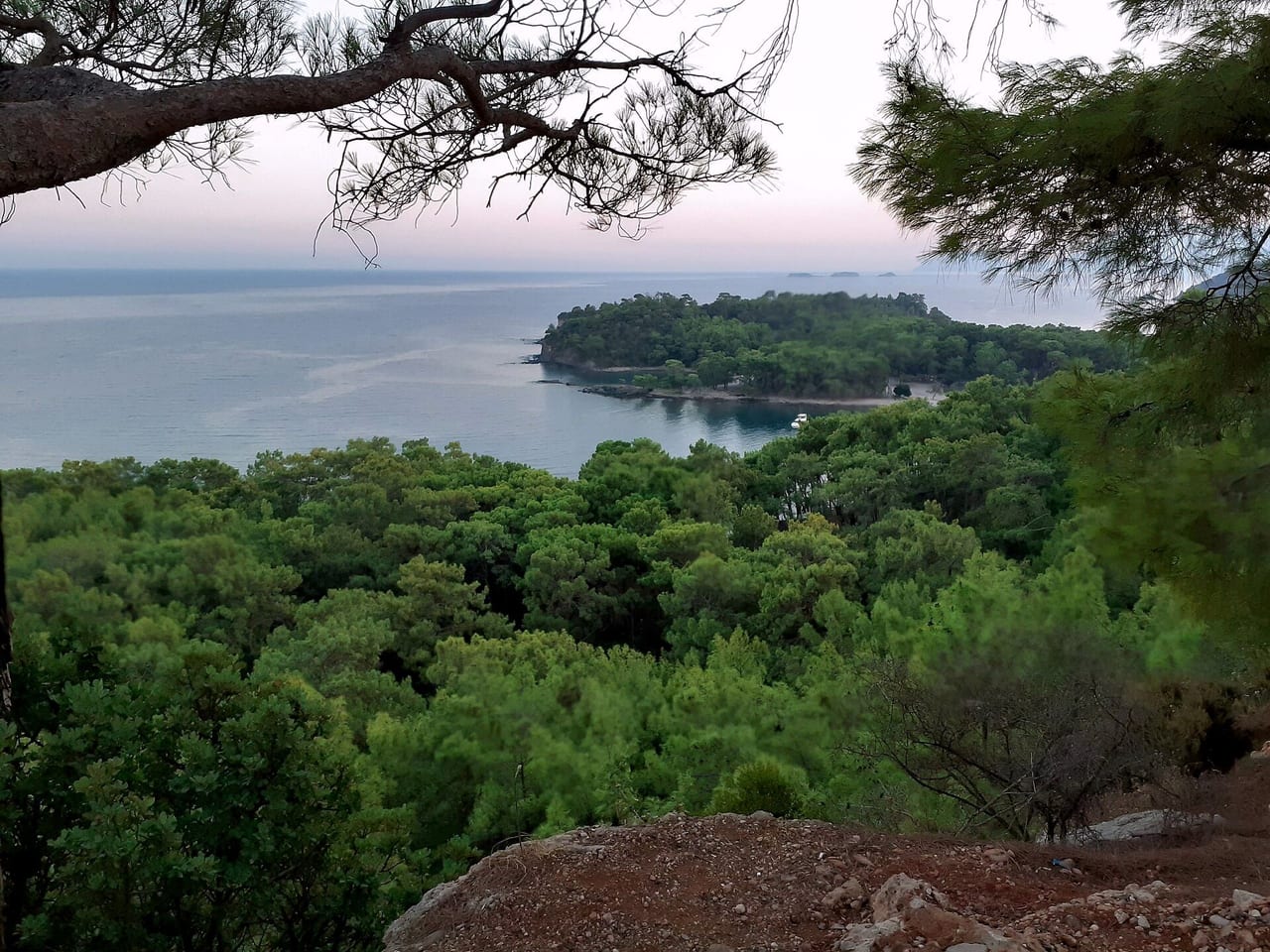
Phaselis
An ancient city with three harbors on a small pine-covered peninsula north of Tekirova: a main street linking the harbors, agoras, a theater, baths, and the Gate of Hadrian.
A peninsula with three harbors
Phaselis stands on a small peninsula reaching into the Mediterranean in the Kemer district, north of Tekirova. Tahtalı Mountain rises behind it, and today the ruins lie among the pine forests of Beydağları Coastal National Park. The city was founded early in the 7th century BC, around 690 BC, by colonists led by the city of Lindos on the island of Rhodes. Strabo describes Phaselis as a notable city with three harbors and a lake. The harbors lay to the north, northeast, and southwest of the peninsula: the North Harbor, the Central Harbor, and the South Harbor. The city lived by sea trade, and its coins showed a ship.
Between Lycia and Pamphylia
Lying on the border between Lycia and Pamphylia, Phaselis is assigned by ancient writers sometimes to Lycia and sometimes to Pamphylia. The city came under Persian rule in the 5th century BC; in the 4th century BC it was governed by Mausolus, the satrap of Caria, and by Pericles, king of Limyra. In 333 BC it greeted Alexander the Great with a golden crown, and Alexander stayed in the city for about a month. After Alexander, Phaselis came under the rule of the Ptolemaic dynasty of Egypt. In 167 BC it joined the Lycian League and minted coins in the league's name; Strabo, however, writes that in his own day the city belonged to Lycia but stayed outside the league. In the 1st century BC, together with its neighbor Olympos, it suffered pirate attacks.
From Rome to abandonment
One of the brightest moments of the city, rebuilt in the Roman era, was the visit of Emperor Hadrian; a gate and an agora were built in his name. In the Byzantine period, Phaselis was the seat of a bishop and was among the cities taking part in the Council of Chalcedon in 451. After the Arab raids of the 7th century, a new period of prosperity began in the 8th century. Following the Seljuk siege of 1158, the city lost its importance through earthquakes and the decline of its harbor, and it was abandoned from the early 13th century. Early in the 19th century, the British naval officer Francis Beaufort described the ruins in detail; excavations began in the early 1980s. Phaselis is among the places added to the UNESCO World Heritage Tentative List in 2009 under the name "Ancient Cities of Lycian Civilization."
Practical information
- Getting there: By Kemer–Tekirova buses from Antalya.
- Opening hours: summer 8:00 a.m.–7:00 p.m. (last entry 6:30 p.m.); winter (November 1–April 30) 8:00 a.m.–5:00 p.m. (last entry 4:30 p.m.). Hours change with the season; check the official website for current hours.
- Admission: For current fees and Museum Card validity, check the official website.
- Suggested time: 1.5 hours.
- Status: open.
Where

Inside this place
 Hellenistic TempleHistorical PlaceAqueductHistorical PlaceCentral HarborHistorical PlaceMain StreetHistorical PlaceLarge BathHistorical PlaceLatrineHistorical PlaceSmall BathHistorical PlaceTheaterHistorical PlaceTetragonal AgoraHistorical PlaceAgora of DomitianHistorical PlaceThird AgoraHistorical PlaceGate of HadrianHistorical PlaceSouth HarborHistorical Place
Nearby places
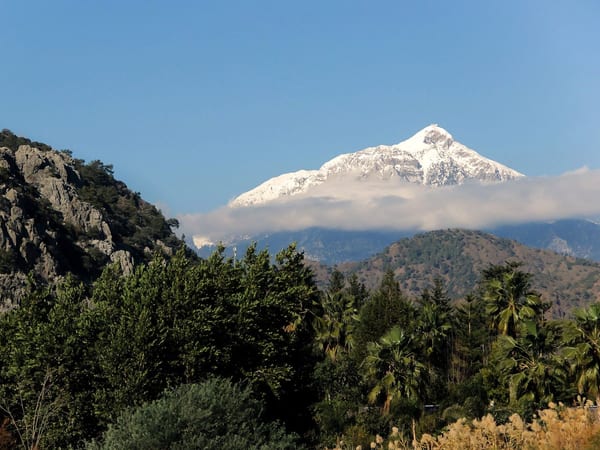 Tahtalı Mountain
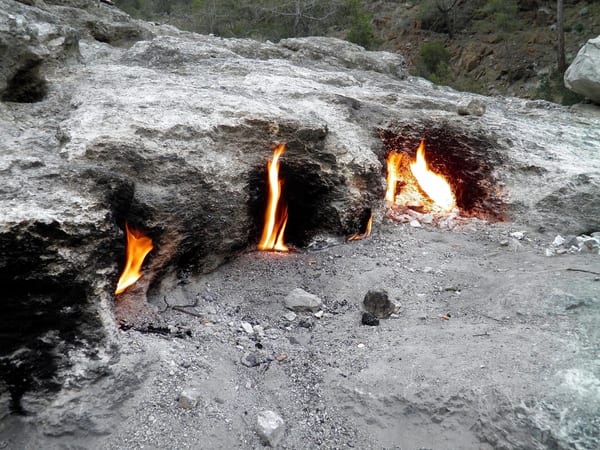 Chimaera
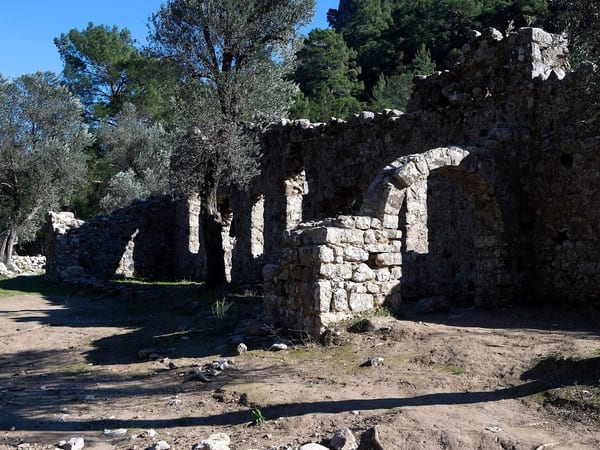 Building with Mosaics

Listen as you walk
Guide & Travel starts the story by itself when you reach the place, and it works offline too.
Photos (17)
- Hellenistic Temple — Photo: Zamir94 · CC BY-SA 4.0 · Wikimedia Commons (colour corrected)
- Aqueduct — Photo: Zamir94 · CC BY-SA 4.0 · Wikimedia Commons (colour corrected)
- Central Harbor — Photo: Zamir94 · CC BY-SA 4.0 · Wikimedia Commons (colour corrected)
- Main Street — Photo: Zamir94 · CC BY-SA 4.0 · Wikimedia Commons (colour corrected)
- Large Bath — Photo: Zamir94 · CC BY-SA 4.0 · Wikimedia Commons (colour corrected)
- Latrine — Photo: Zamir94 · CC BY-SA 4.0 · Wikimedia Commons (colour corrected)
- Small Bath — Photo: Zamir94 · CC BY-SA 4.0 · Wikimedia Commons (colour corrected)
- Theater — Photo: Zamir94 · CC BY-SA 4.0 · Wikimedia Commons (colour corrected)
- Tetragonal Agora — Photo: Zamir94 · CC BY-SA 4.0 · Wikimedia Commons (colour corrected)
- Agora of Domitian — Photo: Zamir94 · CC BY-SA 4.0 · Wikimedia Commons (colour corrected)
- Third Agora — Photo: Zamir94 · CC BY-SA 4.0 · Wikimedia Commons (colour corrected)
- Gate of Hadrian — Photo: Zamir94 · CC BY-SA 4.0 · Wikimedia Commons (colour corrected)
- South Harbor — Photo: Zamir94 · CC BY-SA 4.0 · Wikimedia Commons (colour corrected)
- Tahtalı Mountain — Photo: Güney Özdamar · CC BY-SA 4.0 · Wikimedia Commons (cropped)
- Chimaera — Photo: Carole Raddato from FRANKFURT, Germany · CC BY-SA 2.0 · Wikimedia Commons (colour corrected)
- Building with Mosaics — Photo: Dosseman · CC BY-SA 4.0 · Wikimedia Commons (cropped)
- Tomb of Archepolis — Photo: Dosseman · CC BY-SA 4.0 · Wikimedia Commons (cropped)


