Olympos
A Lycian harbor city scattered through the forest in a narrow valley where a stream from the mountains meets the sea: a temple gateway, a bishop's palace, and a sea captain's sarcophagus inscribed with a poem.
A harbor city among the mountains
Olympos is a harbor city in eastern Lycia, on the coast of the Teke Peninsula. Its ruins spread along both banks of the Olympos Stream (Akçay), which comes down from the mountains to the sea through a narrow valley ringed by mountains. Its name means "high mountain," and it comes from Mount Tahtalı, about 16 km to the north. Its founding date is unknown; some researchers date the city to the 3rd century BC. According to some researchers, the city's original site in the Hellenistic period was on Mount Musa to the south, and the coastal settlement took the name Olympos in the Roman period. The name appears on coins of the Lycian League struck in 167–168 BC, and Olympos represented eastern Lycia as one of the six cities in the league that held three votes each.
From pirates to bishops
In the 1st century BC, the Cilician pirate Zeniketes made the city his base, and the cult of Mithras arrived with the pirates; the Roman commander Servilius Isauricus defeated the pirates and brought the city into Roman territory. Strabo describes Olympos as a large city. In the Roman period, the city's chief god was Hephaestus, and Emperor Hadrian visited the city; the fire of nearby Yanartaş, the Chimaera, made Olympos a center of worship through the Roman and Byzantine eras. The city's first bishop was Methodius, executed at Patara in 312. Bishops of Olympos attended the Council of Ephesus in 431 and later gatherings in Constantinople. From the 5th century on, a new Christian layout was built over the Roman city: streets narrowed, and stones from older buildings were reused. Urban life ended in the 7th century, not with a sudden disaster but gradually. In the 11th and 12th centuries, Venetian and Genoese merchants called at this coast; much later, Yörük nomads used the ruins as winter quarters.
Ruins in the forest
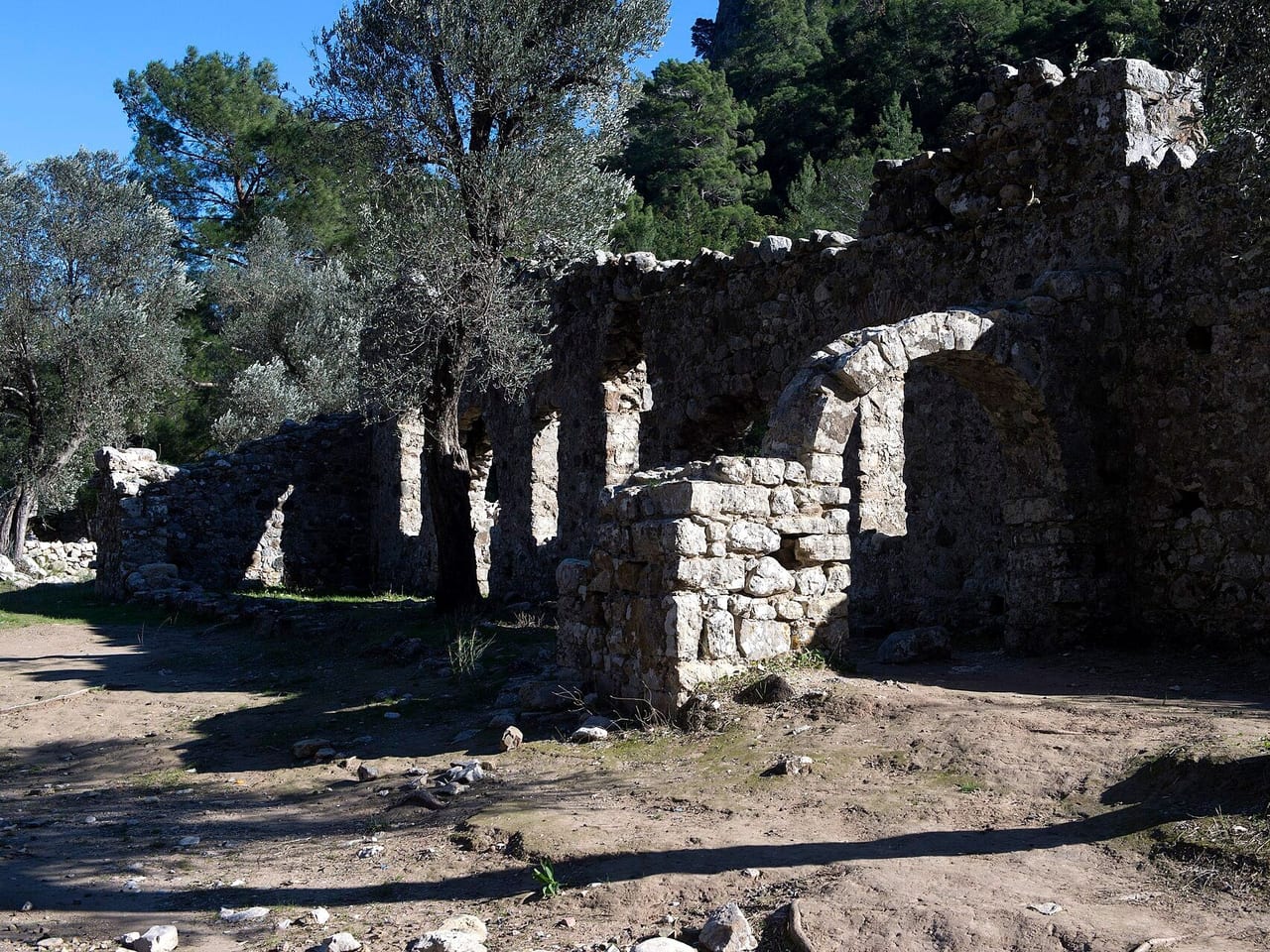
In the 19th century, the first to describe the ruins was the British naval officer Francis Beaufort. Local people then called the place Deliktaş; the natural rock passage that bore this name lay at the city's seaward entrance. Most of the remains date from the Hellenistic, Roman, and Byzantine periods and lie in a forest; since no modern settlement was built over them, the early Byzantine city's fabric can still be traced. The city lies within Beydağları Coastal National Park, and the Lycian Way passes through it; Çıralı Beach to the east is a nesting ground for loggerhead sea turtles. Olympos is one of the Lycian cities proposed to UNESCO in 2009.
Practical information
- Getting there: via two turnoffs heading south from the Antalya–Kumluca highway; the site's address is Yazır Mahallesi, Olympos Mevkii, Kumluca.
- Opening hours: open daily; summer 8:00 a.m.–7:00 p.m., winter (November 1–April 30) 8:00 a.m.–5:00 p.m.; the ticket office closes half an hour earlier. Hours change with the season; check the official website for current hours.
- Admission: for current fees and Museum Card validity, check the official website.
- Suggested time: 2 hours.
- Status: open.
Where
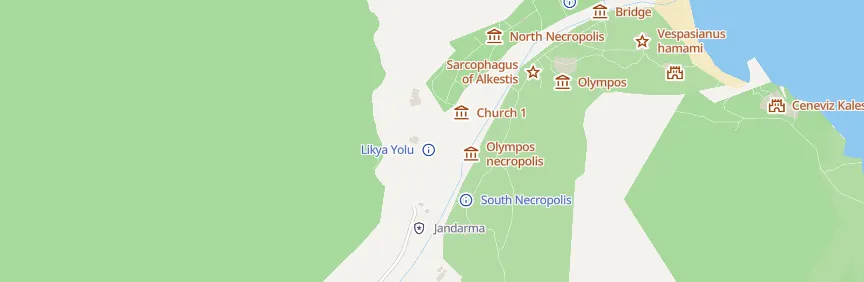
Inside this place
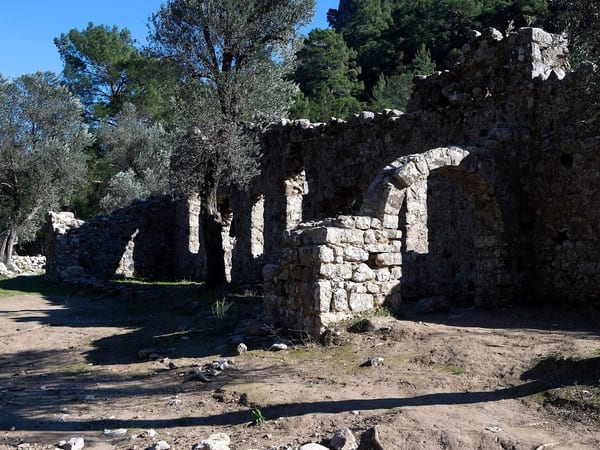 Entrance ComplexHistorical PlaceChurch 1Historical PlaceSouth NecropolisHistorical PlaceNorth Necropolis and Necropolis StreetHistorical PlaceTheaterHistorical PlaceGreat BathHistorical PlaceHarbor BasilicaHistorical PlaceBridge Pier and CanalHistorical PlaceEpiscopal PalaceHistorical PlaceTemple GateHistorical PlaceChurch 3Historical PlaceBuilding with MosaicsHistorical PlaceTomb of ArchepolisHistorical PlaceHarbor Monumental TombsHistorical Place
Nearby places
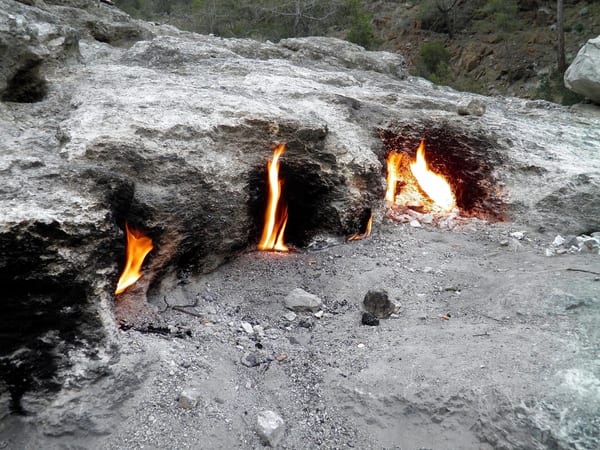 Chimaera
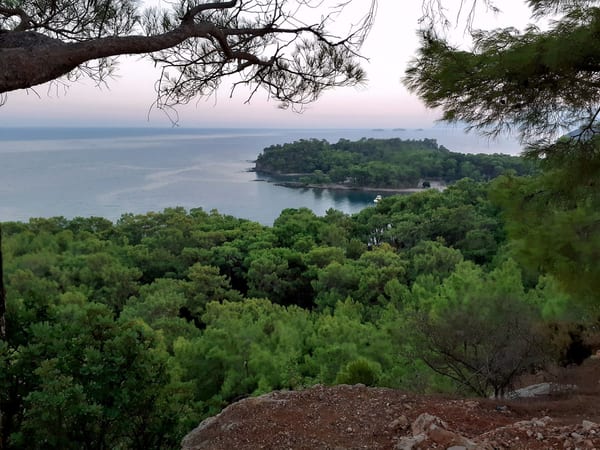 South Harbor
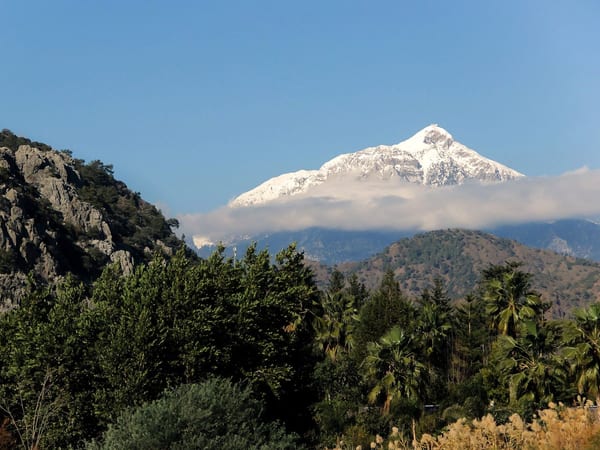 Tahtalı Mountain

Listen as you walk
Guide & Travel starts the story by itself when you reach the place, and it works offline too.
Photos (18)
- Entrance Complex — Photo: Dosseman · CC BY-SA 4.0 · Wikimedia Commons (cropped)
- Church 1 — Photo: Dosseman · CC BY-SA 4.0 · Wikimedia Commons (cropped)
- South Necropolis — Photo: Dosseman · CC BY-SA 4.0 · Wikimedia Commons (cropped)
- North Necropolis and Necropolis Street — Photo: Dosseman · CC BY-SA 4.0 · Wikimedia Commons (cropped)
- Theater — Photo: Dosseman · CC BY-SA 4.0 · Wikimedia Commons (cropped)
- Great Bath — Photo: Dosseman · CC BY-SA 4.0 · Wikimedia Commons (cropped)
- Harbor Basilica — Photo: Dosseman · CC BY-SA 4.0 · Wikimedia Commons (cropped)
- Bridge Pier and Canal — Photo: Dosseman · CC BY-SA 4.0 · Wikimedia Commons (cropped)
- Episcopal Palace — Photo: Dosseman · CC BY-SA 4.0 · Wikimedia Commons (cropped)
- Temple Gate — Photo: Dosseman · CC BY-SA 4.0 · Wikimedia Commons (cropped)
- Church 3 — Photo: Dosseman · CC BY-SA 4.0 · Wikimedia Commons (cropped)
- Building with Mosaics — Photo: Dosseman · CC BY-SA 4.0 · Wikimedia Commons (cropped)
- Tomb of Archepolis — Photo: Dosseman · CC BY-SA 4.0 · Wikimedia Commons (cropped)
- Harbor Monumental Tombs — Photo: Dosseman · CC BY-SA 4.0 · Wikimedia Commons (cropped)
- Chimaera — Photo: Carole Raddato from FRANKFURT, Germany · CC BY-SA 2.0 · Wikimedia Commons (colour corrected)
- South Harbor — Photo: Zamir94 · CC BY-SA 4.0 · Wikimedia Commons (colour corrected)
- Tahtalı Mountain — Photo: Güney Özdamar · CC BY-SA 4.0 · Wikimedia Commons (cropped)
- Gate of Hadrian — Photo: Zamir94 · CC BY-SA 4.0 · Wikimedia Commons (colour corrected)


